In a sobering start to 2026, the “Big Tech” narrative is shifting from pure AI excitement to a rigorous demand for ROI. Following Microsoft’s fiscal Q2 earnings on January 28, the market has sent a clear message: beating estimates is no longer enough if the bill for AI infrastructure continues to balloon.
Cloud Revenue Promises Rattle Big Tech Investors
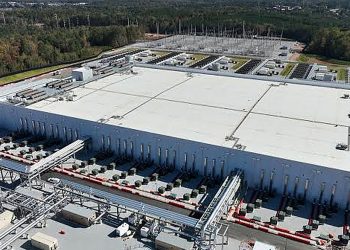
While Microsoft, Amazon (AWS), and Oracle are reporting record cloud backlogs, the stock market is fixated on the unprecedented capital expenditure (Capex) required to maintain that growth. Investors are increasingly wary of a “valuation trap” where massive revenue is offset by even more massive hardware costs.
The “Efficiency Gap” of 2026
The central tension lies in the time it takes for a GPU in a data center to turn into a dollar on a balance sheet.
Microsoft’s AI Surge: Despite crossing $50 billion in quarterly cloud revenue for the first time, Microsoft shares fell as much as 11.3% in post-earnings trading. The culprit? A record $37.5 billion in quarterly Capex—a 66% year-over-year increase—and guidance that suggests Azure growth, while strong at 39%, is stabilizing rather than accelerating.
Oracle’s Pivot: Larry Ellison recently warned that “foundational models” are becoming a commodity. Oracle is doubling down on proprietary enterprise data, projecting $50 billion in Capex for 2026 to build out specialized superclusters. Investors, however, are questioning if Oracle’s $500 billion backlog will convert to profit before the next tech shift occurs.
Amazon’s AWS Resilience: AWS is showing its fastest growth since 2022, fueled by a $200 billion backlog. Yet, reports of looming layoffs in AWS and retail divisions suggest that even the “Everything Store” is tightening its belt to fund its multibillion-dollar AI infrastructure build-out.