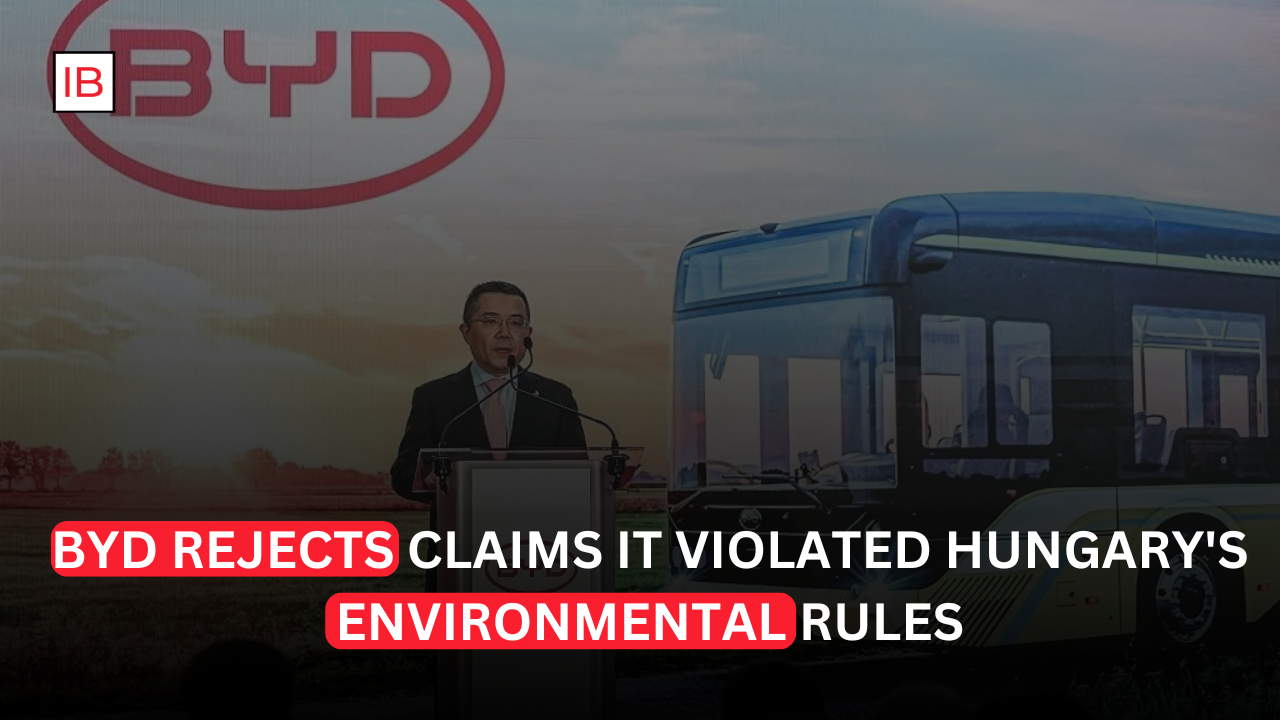
Chinese EV Giant Denies Allegations Amid Ongoing Investigation. Chinese electric vehicle manufacturer BYD has rejected allegations that it violated environmental regulations during the construction of its new factory in Hungary, insisting that the project complies with all local and European legal requirements.
The company issued its response after reports emerged that Hungarian authorities were investigating whether environmental rules had been breached at the site of BYD’s first European vehicle manufacturing plant in the city of Szeged.
Company Says Construction Meets Regulations
BYD stated that environmental protection remains a key priority and that all construction activities have been carried out in accordance with applicable laws and regulatory standards.
The company said it has cooperated fully with local authorities and remains committed to maintaining transparency throughout the development process. BYD added that it is confident the investigation will confirm that the project has complied with all environmental requirements.
Investigation Comes During Major European Expansion
The scrutiny arrives as BYD accelerates its expansion across Europe, where demand for electric vehicles continues to grow rapidly.
The Hungarian facility is expected to become BYD’s first vehicle production plant in Europe and is viewed as a key part of the company’s strategy to increase market share while reducing the impact of European Union tariffs on Chinese-made electric vehicles. Production at the plant is scheduled to begin later in 2026.
Industry analysts note that establishing local manufacturing operations is becoming increasingly important for Chinese automakers seeking long-term growth in Europe.
Previous Allegations Increased Attention
The environmental investigation follows earlier reports involving labor-related concerns at the same project.
Worker-rights organizations previously alleged that some subcontractors involved in the factory’s construction engaged in labor violations, including issues related to migrant workers. BYD has consistently denied wrongdoing and stated that it expects contractors and suppliers to comply with all legal and ethical standards.
Although the labor allegations are separate from the environmental inquiry, the combined scrutiny has increased attention on the company’s European operations.
Hungary Remains Key to BYD’s Strategy
Despite the controversy, BYD continues to describe Hungary as its most important European manufacturing hub.
Company executives recently confirmed that the Hungarian factory remains the firm’s top priority as it expands production capacity across the continent. The plant is expected to manufacture several electric vehicle models for European customers and serve as a foundation for future regional growth.
BYD has also paused work on a previously announced factory project in Turkey while focusing resources on completing its Hungarian operations.
European Competition Intensifies
The investigation comes at a time when competition in Europe’s electric vehicle market is becoming increasingly intense.
Chinese automakers, including BYD, are expanding aggressively across the region, challenging established European manufacturers and competing directly with global EV leaders. Local production facilities are seen as a crucial advantage in securing long-term market access.
BYD’s European sales have grown rapidly over the past year, making the successful completion of the Hungary project an important milestone for the company.
Outcome Could Affect Future Expansion
For now, Hungarian authorities continue reviewing the allegations while BYD maintains that no environmental violations occurred.
The outcome of the investigation could influence public perception of the project and shape future discussions about foreign investment, environmental oversight and industrial development in Europe. However, BYD remains confident that the factory will proceed as planned and begin production later this year.