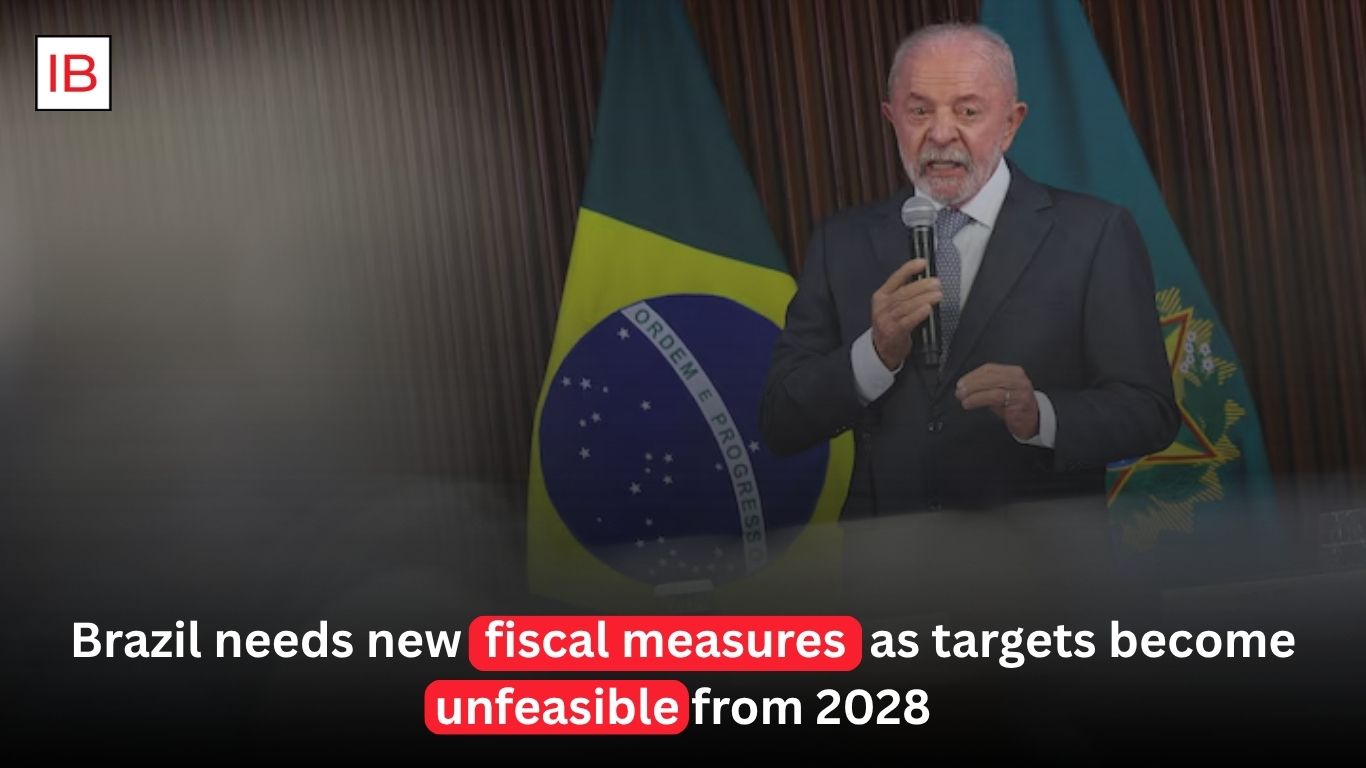
Brazil’s Treasury has warned that without additional fiscal reforms and new revenue measures, the government will be unable to meet its budget deficit targets from 2028 onward, raising fresh concerns about the country’s long-term fiscal stability.
Brazil’s National Treasury has cautioned that the government’s current fiscal framework will become unsustainable by 2028 unless new spending controls or revenue-raising measures are introduced. According to the Treasury’s latest fiscal projections, existing budget rules will make it increasingly difficult to balance public finances as mandatory government spending continues to rise faster than available revenues. The warning comes as President Luiz Inácio Lula da Silva’s administration faces mounting pressure to maintain social spending while keeping public debt under control.
Treasury Flags Growing Fiscal Gap
Brazil’s Treasury said current fiscal targets are unlikely to remain achievable beyond 2027 under existing policies.
Officials explained that mandatory government expenditures—including pensions, social benefits, healthcare, education, and public sector salaries—are projected to consume an increasing share of the federal budget. Without structural reforms or additional sources of revenue, the government could struggle to comply with its own fiscal framework.
The report serves as an early warning that policymakers will need to take action before fiscal pressures intensify.
Rising Spending Pressures Challenge Budget Goals
One of the main concerns highlighted by the Treasury is the steady growth of mandatory spending.
Unlike discretionary expenditures, mandatory spending is required by law and cannot easily be reduced without legislative changes. As these obligations continue increasing, they leave the government with less flexibility to finance infrastructure projects, public investment, and other development initiatives.
Officials warned that the imbalance between rising expenditures and government income could eventually undermine Brazil’s fiscal credibility if corrective measures are delayed.
Government May Need Tax and Spending Reforms
To preserve fiscal stability, the Treasury suggested that Brazil will likely need a combination of new revenue measures and spending reforms.
Potential options include tax adjustments, reductions in certain public expenditures, changes to budget rules, or reforms aimed at slowing the growth of mandatory spending programs. While no specific measures have been announced, officials emphasized that maintaining the current policy path will not be sufficient to achieve future fiscal targets.
Any proposed reforms would require political support from Congress, where fiscal policy remains a highly debated issue.
Debt Sustainability Remains a Key Concern
Economists continue to monitor Brazil’s public debt trajectory closely as higher government borrowing increases pressure on public finances.
Although Latin America’s largest economy has shown resilience in recent years, persistent fiscal deficits could gradually increase borrowing costs and weaken investor confidence if left unaddressed. Maintaining sustainable debt levels is considered essential for preserving macroeconomic stability and supporting long-term economic growth.
Financial markets are expected to closely follow any government proposals aimed at strengthening fiscal discipline.
Investors Seek Greater Policy Certainty
The Treasury’s warning has reinforced calls from investors for clearer long-term fiscal planning.
Stable public finances are widely viewed as critical for attracting domestic and foreign investment, supporting Brazil’s currency, and maintaining favorable financing conditions. Analysts believe credible fiscal reforms could improve market confidence, while prolonged uncertainty may increase volatility in government bond and currency markets.
The government’s ability to balance economic growth with responsible fiscal management will remain a central issue over the coming years.
Fiscal Challenges Extend Beyond 2028
While Brazil’s economy continues to benefit from strong agricultural exports and a diversified industrial base, long-term fiscal sustainability remains one of its biggest economic challenges.
The Treasury’s latest assessment underscores the need for early policy action rather than waiting until fiscal pressures become more severe. As mandatory spending continues to expand and budget constraints tighten, future governments will likely face difficult decisions over taxation, public spending, and structural reforms.
Whether Brazil can successfully implement those measures will play a major role in determining its economic outlook, investor confidence, and financial stability during the next decade.