Miracle Survival Brings Hope Amid Widespread Destruction
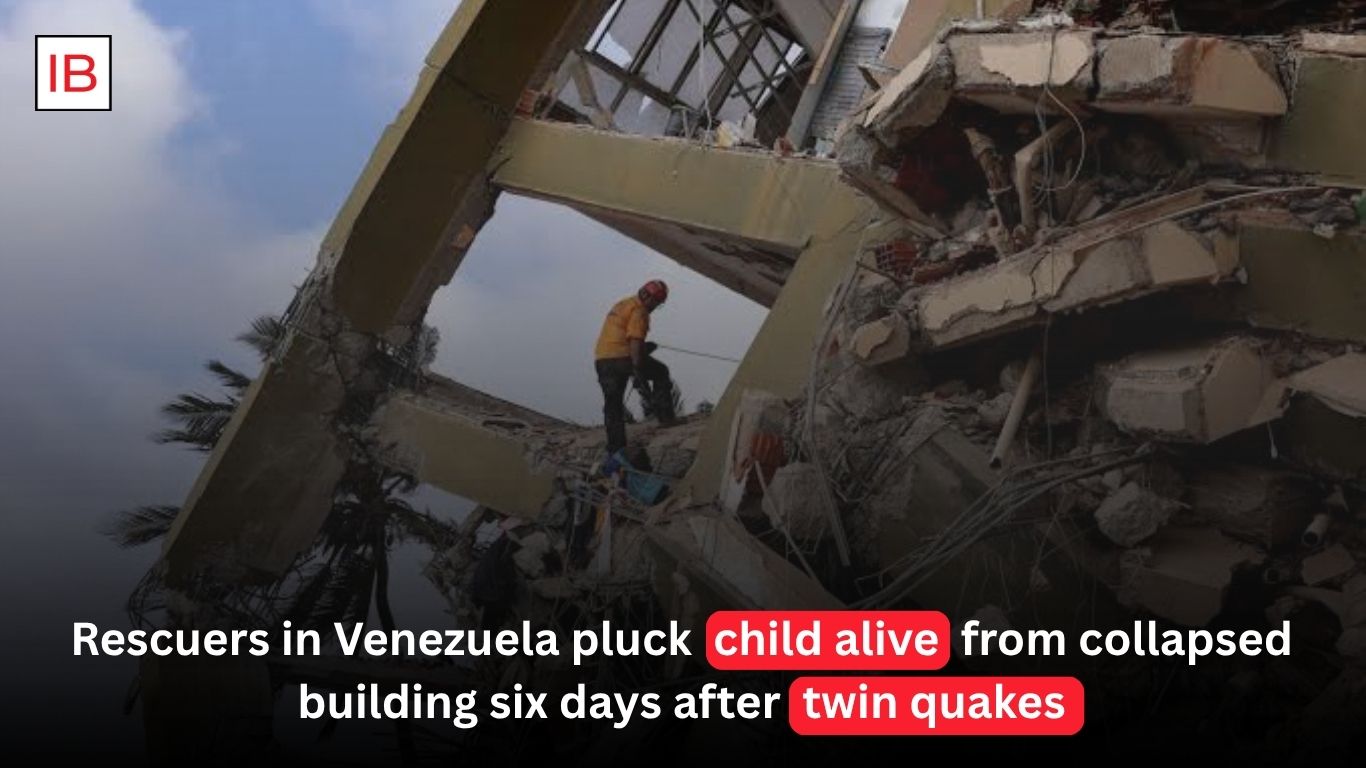
Rescue teams in Venezuela have pulled a young child alive from the rubble of a collapsed building six days after powerful twin earthquakes struck the country, offering a rare moment of hope in an otherwise devastating disaster.
The child was found in La Guaira state inside the ruins of the Los Corales Garden 1 building and was immediately taken for medical treatment in the capital, Caracas. The rescue was carried out by international teams working alongside Venezuelan authorities as search efforts continue across heavily damaged areas.
The survival has been described by officials as the only confirmed live rescue on the sixth day of operations, underscoring both the severity of the destruction and the slim chances of finding additional survivors as time passes.
Massive Earthquakes Trigger Widespread Collapse
Venezuela was struck by two powerful earthquakes measuring 7.2 and 7.5 magnitude within seconds of each other, causing buildings to collapse across multiple regions and trapping thousands of people under debris.
Entire residential blocks were reduced to rubble, with rescue crews from several countries deployed to assist local emergency teams in search-and-rescue operations. The disaster has overwhelmed infrastructure and created urgent humanitarian needs in affected cities and towns.
Authorities say the hardest-hit areas include coastal regions where construction density is high and evacuation was difficult due to the sudden nature of the quakes.
Race Against Time in Search for Survivors
The rescue of the child comes on the sixth day of operations, a critical point in disaster response where survival odds typically fall sharply.
Despite this, teams continue to search collapsed structures using thermal imaging, sniffer dogs, and manual excavation. International rescue groups, including specialists from Jordan, have played a key role in reaching trapped victims in unstable conditions.
Officials have urged continued optimism, noting that previous rescues—including children and families—have shown that survival is still possible even days after the disaster.
Humanitarian Crisis Deepens Across Affected Regions
The earthquakes have created a rapidly escalating humanitarian crisis, with thousands of injured and displaced residents requiring urgent assistance.
Relief agencies, including UNICEF, have begun delivering emergency supplies such as medical kits, newborn care materials, and disease prevention equipment to support overwhelmed hospitals and shelters.
Health services in affected areas are under severe strain, with limited capacity to handle mass casualties and rising risks of disease outbreaks in crowded temporary shelters.
Damage Assessment Reveals Scale of Destruction
Preliminary estimates suggest that tens of thousands of buildings have been damaged or destroyed across Venezuela, making this one of the most severe natural disasters in the country’s recent history.
Entire neighborhoods have been flattened, and infrastructure including roads, hospitals, and utilities has been heavily impacted. Rescue operations are being slowed in some areas due to debris, unstable structures, and limited heavy machinery.
Officials warn that the full scale of destruction may take weeks to fully assess as remote areas remain inaccessible.
Stories of Survival Stand Out Amid Tragedy
Despite the overwhelming destruction, scattered rescues continue to provide moments of relief for rescue teams and families searching for loved ones.
Reports of children and families surviving days under rubble have reinforced hopes that more survivors may still be found, even as conditions become increasingly difficult.
Each successful rescue is now treated as both a medical emergency and a symbolic victory in a disaster marked by widespread loss.
Looking Ahead
As Venezuela continues its search-and-rescue operations, the focus is shifting between urgency and uncertainty. The rescue of a child alive after six days highlights both the resilience of survivors and the determination of rescue teams working under extreme conditions.
However, with each passing hour, the likelihood of additional live recoveries decreases, placing greater emphasis on recovery efforts, humanitarian relief, and long-term rebuilding.
For now, the discovery of a survivor after nearly a week buried under rubble stands as a powerful reminder of hope amid catastrophe—and the continuing human effort to find life in the aftermath of destruction.