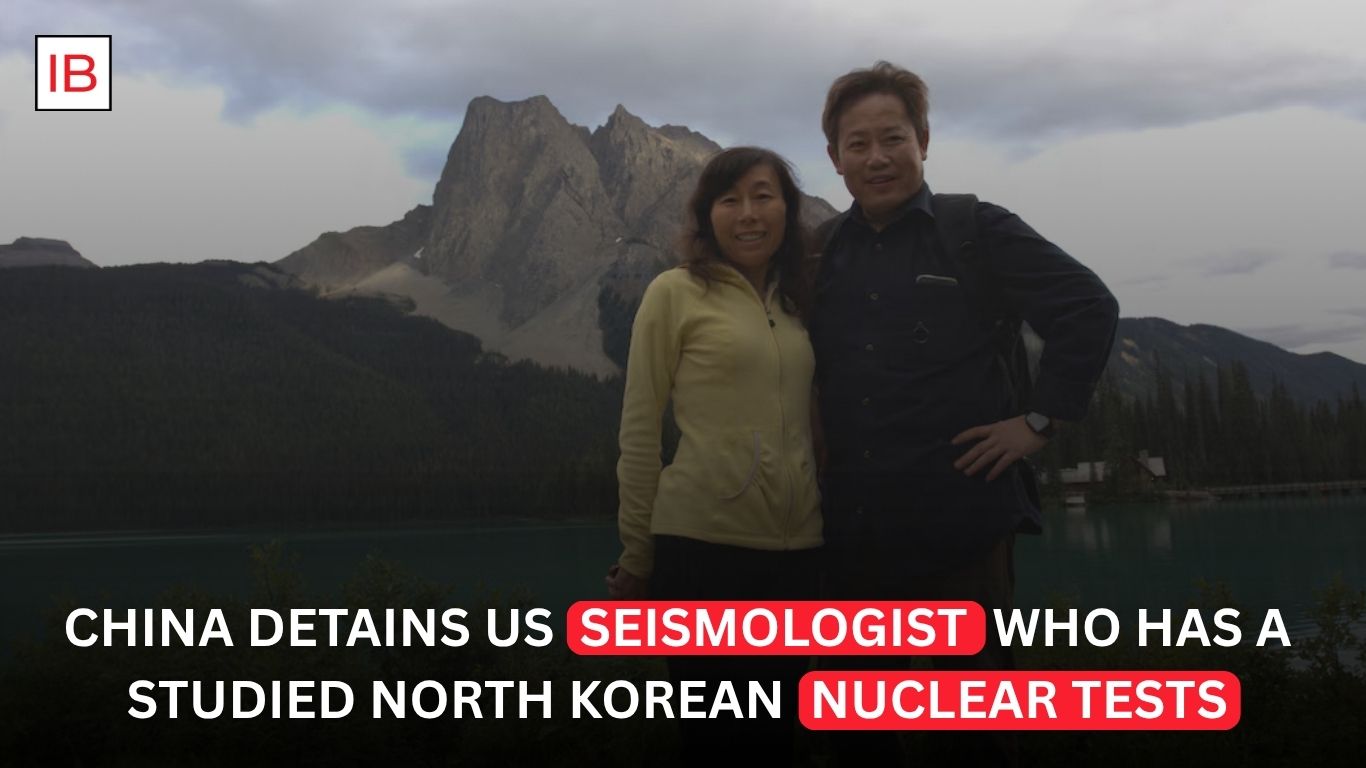
American Researcher Faces Espionage Charges as Case Adds Strain to US-China Relations
China has detained American seismologist Dr. Youlin Chen, a researcher known for his work on detecting North Korean nuclear tests, on espionage charges. Chen, who was born in China and later became a U.S. citizen, has been held since November 2024, and his case has become a growing source of tension between Washington and Beijing.
According to his family and U.S. officials, Chen’s research was publicly funded by the U.S. government and focused on analyzing seismic signals from North Korea’s nuclear weapons tests. His work did not involve classified information or require a security clearance.
Espionage Charges Spark Concern
Chinese authorities have accused Chen of espionage, although specific details of the allegations have not been made public.
Reports indicate that:
- Chen has been detained since November 2024.
- He has reportedly been interrogated more than 100 times.
- His trial is expected to take place behind closed doors.
- His family fears a conviction is likely.
The lack of publicly available evidence has raised concerns among human rights advocates and U.S. officials.
Research Focused on North Korean Nuclear Tests
Chen is widely recognized for his expertise in seismology and earthquake monitoring.
His research included:
- Detecting underground nuclear explosions
- Analyzing seismic wave patterns
- Monitoring North Korean nuclear tests
- Improving earthquake detection techniques
- Publishing publicly available scientific research
His studies were supported by the U.S. State Department and the U.S. Air Force Research Laboratory, with findings openly published in scientific journals.
US Government Calls for His Release
Earlier this year, U.S. Secretary of State Marco Rubio designated Chen as “wrongfully detained,” making his release a diplomatic priority.
According to Reuters, President Donald Trump also raised Chen’s case directly with Chinese President Xi Jinping during a meeting in May, but no breakthrough has been reported.
Family Raises Humanitarian Concerns
Chen’s wife, Dr. Yufang Rong, has expressed growing concern over his health and treatment in detention.
She says he has faced:
- Poor nutrition
- Limited medical care
- Prolonged isolation
- Repeated interrogations
- Uncertain legal proceedings
Human rights organizations have also questioned whether China is retroactively treating publicly available research as state secrets.
Scientific Community Watches Closely
The case has drawn attention from researchers worldwide, with many expressing concern about the potential impact on international scientific collaboration.
Experts warn the detention could discourage:
- International research partnerships
- Academic exchanges
- Scientific cooperation
- Joint security research
- Cross-border knowledge sharing
Researchers working in sensitive fields may become increasingly cautious about conducting international projects.
Diplomatic Relations Face Another Challenge
Chen’s detention adds another point of friction to already strained U.S.-China relations, which remain affected by disputes over trade, technology, national security, and geopolitical competition.
Analysts believe the case could become an important topic during future diplomatic discussions between the two countries.
Looking Ahead
The detention of Dr. Youlin Chen has evolved from an individual legal case into a broader diplomatic issue between the United States and China. While Beijing continues pursuing espionage charges, Washington maintains that Chen’s work consisted of publicly available scientific research and has called for his release.
As both governments continue high-level diplomatic engagement, the outcome of Chen’s case is likely to remain closely watched by policymakers, scientists, and human rights organizations around the world.