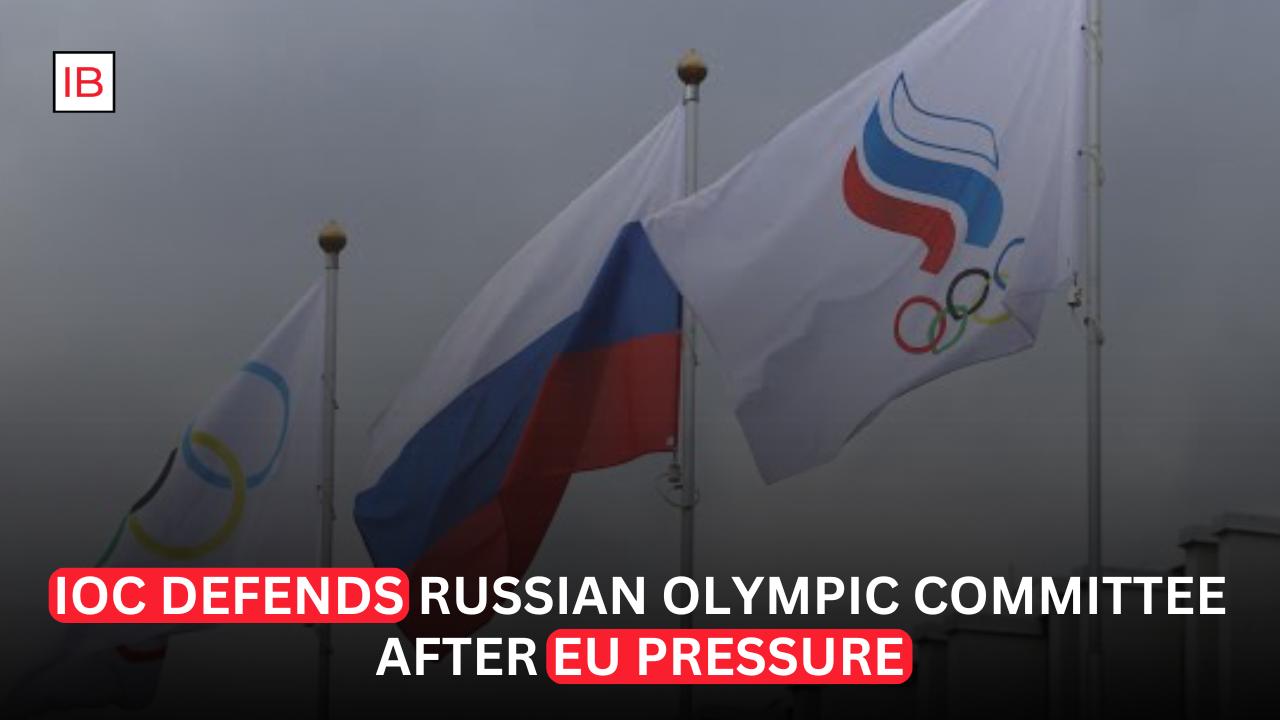
Olympic Body Says Provisional Decision Does Not Signal Full Return of Russia to International Sport
The International Olympic Committee (IOC) has defended its decision to provisionally reinstate the Russian Olympic Committee (ROC) after nine European Union member states urged the European Commission to suspend funding for international sports organizations that have allowed Russian and Belarusian athletes to return to competition.
The dispute highlights the continuing divisions within the international sporting community over Russia’s participation following the invasion of Ukraine. While several European governments argue that restrictions should remain in place, the IOC maintains that its recent decision is limited in scope and should not be interpreted as a broader policy shift.
Nine EU Countries Oppose the Decision
The joint appeal was submitted by Estonia, Denmark, Finland, Latvia, Lithuania, the Netherlands, Poland, Romania, and Sweden.
The countries called on the European Commission to:
- Suspend EU funding for sports organizations that allow Russian and Belarusian athletes to compete.
- Reassess financial support for international sporting bodies.
- Maintain pressure on Russia through sporting sanctions.
- Continue supporting Ukrainian athletes affected by the war.
The request targets organizations including the IOC, World Aquatics, and the International Fencing Federation.
IOC Explains Its Position
The IOC said the reinstatement of the Russian Olympic Committee is provisional and followed changes made by the ROC after the suspension imposed in October 2023.
According to the IOC:
- The decision does not represent a full normalization of relations.
- Russia remains unable to host Olympic events.
- Russian officials are still not invited to IOC events.
- No decision has been made regarding the Russian flag, anthem, or official representation at future Olympic Games.
The organization stressed that the move was based on compliance with specific administrative requirements rather than political considerations.
Why the ROC Was Suspended
The IOC suspended the Russian Olympic Committee in October 2023 after it incorporated regional sports organizations from Ukrainian territories occupied by Russia into its structure.
Following the removal of those organizations from the ROC, the IOC said the conditions that led to the suspension had changed, allowing for a provisional reinstatement.
Ongoing Debate Over Russian Athletes
The participation of Russian and Belarusian athletes continues to divide governments and sports organizations.
Supporters of reinstatement argue that:
- Individual athletes should not automatically be punished for government actions.
- Eligible competitors should be allowed to participate under strict neutrality rules.
- Sport should remain separate from politics where possible.
Opponents contend that:
- Allowing Russian athletes back undermines international pressure over the war.
- Ukrainian athletes continue to face extraordinary challenges.
- Sporting sanctions should remain until the conflict is resolved.
Olympic Charter Updated
The IOC also announced revisions to its Olympic Charter emphasizing that Olympians should:
- Promote peace.
- Serve as positive role models.
- Uphold the values of the Olympic Movement.
- Respect the principles of international sport.
The organization said these changes reinforce the broader mission of the Olympic Games while maintaining neutrality in political disputes.
Looking Ahead
The IOC’s defense of the provisional reinstatement of the Russian Olympic Committee underscores the ongoing tension between sporting governance and international politics. While the committee insists the decision is administrative rather than political, opposition from several EU governments shows that Russia’s return to international sport remains highly controversial.
As preparations continue for future Olympic competitions, the debate over Russian and Belarusian participation is expected to remain a significant issue, with governments, sports federations, and athletes continuing to hold sharply differing views on the balance between sporting inclusion and geopolitical accountability.