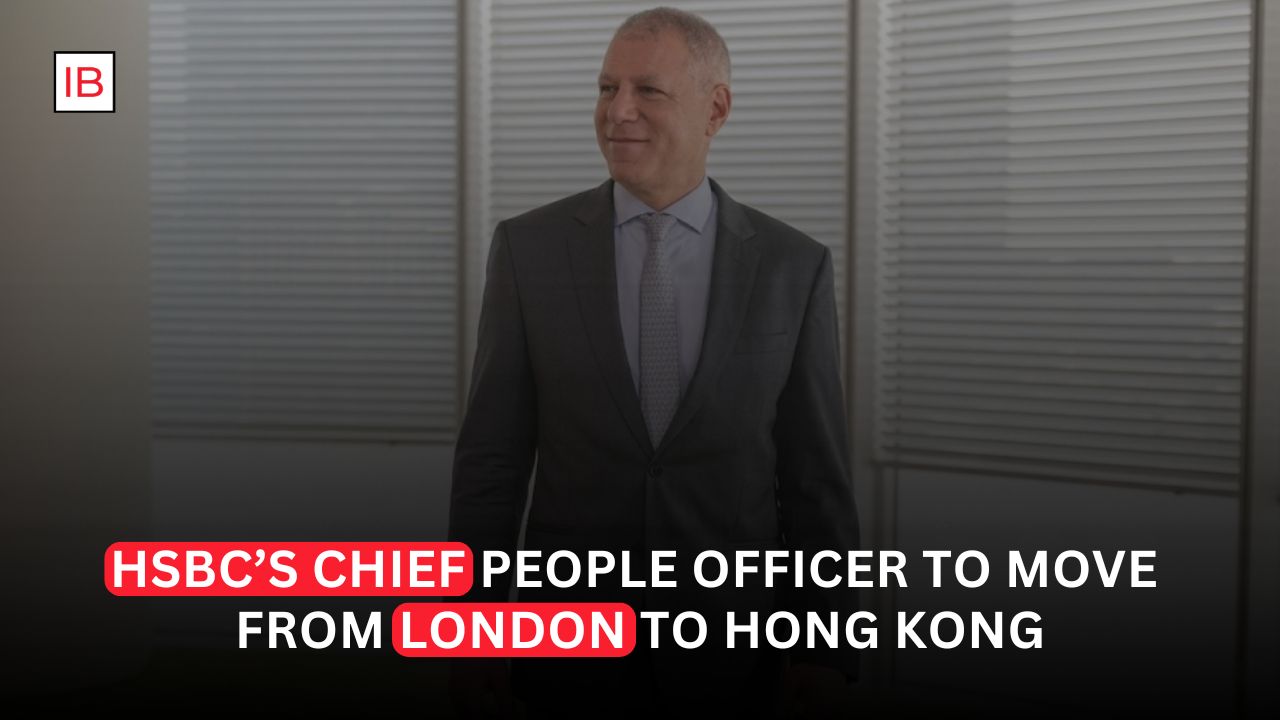
HSBC is set to relocate its Group Chief People and Governance Officer, Aileen Taylor, from London to Hong Kong, marking the latest step in the bank’s ongoing effort to shift senior leadership closer to Asia, its most important profit engine.
Another Move in HSBC’s Asia Pivot
The relocation adds Taylor to a growing list of senior HSBC executives who have based themselves in Hong Kong in recent years, as the London-headquartered bank continues reorienting toward the region that now generates the bulk of its earnings. Taylor, appointed Group Chief People and Governance Officer in October 2024 after previously serving as the bank’s Group Company Secretary and Chief Governance Officer, oversees a team of more than 3,340 employees and holds broad responsibility for shaping workforce strategy across HSBC’s roughly 210,000 employees worldwide.
Her move follows a similar pattern set by Group CEO Georges Elhedery, who relocated temporarily to Hong Kong earlier in 2026 to cut down on frequent long-haul travel between London and Asia. Elhedery, who has led HSBC since 2024, has spent extended stretches in the city, both to reduce flights and to more directly support the bank’s push to reclaim market share in Hong Kong’s competitive investment banking and wealth management sectors.
A Bank Repeatedly Reshaped by Its Asia Strategy
HSBC’s tilt toward Asia is not new, but it has accelerated markedly under Elhedery’s leadership. Since taking the helm, he has pushed for a more rigorous, high-performance culture at the bank, alongside a restructuring of its investment banking operations that triggered a wave of senior departures. At the same time, HSBC has been aggressively hiring investment bankers in China, poaching talent from rivals including JPMorgan Chase and Goldman Sachs, to capitalize on Hong Kong’s booming IPO market.
The bank is reportedly working on roughly 40 IPOs in Hong Kong this year, up sharply from just five in all of 2025, as a wave of technology and biotech listings pushes the city toward raising more than $43 billion in new capital in 2026. That surge has intensified competition among global and domestic banks for advisory fees, giving HSBC further incentive to keep its top leadership close to the action.
Why Leadership Presence in Hong Kong Matters
For a bank that generates most of its profits in Asia, having senior executives physically present in the region carries real strategic weight. Face time with major clients — ranging from private equity firms to hedge funds — has become an increasingly important part of HSBC’s efforts to win back business and reassure key accounts. Elhedery himself has sent personalized video messages to key clients across Greater China and encouraged his executive team to engage directly with hundreds of the bank’s most important customers.
HSBC’s pivot also comes at a pivotal moment, as it works to integrate its roughly $14 billion acquisition of Hang Seng Bank, one of the largest deals in its recent history. Having top leadership based in or near Hong Kong is expected to help smooth that integration while reinforcing the message that Asia remains central to HSBC’s long-term strategy.
A Pattern That Predates This Move
HSBC’s westward-to-eastward leadership shifts have played out in phases over the past several years. Following a 2021 restructuring, the bank relocated several top executives — including those overseeing global banking and markets, wealth and personal banking, and commercial banking — to Hong Kong, placing businesses responsible for most of the bank’s revenue under leadership based in the city. British regulators have generally required certain senior bank officials to remain UK-based, though exceptions have been made as HSBC continues leaning into its historical roots in the region.
What It Signals Going Forward
Taylor’s relocation reinforces a message HSBC has been sending for years: even as the bank remains headquartered and listed in London, its future growth, talent strategy, and competitive positioning increasingly depend on decisions made and relationships built in Asia. With HSBC’s leadership ranks continuing to shift eastward, further moves of this kind seem likely as the bank works to defend and expand its position in one of the world’s fastest-growing financial hubs.