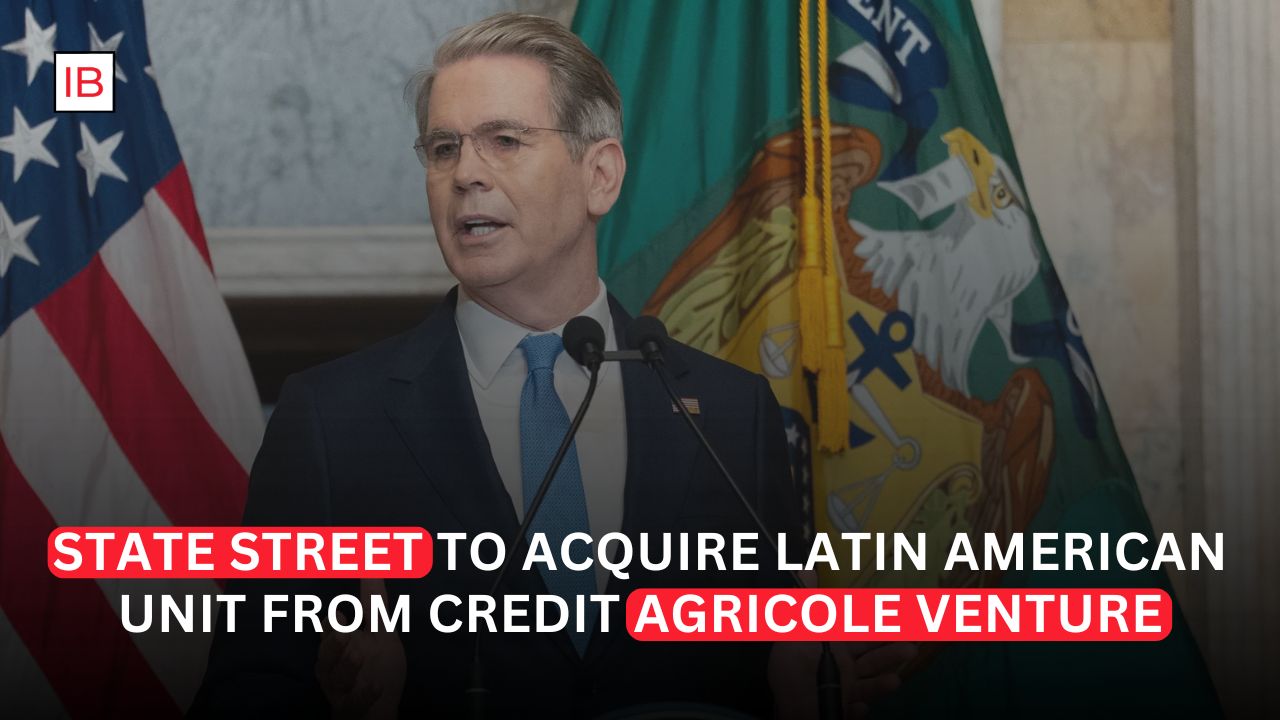
Custody Bank Agrees to Buy Latin American Operations from Santander-CACEIS Venture to Strengthen Regional Growth
State Street Corporation has agreed to acquire the Latin American asset servicing business operated by the Santander-CACEIS partnership, significantly expanding the U.S. custody bank’s presence across one of the world’s fastest-growing financial markets. The transaction marks another major step in State Street’s long-term strategy to strengthen its global investment servicing network while increasing support for institutional investors operating throughout Latin America. The acquisition reflects growing competition among global custody banks to expand their reach as international investment flows continue increasing across emerging markets.
The business being acquired provides custody, fund administration, and related asset servicing solutions for institutional clients across several Latin American countries. By integrating these operations into its global platform, State Street aims to enhance services for existing customers while creating new opportunities to support investment managers, pension funds, insurance companies, and other financial institutions throughout the region.
Strengthening Latin American Operations
The acquisition significantly increases State Street’s regional footprint.
The expanded platform will strengthen services in markets including:
- Brazil.
- Mexico.
- Colombia.
- Other key Latin American financial centers.
Latin America continues attracting greater international investment as pension assets expand, capital markets deepen, and institutional investment becomes increasingly sophisticated.
Expanding Global Custody Network
State Street is one of the world’s largest providers of investment servicing.
Its core businesses include:
- Global custody.
- Fund administration.
- Asset servicing.
- Investment accounting.
- Data and analytics.
The company safeguards trillions of dollars in client assets worldwide while supporting institutional investors through increasingly complex regulatory and operational environments.
Adding the Latin American business strengthens State Street’s ability to offer seamless cross-border services to multinational asset managers and financial institutions.
Why Latin America Matters
Institutional investment across Latin America has grown steadily in recent years.
Several trends continue supporting demand:
- Expanding pension systems.
- Rising wealth management assets.
- Growing cross-border investment.
- Modernizing financial markets.
- Increased foreign investor participation.
These developments have created attractive long-term opportunities for global asset servicing providers.
Santander and CACEIS Continue Strategic Partnership
The transaction follows broader changes involving CACEIS, the European asset servicing company.
After Crédit Agricole acquired Santander’s ownership stake in CACEIS, the two financial groups agreed to continue cooperating through selected long-term partnerships while restructuring parts of their international operations. The sale of the Latin American asset servicing business represents part of this broader strategic realignment.
Clients Expected to Benefit
State Street expects the acquisition to enhance client services by providing:
- Broader regional coverage.
- Expanded technology capabilities.
- Greater operational scale.
- Improved regulatory support.
- Enhanced investment servicing solutions.
Institutional investors increasingly prefer providers capable of delivering integrated global services while maintaining strong local expertise.
Industry Consolidation Continues
The acquisition reflects ongoing consolidation within the global custody and asset servicing industry.
Major financial institutions continue pursuing acquisitions to:
- Increase operating efficiency.
- Expand geographic coverage.
- Improve technology platforms.
- Achieve greater economies of scale.
- Better serve multinational clients.
Growing regulatory complexity and increasing client expectations have encouraged firms to build larger, more diversified global businesses.
Technology Remains a Competitive Advantage
Digital transformation continues reshaping investment servicing.
State Street has invested heavily in:
- Cloud technology.
- Artificial intelligence.
- Data analytics.
- Automation.
- Digital asset infrastructure.
Combining these capabilities with an expanded Latin American presence may improve operational efficiency while offering clients more advanced investment management tools.
Regulatory Approvals Still Required
Like most international financial transactions, the acquisition remains subject to customary regulatory approvals.
Authorities in multiple jurisdictions are expected to review the deal before completion.
Following approval, State Street plans to integrate employees, technology platforms, and customer relationships while maintaining uninterrupted service for existing clients.
Looking Ahead
State Street’s acquisition of the Latin American asset servicing business from the Santander-CACEIS partnership underscores the growing importance of emerging markets within the global financial industry. As institutional investment across Latin America continues expanding, demand for sophisticated custody, fund administration, and investment servicing solutions is expected to rise. The transaction positions State Street to benefit from these long-term trends while strengthening its competitive position against other global custody providers.
For institutional investors, the combination offers the potential for broader regional coverage supported by one of the world’s largest investment servicing organizations. As financial markets become increasingly interconnected and technology continues transforming asset management, acquisitions such as this illustrate how global financial institutions are investing in scale, digital capabilities, and geographic expansion to meet the evolving needs of international clients. The deal also highlights the continued consolidation occurring across the custody banking industry as firms seek stronger competitive positions in high-growth regions.