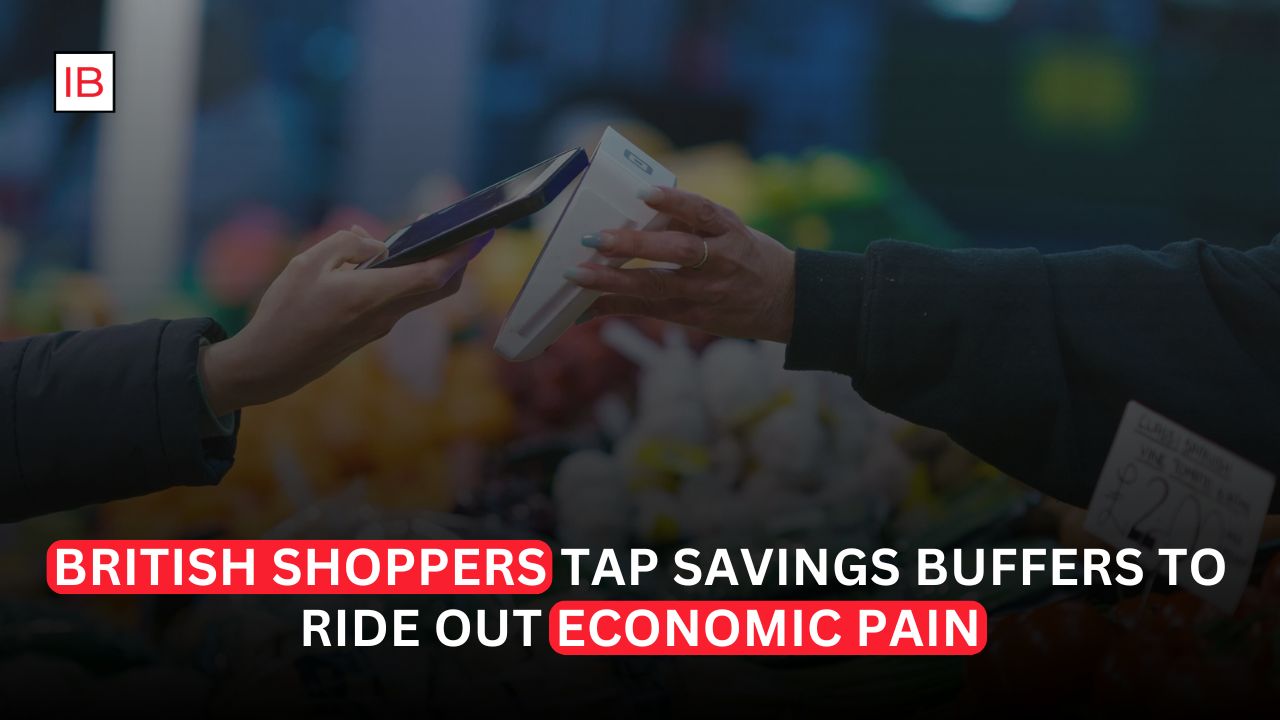
British households are increasingly leaning on savings cushions rather than credit to absorb the shock of rising living costs, as the fallout from the Iran war and persistent inflation pressures reshape how consumers across the country manage their money.
A Notable Shift in Household Behavior
Rather than reaching for credit cards or cutting spending indiscriminately, UK consumers have responded to this year’s economic turbulence with a more deliberate, defensive strategy: building up savings buffers while trimming discretionary purchases. Data from the Office for National Statistics shows the household saving ratio climbed to 10.7% in the second quarter, an increase of 0.2 percentage points, reflecting a growing share of disposable income being set aside rather than spent. Surveys echo that shift in mindset, with roughly 44% of consumers saying they want to save more going forward and around 39% indicating they need to be more careful with money given the current economic climate.
The Middle East Conflict’s Ripple Effect
Much of this year’s consumer caution traces directly back to the widening economic fallout from the Iran war, which has driven up fuel prices, stoked inflation fears, and rattled household confidence since fighting began in February. Petrol prices climbed roughly 50% at points during the conflict, while the UK’s GfK Consumer Confidence Index sank to some of its lowest readings in nearly a year, with assessments of the broader economic outlook deteriorating sharply even as views of personal finances held comparatively steadier.
Barclays data captured this shift concretely, with credit and debit card spending falling for the first time since late 2024 as households pulled back on hotels, travel, and other discretionary categories. Barclaycard spending on travel alone dropped by 5.7% year-on-year, while separate retail data showed a marked decline in store spending, distorted only partly by seasonal factors like the timing of Easter.
Households Choosing Differently, Not Uniformly
Rather than simply cutting spending across the board, households appear to be making more deliberate tradeoffs about where and how they allocate their money. According to Barclays’ spending data covering the first half of 2026, some consumers have delayed major purchases entirely, others have prioritized building savings buffers, and many have swapped overseas holidays for domestic trips instead. At the same time, spending on smaller pleasures — streaming subscriptions, beauty products, and entertainment — has held up relatively well, suggesting households are being selective about where to cut back rather than retreating from spending altogether.
A Widening Gap Between Prepared and Vulnerable Households
Beneath these aggregate trends lies a growing divide between financially resilient households and those living paycheck to paycheck. Equifax UK’s analysis has highlighted a stark 13,000-pound gap between what UK consumers say they’d need for a comfortable savings cushion and what they actually have set aside. Average unpaid utility bill balances have also crept up, reaching roughly 600 pounds in 2025, nearly double the 350-pound figure recorded back in 2020, pointing to real financial strain among households without the buffers to absorb rising costs.
Mortgage borrowers have adapted in their own ways as well, with nearly 300,000 people switching to interest-only products or extending their mortgage terms between mid-2023 and late 2025 as a coping mechanism against persistently elevated interest rates. Separately, mortgage lending itself rebounded by close to 15% in 2025 compared with the prior year, even as a growing share of new loans, now around 11%, stretched beyond 35-year terms as borrowers sought ways to manage monthly repayments.
What Comes Next for the Bank of England
The shift toward precautionary saving carries direct implications for UK monetary policy. Economists have noted that households delaying big purchases and building savings buffers in response to Middle East-driven shocks points toward continued muted economic activity in the months ahead. With interest rate decisions looming, the Bank of England faces a delicate balancing act between containing inflation stoked by the conflict and avoiding policies that squeeze already-cautious consumers even further.
Looking Ahead
With energy price caps expected to rise significantly later this year and cost-of-living pressures showing few signs of easing, the coming months will likely test whether British households can sustain this cautious, buffer-building approach or whether prolonged uncertainty ultimately forces a more painful adjustment. For now, the shift toward saving over spending reflects a population trying to prepare for continued turbulence rather than waiting to be caught off guard by it.