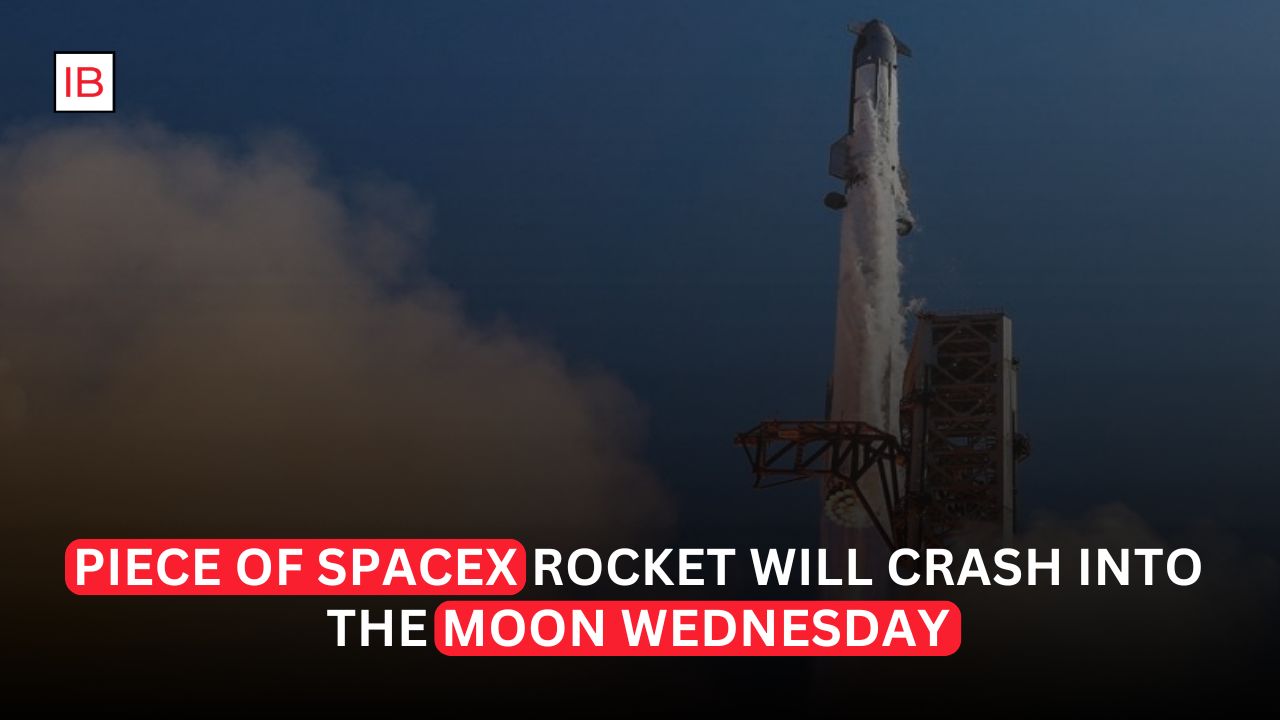
A discarded piece of a SpaceX Falcon 9 rocket, floating aimlessly in space since early last year, is on track to slam into the moon at high speed in the early hours of Wednesday morning, carving out a fresh crater in an unintentional but scientifically interesting collision.
The Details of the Impact
The object is the second, or upper, stage of a Falcon 9 rocket that launched on January 15, 2025, carrying two robotic lunar landers, including one from Firefly Aerospace, toward the moon. Weighing roughly four metric tons and about the size of a school bus, the rocket body is expected to strike the lunar surface at approximately 2:34 to 2:35 a.m. ET Wednesday, traveling at around 5,400 miles per hour, roughly seven times the speed of sound. The impact is expected to occur near Einstein Crater on the moon’s western limb, a region on the sunlit side of the moon that is nonetheless difficult to observe from Earth.
Space tracking expert Bill Gray, who runs the software project Project Pluto and has been monitoring the object since first calculating its impending collision, co-authored a study on the impact with an international team of researchers, though that paper has not yet been peer-reviewed. SpaceX has confirmed the impact is unintentional.
Why the Rocket Stage Was Still Out There
Typically, the upper stages of rockets like the Falcon 9 either burn up upon reentry into Earth’s atmosphere or fall into the ocean once they finish boosting a payload to its intended orbit. In this case, the January 2025 lunar lander mission required significantly more thrust than missions bound for orbits closer to Earth, leaving the rocket’s second stage stranded in space rather than returning to Earth. Since then, it has drifted for well over a year alongside thousands of other pieces of space debris that active satellites must regularly maneuver around to avoid collisions.
What Observers Might See
The collision is expected to kick up a visible plume of lunar dust and rubble, illuminated by sunlight given the impact site’s position on the moon’s sunlit side. However, that plume is expected to be too faint to see with the naked eye from Earth, meaning only telescopes and specialized observation equipment are likely to catch a glimpse of the aftermath. Skywatchers in the eastern United States and Canada, along with much of South America, are positioned for the best potential viewing opportunities given the timing and geometry of the impact.
A Chance for Scientific Study
Despite being unplanned, the impact offers researchers a genuine opportunity to gather data. Because meteoroids and other natural objects that strike the moon typically offer little to no advance warning, well-tracked, human-made impacts like this one give scientists a rare chance to study impact dynamics and seismic effects under known conditions. NASA has intentionally used this technique before, deliberately crashing spent rocket stages from its Saturn V program into the moon during the Apollo era specifically to study the resulting seismic effects, and later crashing its LCROSS spacecraft and an upper stage near the lunar south pole in 2009 while searching for signs of ice.
A Growing Space Debris Problem
While experts say this particular piece of space junk poses no real cause for concern, they note the incident highlights a broader and growing challenge: an increasingly crowded orbital environment as more satellites, rocket components, and other hardware accumulate in space. Gray, who plans to observe the impact’s aftermath from New Brunswick, Canada, has noted that space is simply getting more crowded, a dynamic that experts say could have been avoided in this specific case had the rocket’s upper stage been nudged into a solar orbit instead of left to drift toward an eventual lunar collision.
Why It Matters for Future Lunar Missions
The incident carries added significance given NASA’s plans to establish a permanent lunar base and begin sending routine astronaut missions to the moon’s surface later this decade under its multibillion-dollar Artemis program. NASA and SpaceX are reportedly already in discussions over how to prevent similar unintentional lunar impacts in the future, given that neither agency would want stray pieces of space debris threatening future lunar infrastructure, equipment, or astronauts once permanent operations on the moon’s surface are underway.
What Comes Next
With the impact expected in the early hours of Wednesday morning, scientists and space debris trackers will be watching closely for any observational data the collision generates, even as the event itself serves as a reminder of the mounting challenge of managing debris both in Earth’s orbit and increasingly around the moon. As lunar exploration accelerates in the years ahead, incidents like this one are likely to add urgency to ongoing efforts to improve space traffic coordination before more ambitious, and more crowded, lunar missions get underway.