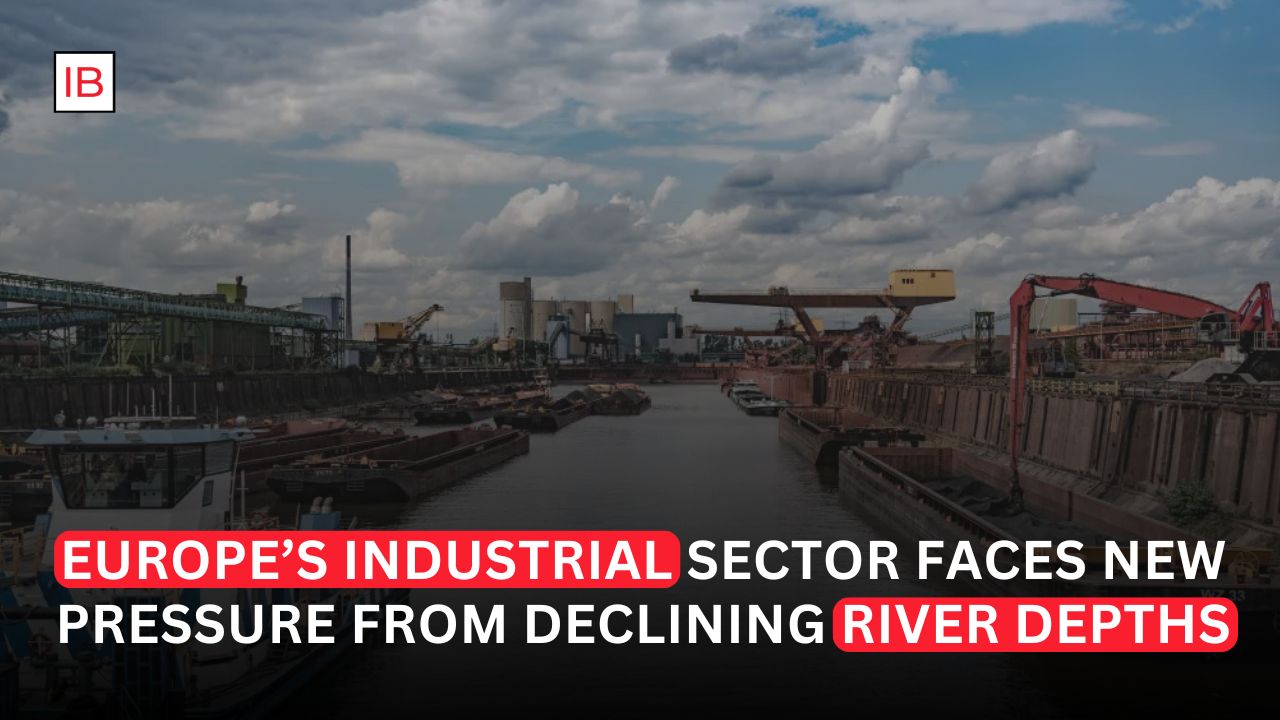
Low Water Levels Disrupt Shipping, Energy Production, and Manufacturing Across the Continent
Europe’s two most important commercial waterways—the Rhine and Danube rivers—are experiencing severe drought conditions that are disrupting industrial production, transportation, and energy generation across the continent. Following months of extreme heat and exceptionally low rainfall, water levels on both rivers have fallen to historic lows, forcing cargo vessels to reduce loads, increasing freight costs, interrupting factory supply chains, and placing additional pressure on already strained energy systems.
The worsening drought highlights how climate-related events are becoming an increasingly significant economic challenge for Europe. Industries that depend on reliable inland waterways for transporting raw materials, chemicals, fuel, agricultural products, and manufactured goods now face rising operating costs and growing logistical uncertainty. Governments, businesses, and energy companies are responding with emergency measures while economists warn that prolonged low water levels could slow industrial output and weaken economic growth across several European countries.
Rhine River Faces Major Shipping Disruptions
The Rhine River serves as one of Europe’s busiest commercial transport corridors.
It connects major industrial regions across:
- Germany.
- Switzerland.
- France.
- Netherlands.
The river carries enormous volumes of:
- Chemicals.
- Coal.
- Iron ore.
- Petroleum products.
- Industrial materials.
- Agricultural goods.
Because water levels have dropped dramatically, cargo vessels can no longer operate at normal capacity.
Many ships now transport only a fraction of their usual loads to avoid running aground, forcing companies to schedule additional trips while significantly increasing transportation costs. Analysts estimate persistently low Rhine water levels could reduce Germany’s economic output during the current quarter by disrupting industrial supply chains.
Danube Water Levels Also Reach Critical Levels
Conditions along the Danube River have become equally concerning.
Several countries, including:
- Hungary.
- Romania.
- Serbia.
have experienced historically low water levels.
The Danube supports:
- Cargo transportation.
- Agriculture.
- Drinking water.
- Hydroelectric power.
- Nuclear power plant cooling.
Reduced river flows have complicated navigation while also creating serious challenges for electricity generation.
Energy Systems Under Pressure
One of the most significant consequences of the drought has been its impact on Europe’s energy infrastructure.
Extremely low river levels have reduced cooling water available for nuclear power plants.
In Hungary, authorities introduced emergency energy-saving measures after the country’s nuclear generation capacity was severely reduced because of insufficient cooling water from the Danube. Similar concerns emerged in neighboring Romania, where low river levels also affected nuclear operations.
Lower water availability has also reduced hydroelectric generation in several regions, increasing dependence on alternative energy sources during one of Europe’s hottest summers.
Manufacturing Faces Rising Costs
Europe’s industrial sector relies heavily on river transport because moving bulk commodities by barge remains significantly cheaper than rail or trucking.
Industries affected include:
- Steel production.
- Chemical manufacturing.
- Automotive suppliers.
- Energy companies.
As shipping capacity declines, manufacturers must either:
- Pay substantially higher freight rates.
- Shift cargo to rail.
- Delay deliveries.
- Reduce production.
Several companies have already adjusted operations because critical raw materials cannot be delivered efficiently through traditional river transport networks.
Agriculture Suffers Alongside Industry
The drought is also reducing agricultural productivity across large parts of Europe.
Lower rainfall combined with prolonged heat has increased stress on crops while reducing irrigation water availability.
Farmers continue facing:
- Lower crop yields.
- Water restrictions.
- Higher irrigation costs.
- Livestock pressure.
These conditions increase the risk of higher food prices later in the year if harvests remain below expectations.
Freight Costs Continue Rising
Restricted navigation has sharply increased shipping costs.
Because barges carry much smaller loads under shallow-water conditions:
- More vessels are required.
- Fuel costs rise.
- Delivery times increase.
- Supply chains become less efficient.
The Rhine normally represents one of Europe’s lowest-cost transportation routes for heavy industrial cargo, making disruptions particularly expensive for manufacturers.
Climate Change Intensifies Risks
Scientists increasingly warn that prolonged droughts are becoming more frequent across Europe.
Recent summers have produced:
- Record temperatures.
- Extended heatwaves.
- Lower rainfall.
- Earlier drought conditions.
Climate researchers argue these events are no longer isolated incidents but part of a broader pattern affecting Europe’s long-term economic resilience.
Governments are increasingly considering investments in:
- Water management.
- Climate adaptation.
- Transport diversification.
- Infrastructure resilience.
Looking Ahead
The continuing drought affecting the Rhine and Danube rivers demonstrates how climate-related disruptions are becoming an increasingly important economic challenge for Europe. Low water levels have already interrupted cargo transport, increased logistics costs, constrained industrial production, reduced power generation, and placed additional pressure on agricultural output. Because these rivers serve as critical arteries for Europe’s economy, prolonged disruptions could continue affecting manufacturing competitiveness, energy security, and regional economic growth throughout the coming months.
While governments and businesses are implementing emergency measures to reduce immediate impacts, the crisis also underscores the need for longer-term investment in resilient infrastructure, diversified transportation networks, and climate adaptation strategies. As extreme weather events become more frequent, Europe’s industrial economy will increasingly depend on its ability to adapt to changing environmental conditions while maintaining reliable energy, logistics, and supply chain systems.