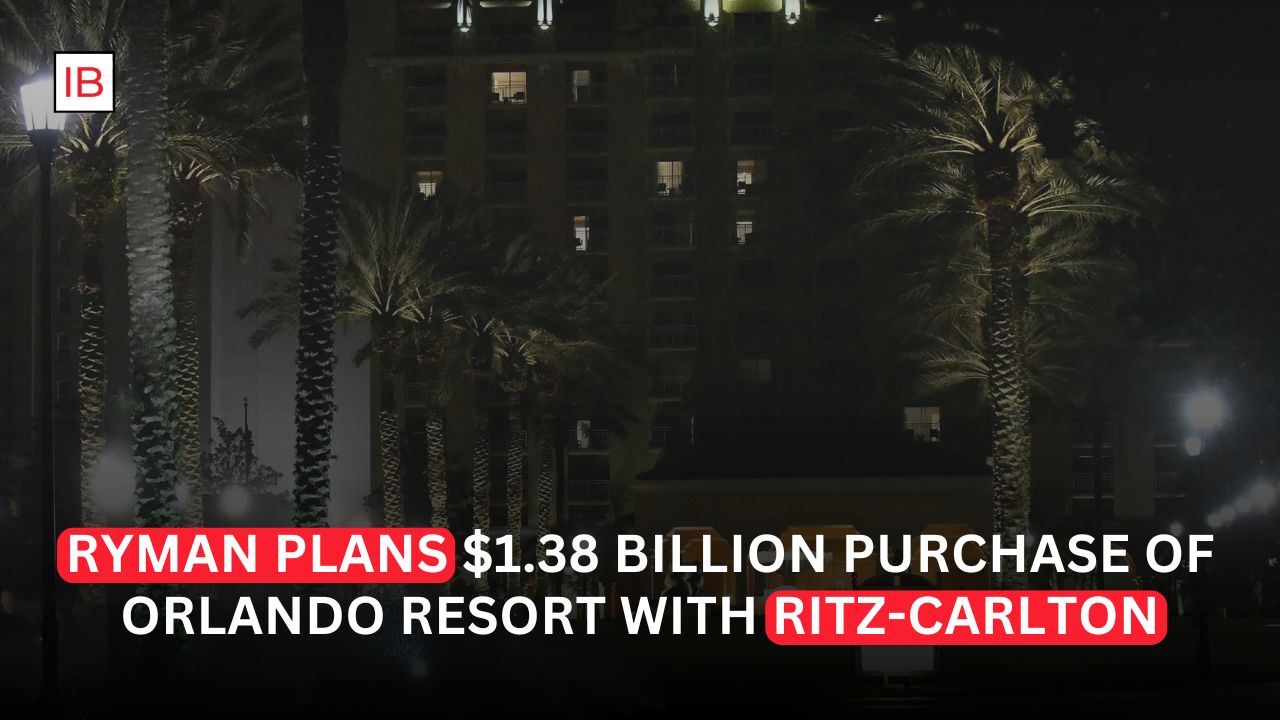
Major Hospitality Deal Expands Ryman’s Presence in Orlando’s Tourism Market
Ryman Hospitality Properties has agreed to acquire an Orlando resort featuring a Ritz-Carlton property for approximately $1.38 billion, expanding the company’s presence in one of the most important tourism and hospitality markets in the United States.
The transaction reflects continued investor interest in large-scale destination resorts as travel demand remains an important driver of the US hospitality industry.
Orlando is one of the world’s best-known tourism destinations, attracting millions of visitors each year through its theme parks, convention business and broader leisure market.
A Major Hospitality Investment
The $1.38 billion price tag makes the acquisition a significant investment for Ryman.
The company operates a portfolio of hotels, resorts and entertainment-focused properties, with a strategy centered on large destinations that can generate revenue from rooms, meetings, events, food and entertainment.
Adding another major Orlando resort would strengthen that strategy.
Why Orlando Matters
Orlando’s hospitality market benefits from several sources of demand.
Tourists visit the region for its major attractions, while businesses and organizations generate demand through conferences, conventions and corporate events.
The city also benefits from a large international visitor base.
That combination creates a diversified hospitality market that can support large destination properties.
Ritz-Carlton Adds Premium Positioning
The Ritz-Carlton brand is associated with the luxury segment of the hotel industry.
A property carrying the brand can attract higher-spending travelers and provide access to premium pricing.
For Ryman, acquiring a resort connected to a globally recognized luxury hotel brand could complement its existing hospitality portfolio.
Luxury properties can also benefit from strong demand for high-end travel experiences.
Resort Economics Extend Beyond Hotel Rooms
Large resorts generate revenue from more than overnight accommodations.
They can also earn money through:
- Restaurants.
- Bars.
- Conferences.
- Weddings.
- Entertainment.
- Recreational facilities.
- Events.
- Retail.
- Meeting spaces.
This creates multiple revenue streams and allows resort operators to benefit from visitors throughout their stay.
Tourism Remains a Powerful Economic Driver
The acquisition comes as the US travel industry continues adapting to changing consumer preferences.
Travelers increasingly seek experiences rather than simply accommodation.
Large destination resorts can benefit from that trend by combining hotels, dining, entertainment and other activities in one location.
Orlando is particularly well positioned because of its concentration of attractions and established tourism infrastructure.
Competition in Orlando Is Intense
The market also presents challenges.
Orlando has a large number of hotels and resorts competing for visitors.
Operators must constantly invest in their properties to maintain their appeal.
Rising labor, maintenance and operating costs can also affect profitability.
The success of the acquisition will therefore depend on Ryman’s ability to maintain strong occupancy, pricing and spending per guest.
Scale Could Provide Advantages
A larger presence in Orlando could give Ryman greater scale in one of the country’s most important hospitality markets.
The company may be able to share operational expertise across its properties while strengthening relationships with corporate clients and event organizers.
Greater scale can also help hospitality companies manage marketing and distribution costs.
Financing Will Matter
A transaction of this size can also affect a company’s balance sheet.
Investors will closely examine how Ryman finances the acquisition and how the deal affects debt levels, interest expenses and future cash flow.
The expected performance of the resort will ultimately determine whether the investment generates attractive returns.
Long-Term Growth Strategy
Ryman’s acquisition reflects a broader trend among hospitality companies seeking high-quality destination properties.
Large resorts can provide long-term growth opportunities because they generate revenue from multiple customer segments.
If tourism and convention demand continue expanding, the Orlando property could become an important contributor to Ryman’s earnings.
Looking Ahead
Ryman’s planned $1.38 billion acquisition of the Orlando Ritz-Carlton resort represents a major expansion of its hospitality footprint.
The deal gives the company exposure to one of the world’s largest tourism markets while adding a premium luxury property to its portfolio.
Investors will now focus on the financial details of the transaction, including financing, expected cash flow and the resort’s ability to generate strong returns.
The acquisition also highlights the continued importance of Orlando to the US hospitality industry.
With tourism, conventions and luxury travel all supporting demand, major destination resorts remain valuable assets for companies seeking long-term growth in the hotel and entertainment sector.