A Weakening Entry-Level Job Market Is Hitting Young Workers Across Education Levels as Employers Become More Selective and AI Reshapes Hiring
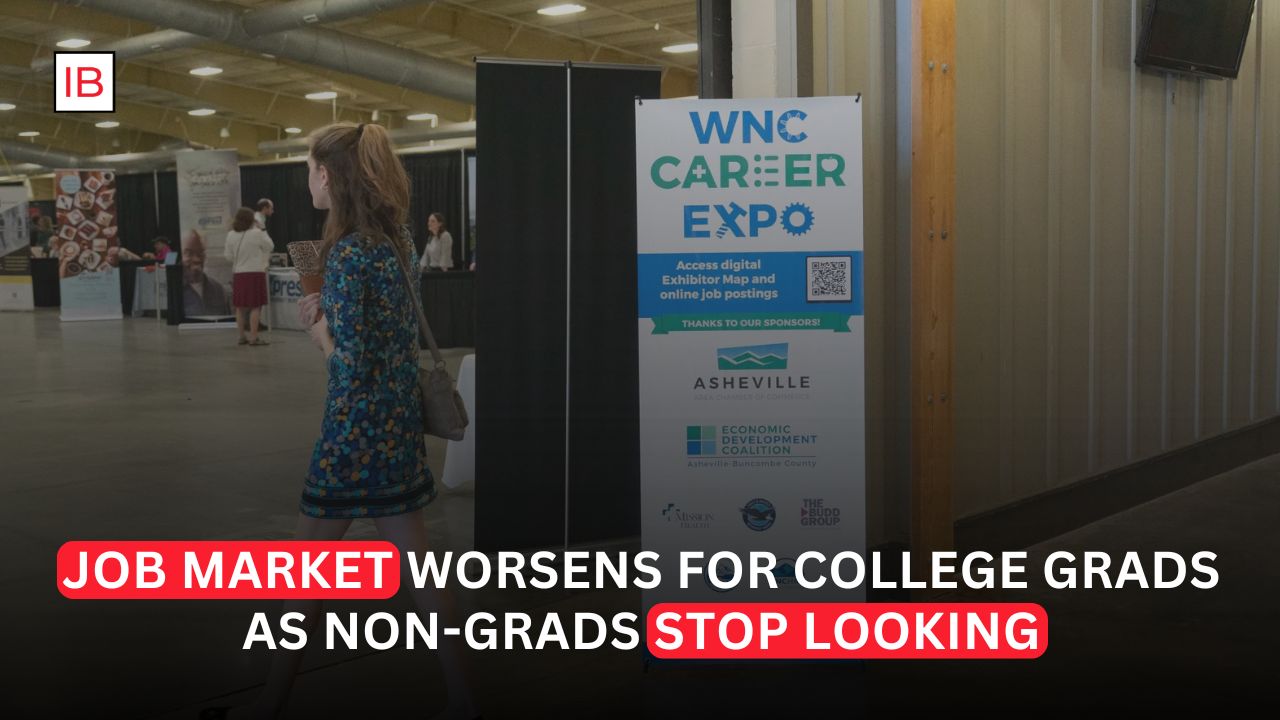
The US labor market is becoming increasingly difficult for young Graduates , with recent college graduates struggling to secure jobs while workers without degrees are facing an even more difficult choice: continue searching for work or leave the labor force altogether.
The deterioration is particularly concerning because young workers typically rely on their first jobs to establish careers, build experience and begin paying down education and other expenses. When those opportunities disappear, the consequences can extend far beyond a single period of unemployment.
Recent data and labor-market research show that the weakness is affecting workers with and without college degrees, although the problems look different for each group. The OECD’s 2026 Employment Outlook found that young college graduates have experienced a rising unemployment gap relative to the overall working-age population, while young non-college workers in the US have also become increasingly exposed to unemployment.
College Degree No Longer Guarantees an Easy Start
For generations, earning a college degree was viewed as one of the most reliable ways to enter the professional workforce.
That advantage has not disappeared, but the transition from graduation to a career has become considerably more difficult.
Young graduates are encountering fewer entry-level opportunities, longer hiring processes and employers demanding experience for positions that historically served as starting points for new workers.
Indeed data has shown increasing numbers of new graduates creating profiles and searching for work, suggesting that many are struggling to move from education into employment.
The problem is particularly visible among graduates seeking positions in technology and other professional industries where companies have become more cautious about hiring junior employees.
Employers Are Becoming More Selective
One major factor behind the difficult environment is the changing behavior of employers.
Companies that previously hired large numbers of junior workers have increasingly focused on candidates who can contribute immediately.
That has created what labor-market analysts describe as “experience creep” — employers asking for more previous experience even for jobs that traditionally would have been considered entry-level.
For recent graduates, that creates a frustrating cycle.
They need experience to get a job, but they need a job to obtain the experience employers are demanding.
The problem is especially severe when companies reduce hiring while continuing to receive large numbers of applications.
AI Adds Another Layer of Uncertainty
Artificial intelligence is also changing the entry-level employment landscape.
Companies are increasingly using AI tools to automate routine tasks involving coding, research, writing, customer support and data analysis.
That does not necessarily mean AI is directly eliminating all entry-level jobs.
The OECD has said evidence linking generative AI directly to young people’s employment difficulties remains mixed, suggesting that broader economic and labor-market forces are also important.
However, AI can still affect hiring decisions.
If a company believes a smaller number of experienced employees can accomplish work previously assigned to larger teams of junior workers, it may have less incentive to recruit recent graduates.
That can make the first step into a career particularly difficult.
Non-Graduates Face an Even Harder Problem
Workers without college degrees are facing a different but related challenge.
For people without a bachelor’s degree, many traditional entry-level jobs have become less reliable sources of stable employment.
Manufacturing, retail, administrative work and other sectors have experienced technological changes, restructuring and shifts in consumer demand.
Some workers have responded by reducing their job searches or leaving the labor force altogether.
The OECD’s latest employment data shows that young non-college workers in the United States have seen a significant increase in their unemployment gap relative to the broader working-age population.
That matters because people who stop actively searching for work are no longer counted as unemployed under the standard unemployment measure.
As a result, headline unemployment figures can sometimes fail to capture the full extent of labor-market frustration.
Giving Up Can Hide the True Scale of Weakness
When workers become discouraged, they may stop applying for jobs.
Some return to school.
Others rely on family support, temporary work, gig jobs or informal employment.
Still others simply stop participating in the labor force.
That makes labor-force participation an important indicator alongside unemployment.
A worker who wants a job but has stopped looking may not appear in the unemployment statistics even though they remain economically disconnected.
For young people, extended periods outside the labor market can be particularly damaging because they lose opportunities to develop experience and professional networks.
Underemployment Is Another Major Problem
Finding a job does not necessarily mean finding a good job.
Many recent graduates are taking positions that do not require their education because they cannot secure work in their chosen fields.
This phenomenon is known as underemployment.
Historical research from the New York Federal Reserve has found that roughly one-third of college graduates work in jobs that do not require a college degree, although underemployment tends to be particularly high among people entering the labor market for the first time.
The current environment could make that transition more difficult.
A graduate may eventually find professional employment, but spending months or years in a low-skilled position can affect earnings, career progression and future opportunities.
Entry-Level Jobs Are Becoming More Important
The decline in entry-level hiring has implications beyond young workers.
Entry-level jobs are how companies develop future managers, specialists and executives.
If businesses stop hiring inexperienced workers, they may eventually face shortages of experienced employees.
That creates a potential long-term problem for the economy.
A healthy labor market needs a pipeline through which workers can gradually develop skills and move into more advanced positions.
If that pipeline weakens, workers and employers can both suffer.
College Graduates Still Have an Advantage
Despite the current difficulties, having a college degree remains valuable.
Young graduates generally have lower unemployment rates and access to a wider range of professional occupations than workers without degrees.
The problem is that the advantage may take longer to materialize.
Recent research from the Economic Policy Institute describes the labor-market situation for young graduates as weaker than in healthier periods, while also emphasizing that the experience is not uniform across all graduates.
Fields of study, location, skills and previous work experience can make a substantial difference.
That means the current labor market is not simply a story about college degrees losing their value.
It is increasingly a story about which skills employers value and how quickly graduates can demonstrate them.
The Skills Gap Is Becoming More Important
Employers are increasingly looking for candidates who can combine technical knowledge with practical skills.
Communication, data analysis, AI literacy, problem-solving and industry-specific experience can all influence hiring decisions.
For graduates, simply possessing a degree may no longer be enough to stand out among hundreds of applicants.
Internships, projects, certifications and other forms of demonstrated experience can become increasingly important.
For non-graduates, vocational training and technical certifications can similarly provide alternative routes into growing industries.
The Labor Market Is Becoming More Unequal
Another concern is that a weak entry-level market can widen economic inequality.
Workers who have financial support from their families may be able to spend months searching for the right professional position.
Others may have to accept the first job available, regardless of whether it matches their education or career goals.
That difference can influence career trajectories for years.
The longer a worker remains unemployed or underemployed, the harder it can become to catch up with peers who entered strong career tracks immediately after school.
A Difficult Environment for the Class of 2026
The situation is particularly relevant for the latest generation of graduates.
Young people entering the workforce in 2026 are facing an economy where companies are growing more cautious about hiring while technology is changing the nature of many jobs.
Reports from the current hiring market show that graduates are applying to large numbers of positions without receiving corresponding opportunities.
That can create a sense that traditional pathways into adulthood are becoming less predictable.
The issue is not simply whether young people can find a job.
It is whether they can find a job that allows them to build a sustainable career.
Businesses May Eventually Need to Reconsider Hiring
Companies may benefit from reducing junior hiring in the short term, particularly if AI allows existing employees to become more productive.
But there could be longer-term costs.
Businesses need experienced workers, and today’s entry-level employees are tomorrow’s experienced professionals.
If companies consistently avoid hiring young workers, they may weaken their own future talent pipelines.
That could eventually force employers to reconsider how they train and develop workers.
Policy and Education Face New Questions
The changing labor market also creates challenges for policymakers and educational institutions.
Universities need to ensure graduates leave with skills that employers actually value.
Governments may need to expand apprenticeships, vocational programs and other pathways into employment.
Businesses may also need incentives to create more training opportunities for people without traditional credentials.
The goal should not necessarily be to push every young person toward college.
Instead, the focus could be on creating multiple reliable routes into stable, productive careers.
Looking Ahead
The struggles facing college graduates and non-graduates reveal a deeper shift in the US labor market.
Young college graduates are discovering that a degree no longer guarantees a smooth transition into professional employment, while workers without degrees are facing a growing risk of unemployment, underemployment and labor-force withdrawal.
AI is part of the transformation, but it is not the entire explanation. The OECD’s latest analysis indicates that the evidence for AI being the primary cause of young workers’ difficulties remains limited, pointing instead to a combination of economic conditions, hiring practices and structural changes.
The biggest concern may be what happens if the weakness persists.
A generation unable to secure meaningful first jobs can accumulate less experience, earn less money and build fewer professional connections. Meanwhile, workers who give up searching altogether can become increasingly disconnected from the economy.
For employers, policymakers and educators, the challenge is therefore larger than simply reducing unemployment.
The economy needs effective pathways into work for people with degrees and without them, particularly at the beginning of their careers.
If those pathways continue to narrow, the consequences could eventually extend beyond today’s job seekers and affect the productivity, earnings and economic mobility of an entire generation.