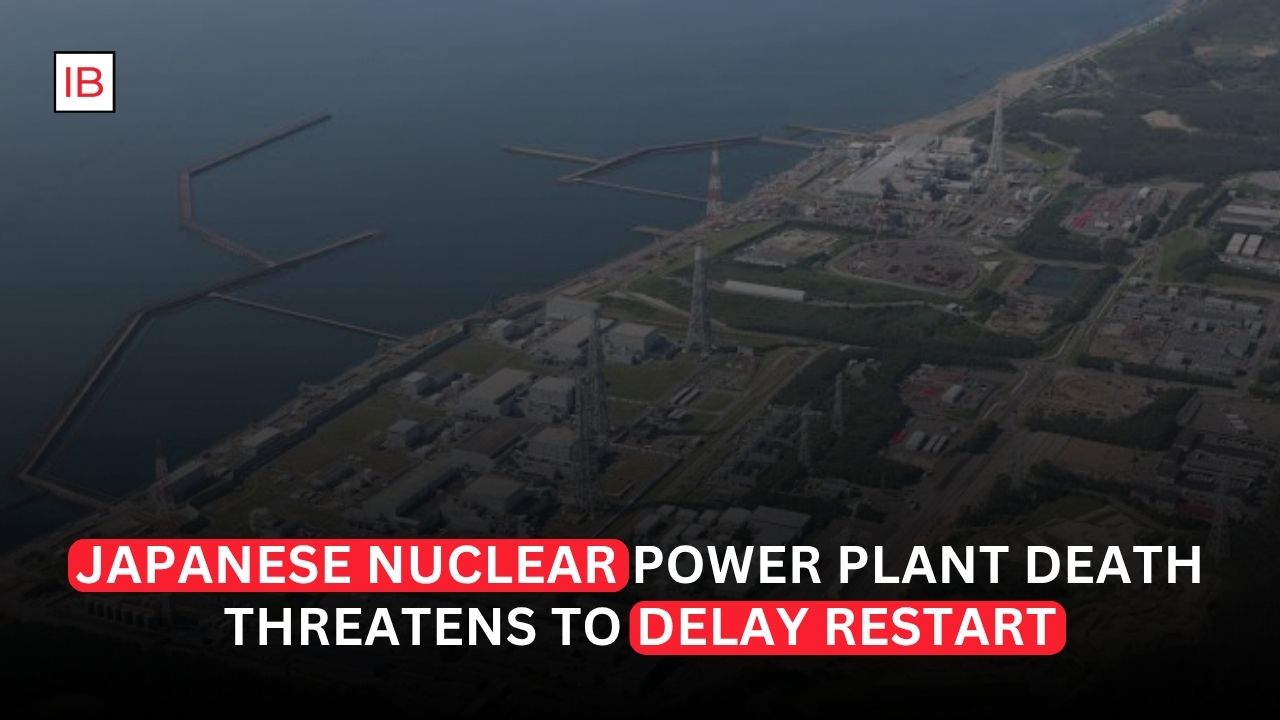
A worker’s death at Japan’s Kashiwazaki-Kariwa nuclear power plant is threatening to complicate plans to bring another reactor back online, reviving concerns about safety and operational discipline at a facility that has become a symbol of Japan’s difficult nuclear restart.
The incident comes at an especially sensitive moment for Tokyo Electric Power Company Holdings, or TEPCO. The utility is attempting to restore nuclear generation after years of shutdowns following the 2011 Fukushima disaster, with Kashiwazaki-Kariwa playing a central role in Japan’s effort to increase nuclear power production.
Kashiwazaki-Kariwa is the world’s largest nuclear power station by capacity. Its seven reactors are located in Niigata Prefecture, roughly 220 kilometers northwest of Tokyo. The facility has been offline for years, and restarting its reactors has required extensive safety upgrades, regulatory reviews and negotiations with local authorities.
The death now threatens to add another obstacle to that process. Although a workplace fatality does not necessarily indicate a nuclear safety failure or radioactive incident, it can have serious consequences for public confidence, particularly at a plant operated by the same company responsible for the Fukushima Daiichi disaster.
Japan’s nuclear industry remains extremely sensitive to safety concerns because of the legacy of Fukushima. After the 2011 earthquake and tsunami triggered meltdowns at three reactors, Japan effectively halted much of its nuclear generation. Restarting reactors has since required tougher regulatory standards, additional safety equipment and extensive local consultation.
Kashiwazaki-Kariwa has faced its own history of problems. TEPCO previously came under intense criticism over security failures and other operational shortcomings at the site. The Nuclear Regulation Authority imposed restrictions on the company after inspectors identified serious weaknesses in its ability to prevent unauthorized access to nuclear facilities.
Those issues mean that even an incident unrelated to the reactor itself can attract considerable scrutiny.
The latest death could therefore affect the timetable for restarting additional units if regulators or local officials decide that the circumstances require further investigation. Japan’s nuclear restart program depends not only on technical approvals but also on maintaining confidence among communities living near the plants.
That political dimension is particularly important in Niigata Prefecture. Local residents have long questioned whether TEPCO can be trusted to operate nuclear facilities safely after Fukushima. Authorities have demanded detailed evidence that the company has corrected weaknesses in its safety culture before allowing reactors to return to service.
The timing also matters because Japan increasingly needs nuclear power to support its energy system. The country imports most of its fossil fuels, leaving electricity costs vulnerable to movements in global oil and gas prices. Restarting nuclear reactors could reduce dependence on imported fuels and provide a more stable source of electricity.
Japan is simultaneously facing rising electricity demand from data centers, semiconductor factories and other high-energy industries. The expansion of artificial intelligence is adding another layer of demand as companies build increasingly power-intensive computing infrastructure.
That makes nuclear generation strategically valuable. Reactors can provide large quantities of electricity continuously, unlike wind and solar facilities whose output depends on weather conditions. For Japan, restarting existing nuclear capacity is therefore potentially one of the fastest ways to increase reliable low-carbon electricity generation.
But the economic argument does not eliminate the safety problem.
Kashiwazaki-Kariwa’s restart has already encountered technical difficulties. Unit 6 began its restart process in January 2026, but the operation was temporarily suspended after a malfunction involving equipment associated with the control rods. TEPCO subsequently resumed the process after investigations and additional checks.
Earlier delays also demonstrated how carefully the company and regulators are approaching the restart. In January, TEPCO postponed the planned startup after an alarm-related problem was detected during testing. The company said it needed additional time to inspect equipment before proceeding.
Those episodes have reinforced the perception that restarting a nuclear reactor after a prolonged shutdown is a complicated process in which even relatively small problems can have major consequences.
The latest fatality adds a human-safety dimension to that discussion. Nuclear plants require workers to operate in environments involving heavy machinery, electrical equipment, confined areas and potentially hazardous materials. A workplace accident does not automatically imply that a reactor is unsafe, but it can raise questions about training, supervision, working conditions and management practices.
For TEPCO, the challenge is therefore broader than simply determining whether the deceased worker’s accident was connected to reactor operations. The company will need to demonstrate that it understands what happened and that appropriate measures are being taken to prevent a recurrence.
Any investigation could also attract attention from Japanese regulators and local authorities. If officials believe the incident reflects wider shortcomings in workplace management, they could demand additional inspections or corrective measures before allowing further progress on the restart program.
The financial implications could be significant. Delays in nuclear restarts can force utilities to rely more heavily on thermal power generation, increasing fuel costs and potentially putting upward pressure on electricity prices. For Japan, where energy imports are a major component of the trade balance, every additional period of nuclear inactivity can carry an economic cost.
For investors, the situation creates a difficult balance. TEPCO and other Japanese utilities stand to benefit from returning nuclear reactors to service because nuclear generation can reduce fuel expenses and improve power supply stability. But safety incidents and regulatory delays can undermine those expected benefits.
The incident also highlights a fundamental challenge for Japan’s nuclear strategy: public confidence cannot be restored through technical upgrades alone. Communities need to believe that operators have developed a strong safety culture and that workers are protected as carefully as the reactors themselves.
That is particularly important for TEPCO, whose reputation was severely damaged by Fukushima. The company has spent years attempting to demonstrate that it has changed its approach to safety and risk management.
The latest death could therefore become more than an isolated workplace tragedy. If investigators uncover procedural or management failures, the incident could provide opponents of nuclear restarts with another reason to question TEPCO’s readiness.
Japan nevertheless has powerful reasons to continue pursuing nuclear energy. The country wants to reduce exposure to imported fossil fuels, cut carbon emissions and meet growing electricity demand from advanced industries.
The immediate question is whether those goals can be achieved without compromising safety or rushing the restart process.
For Kashiwazaki-Kariwa, the answer will depend on the investigation and the response from regulators and local authorities. Any delay would be frustrating for Japan’s energy planners, but moving too quickly could carry a much greater cost.
The death serves as a reminder that Japan’s nuclear revival is not simply an engineering project. It is also a test of corporate responsibility, worker safety and public trust. Until those concerns are convincingly addressed, the road toward a broader nuclear restart will remain vulnerable to setbacks.