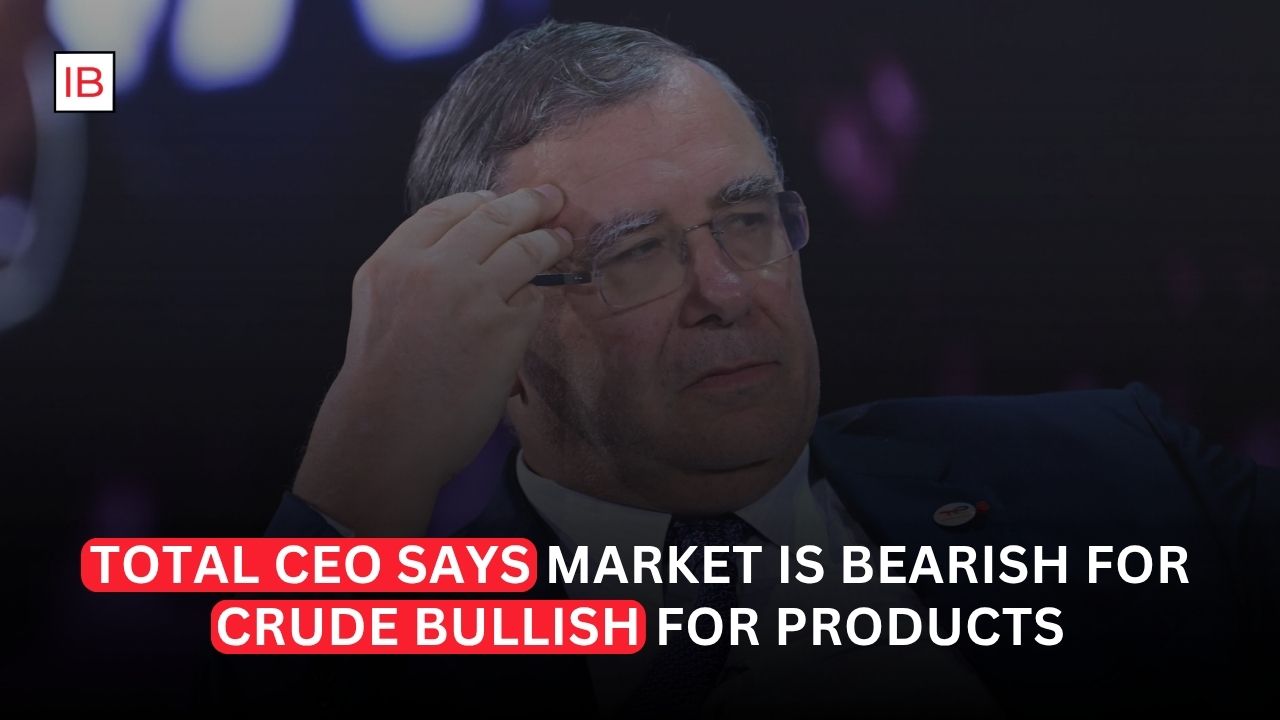
The global oil market is showing an unusual split: crude oil itself faces a bearish outlook, while refined products such as gasoline, diesel and jet fuel remain supported by tight supplies and disrupted refining capacity.
That is the central message from TotalEnergies CEO Patrick Pouyanné, who says the current market conditions are creating a very different outlook for crude and petroleum products.
The distinction is important because oil investors often treat crude prices as the main indicator of the energy market. But today’s market is increasingly being shaped by where the supply disruption occurs. Crude can be available while refined fuels remain scarce because refineries are unable to process it.
Recent market data supports that divergence. Brent and WTI have both attracted significant speculative buying, while refined-product markets have also strengthened amid disruptions in the Middle East.
Crude and Fuel Markets Are Moving in Different Directions
The basic argument is straightforward.
If there is plenty of crude available but insufficient refining capacity, crude prices can come under pressure while gasoline, diesel and jet fuel prices rise.
That creates a strange situation for the oil industry.
Producers may struggle with crude prices, while refiners can earn exceptionally strong margins.
The current market is increasingly showing those characteristics.
The disruption of energy infrastructure and shipping routes in the Middle East has reduced available refining capacity and complicated the movement of petroleum products.
That has created tightness downstream even as the outlook for crude demand becomes less convincing.
Why Refined Products Are More Bullish
Refined products are being supported by a shortage of refining capacity rather than simply a shortage of crude.
This distinction matters.
A refinery takes crude oil and converts it into products such as:
- Gasoline
- Diesel
- Jet fuel
- Marine fuel
- Petrochemical feedstocks
When refinery capacity is disrupted, crude can remain available but the world loses the ability to convert it into usable fuels.
That can cause product prices to rise rapidly.
Recent market analysis has highlighted exactly this dynamic, with European diesel prices rising sharply and US gasoline prices also increasing as disrupted Gulf refining capacity puts pressure on alternative refiners.
The Middle East Is at the Center of the Problem
The Middle East remains the critical factor behind the current market imbalance.
The conflict involving Iran has disrupted normal energy flows and created major uncertainty around the Strait of Hormuz.
The waterway normally handles roughly a fifth of global oil supply, making any disruption there a major threat to international energy markets.
But the consequences extend beyond crude shipments.
The region also contains enormous refining capacity.
When refineries in the Gulf are disrupted, the effects spread across global fuel markets.
European and Asian consumers may have to source refined products from other regions, putting additional pressure on refineries in the United States and elsewhere.
Refiners Are Benefiting From Strong Margins
The biggest winners from this environment can be refiners.
When product prices rise faster than crude costs, refining margins expand.
That encourages refineries outside the affected region to operate at high utilization rates.
Recent market data indicates that US refineries have been operating near exceptionally high levels as they attempt to compensate for lost Middle Eastern capacity.
This creates additional demand for crude.
But there is an important limitation.
Refineries cannot run indefinitely above their practical capacity.
Eventually, maintenance requirements, equipment limitations and labor constraints place a ceiling on production.
That is why the current tightness in refined products could persist even if crude supply itself remains relatively comfortable.
Why the Crude Outlook Is More Bearish
The bearish case for crude comes primarily from demand.
Higher fuel prices can eventually reduce consumption.
Consumers drive less.
Businesses reduce transportation activity.
Airlines face higher fuel costs.
Manufacturers face greater energy expenses.
That process is known as demand destruction.
Recent estimates cited in market analysis suggest global oil demand could contract significantly during 2026 as elevated prices and energy disruptions weigh on consumption.
For crude producers, that creates a difficult combination.
Supply remains available from producers outside the disrupted region, while consumers become increasingly sensitive to high prices.
The Market Is Pricing Two Different Risks
Investors therefore need to separate two risks.
Risk One: Crude oversupply
If global crude production remains strong while demand weakens, crude inventories can rise.
That puts downward pressure on benchmark prices.
Risk Two: Refined-product shortages
If refining capacity remains disrupted, gasoline, diesel and jet fuel can remain expensive even when crude inventories are relatively healthy.
These two conditions can exist simultaneously.
That is what makes the current market unusual.
TotalEnergies Is Positioned Across the Value Chain
TotalEnergies is particularly exposed to this distinction because it operates across multiple parts of the energy industry.
The company produces oil and gas, trades energy and operates refining and marketing businesses.
That means it can benefit from strong refining margins even when crude prices are less supportive.
TotalEnergies describes itself as an integrated multi-energy company involved in producing and marketing oil, biofuels, natural gas and renewable energy.
An integrated company can therefore be more resilient than a pure upstream producer during periods when crude prices weaken but refined products remain expensive.
Traders Are Already Responding
Investor positioning shows that energy remains a major focus.
According to Saxo Bank’s latest commitment-of-traders analysis, hedge funds increased their combined exposure to commodities for a fifth consecutive week.
Brent positioning rose sharply, with speculative net-long positions increasing by 76,000 contracts to 241,000.
That indicates that traders are still betting on energy prices despite concerns about demand.
But positioning alone does not guarantee higher crude prices.
If the geopolitical risk premium disappears, speculative positions can unwind quickly.
Hormuz Remains the Major Wild Card
The Strait of Hormuz is arguably the biggest variable for the oil market.
If shipping through the strait remains severely disrupted, crude and refined-product markets could remain volatile.
If normal shipping resumes, some of the current risk premium could disappear quickly.
That would potentially create a sharp correction in crude prices.
But refined products could behave differently.
Even if crude shipments normalize, damaged or offline refineries may require considerable time to return to full operation.
That is one reason the product market can remain tight after the original supply shock begins to fade.
TotalEnergies Is Investing in Alternative Routes
Pouyanné’s company is responding to the geopolitical risks by investing in alternative oil-export infrastructure.
TotalEnergies plans to invest in expanding the Fujairah oil-export pipeline in Abu Dhabi.
The company also plans to participate in a pipeline project connecting Baghdad and Syria.
The strategic objective is to create alternative routes that allow Middle Eastern crude to reach global markets without relying entirely on the Strait of Hormuz.
The existing Abu Dhabi Crude Oil Pipeline can transport as much as 1.8 million barrels per day, and the UAE plans to expand that capacity.
Infrastructure Is Becoming a Strategic Asset
The importance of these pipelines goes beyond normal commercial economics.
In a stable geopolitical environment, the cheapest transportation route usually wins.
During a crisis, reliability becomes more important.
A pipeline that bypasses a major maritime chokepoint can therefore have enormous strategic value even if it costs more to operate.
For energy companies such as TotalEnergies, investments in alternative infrastructure can reduce exposure to geopolitical disruptions.
For governments, they can strengthen energy security.
What It Means for Oil Prices
The outlook for crude is therefore complicated.
A continuation of the conflict could keep crude prices elevated because of geopolitical risk.
But if the market becomes convinced that supply disruptions will eventually be resolved, demand concerns could reassert themselves.
That would create downward pressure on crude.
Refined products could remain stronger if refinery outages persist.
This creates the possibility of a wider divergence between crude benchmarks and fuel prices.
Diesel Could Be Particularly Important
Diesel deserves special attention.
It is essential for freight, agriculture, construction and industrial activity.
A shortage of diesel therefore has broader economic consequences than a temporary increase in gasoline prices.
European diesel prices have already risen dramatically during the current disruption.
If that continues, businesses could face higher transportation and production costs.
That could eventually feed into broader inflation.
Jet Fuel Adds Another Layer
Airlines are also exposed.
Jet fuel represents a significant portion of airline operating costs.
If refined-product shortages push jet-fuel prices higher, airlines may respond through higher ticket prices, reduced capacity or lower margins.
This creates a secondary economic impact.
The oil market therefore affects much more than energy companies.
It can influence transportation, tourism, manufacturing, food prices and consumer inflation.
Demand Destruction Could Eventually Reverse the Market
There is a limit to how high fuel prices can rise before consumers begin changing behavior.
Businesses may switch to more efficient transportation.
Consumers may drive less.
Airlines may optimize routes.
Industrial companies may reduce energy consumption.
These changes eventually weaken demand.
That is why the bullish case for refined products cannot continue indefinitely without consequences.
High product prices can ultimately create the demand destruction needed to bring the market back into balance.
The Biggest Risk Is a Sudden Resolution
One of the largest risks for oil bulls would be a rapid improvement in the geopolitical situation.
If the Strait of Hormuz reopens fully and disrupted production and refining facilities return to normal, the market could quickly move from shortage fears to concerns about oversupply.
Crude prices could fall sharply.
Refining margins could also narrow as Gulf production returns.
Investors positioned heavily for continued disruption could then face significant losses.
But a Prolonged Disruption Creates the Opposite Outcome
If the conflict continues and refining capacity remains offline, refined products could remain extremely expensive.
Refiners outside the Middle East would continue operating at high rates.
Inventories of gasoline and diesel could remain tight.
Consumers would face higher fuel costs.
That would support refining companies even if crude producers experienced a more complicated price environment.
What Investors Should Watch
Several indicators will determine which scenario develops.
1. Strait of Hormuz traffic
A return to normal shipping would reduce geopolitical risk premiums.
2. Refinery utilization
Higher utilization outside the Gulf would show that other producers are compensating for lost capacity.
3. Diesel inventories
Low inventories would signal continued product tightness.
4. Crude inventories
Rising crude stocks would strengthen the bearish case for crude.
5. Refining margins
Strong crack spreads would indicate that downstream markets remain tight.
6. Global demand
If high prices begin reducing consumption, crude could weaken even while fuel markets remain tight.
Conclusion
Patrick Pouyanné’s assessment highlights one of the most important features of today’s energy market: crude oil and refined products do not necessarily have the same outlook.
Crude can become bearish because demand is weakening and supply outside the disrupted region remains available.
At the same time, gasoline, diesel and jet fuel can remain bullish because the world does not have enough functioning refining capacity to convert available crude into finished products.
The Middle East conflict has made this divergence particularly visible.
The disruption of energy routes and refining infrastructure has tightened fuel markets, while higher prices threaten to reduce global oil demand. Recent market positioning shows that investors remain heavily engaged with the energy story, although the outlook remains highly dependent on geopolitical developments.
For TotalEnergies, the situation reinforces the value of being an integrated energy company.
The company can benefit from strong refining margins while also investing in infrastructure designed to reduce its exposure to major shipping chokepoints.
But the market remains extremely sensitive to the next geopolitical development.
If disruptions persist, refined products could remain expensive.
If they end quickly, crude could face a sharp correction.
The important lesson for investors is therefore not simply whether oil is bullish or bearish.
It is which part of the oil market is being priced.