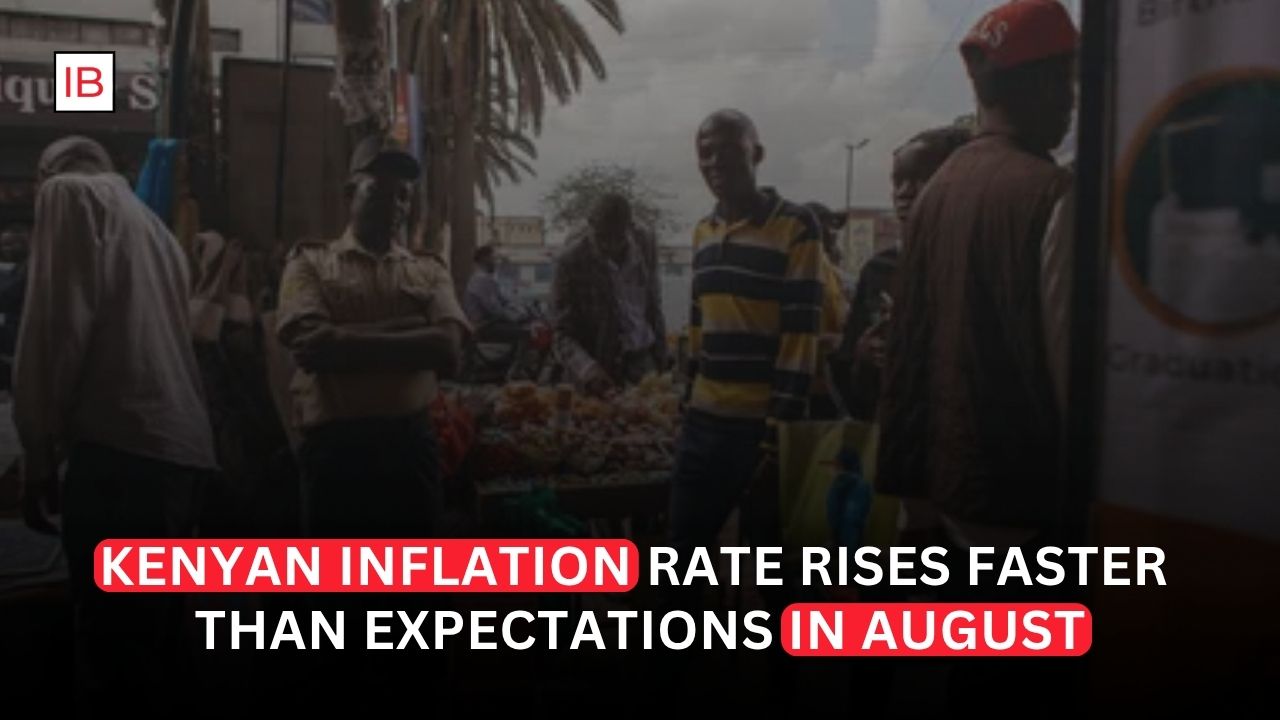
Kenya’s inflation rate accelerated in August, rising faster than economists had expected and putting renewed pressure on policymakers as the country continues to deal with higher food, transport and energy costs.
The increase comes only weeks after the Central Bank of Kenya kept its benchmark interest rate unchanged, saying inflation remained within its target range. In July, annual inflation stood at 6.5%, up slightly from 6.4% in June.
The August acceleration suggests that price pressures remain a significant challenge for Kenya’s economy, particularly as global energy markets remain volatile because of geopolitical tensions.
Inflation Moves Higher
Kenya entered August with inflation already above the midpoint of the central bank’s target range.
The increase in consumer prices has been driven by several categories, with food and transportation among the biggest contributors. Official July data showed food and non-alcoholic beverages rising 9% year over year, while transport prices increased 15.6%. Housing, water, electricity, gas and other fuels also contributed to the overall price level.
The faster-than-expected August increase indicates that these pressures have not disappeared.
For households, higher inflation means incomes buy fewer goods and services. This is particularly significant for lower-income families, which typically devote a larger proportion of their budgets to food, transportation and basic necessities.
Food Prices Remain a Major Concern
Food is one of the most important sources of inflationary pressure in Kenya.
Agricultural production remains vulnerable to weather conditions, while transportation and energy costs influence the final price of food reaching consumers.
The central bank has already warned that weather-related risks could affect food prices.
Kenya’s monetary authorities have identified the potential effects of El Niño conditions and ongoing dryness as risks to the inflation outlook.
A deterioration in agricultural conditions could therefore keep food inflation elevated even if other parts of the economy remain relatively stable.
Oil Prices Add Another Risk
Global energy markets are creating an additional problem.
The ongoing conflict in the Middle East has increased volatility in oil prices, creating risks for countries such as Kenya that depend heavily on imported fuel.
Higher crude prices can quickly feed into transportation costs.
Those costs then spread through the economy because trucks, buses, manufacturers and businesses all depend on fuel.
The central bank has specifically identified geopolitical tensions and volatile global oil prices as risks to Kenya’s inflation outlook.
If oil prices remain elevated, inflation could remain above policymakers’ preferred levels for longer.
The Central Bank Faces a Difficult Choice
The Bank of Kenya has been attempting to support economic growth while keeping inflation under control.
Keeping interest rates high can reduce demand and help prevent inflation from becoming entrenched.
But higher borrowing costs can also discourage investment and make it more expensive for households and businesses to obtain credit.
That creates a difficult trade-off.
If inflation accelerates significantly, the central bank may have less room to reduce borrowing costs.
If it tightens policy too aggressively, however, it could weaken economic activity.
Interest Rates Were Recently Held Steady
The central bank recently decided to maintain its key policy rate, indicating that policymakers believed the existing stance was appropriate.
At the time, annual inflation was 6.5% in July and remained inside the official 5% target with a tolerance range of plus or minus 2.5 percentage points.
The August acceleration complicates that assessment.
Policymakers will now need to determine whether the increase is temporary or evidence of a broader inflation trend.
A single monthly reading does not necessarily justify an immediate change in monetary policy.
But repeated increases would make continued easing much more difficult.
The Kenyan Shilling Matters
Currency stability is another important factor.
A weaker Kenyan shilling can make imported goods more expensive, particularly fuel, machinery and other products priced in dollars.
Conversely, a relatively stable exchange rate can reduce the impact of imported inflation.
The central bank has said exchange-rate stability should continue helping to moderate imported price pressures.
Maintaining that stability will therefore remain important if global commodity prices continue rising.
Government Measures Are Providing Support
The government has introduced measures intended to limit some inflationary pressure.
These include interventions involving fuel pricing and taxation.
The central bank has pointed to government subsidies and reductions in VAT on fuel as measures helping to contain inflation.
Such policies can reduce the immediate impact of higher international energy prices.
But they also have fiscal costs.
If the government spends too much to keep prices artificially low, pressure on public finances can increase.
Inflation Expectations Are Important
One reason the central bank has remained relatively comfortable with inflation is that expectations have remained anchored.
The July MPC survey showed inflation expectations within the target range.
This matters because inflation can become self-reinforcing.
If businesses expect costs to rise sharply, they may increase prices in advance.
Workers may demand larger wage increases.
Companies may then raise prices again to compensate for higher labor costs.
Keeping expectations stable can help prevent that cycle from developing.
Trade Uncertainty Adds Pressure
Kenya is also exposed to changes in global trade.
Higher tariffs and disruptions to international supply chains can increase the cost of imported goods and intermediate products.
For an economy that relies on imports for fuel, machinery and many manufactured products, global trade disruptions can quickly influence domestic prices.
The central bank has therefore identified elevated trade-policy uncertainty as another risk to the inflation outlook.
Growth Could Be Affected
Higher inflation can weaken economic growth if consumers reduce spending.
When households spend more on food, transport and energy, they have less money available for discretionary purchases.
Businesses face a similar problem.
Higher input costs can reduce profit margins unless companies can pass those costs on to customers.
Higher interest rates would add another burden by making credit more expensive.
That combination could slow investment and consumption.
Kenya’s Economy Needs Price Stability
Kenya has been working to maintain economic stability while managing fiscal pressures and supporting growth.
Stable inflation is important because it allows businesses to plan investments and households to make financial decisions with greater confidence.
Rapidly changing prices make those decisions harder.
The latest inflation increase therefore matters beyond the headline number.
It could influence monetary policy, government spending and the broader economic outlook.
Weather Risks Could Become More Important
Agricultural conditions will remain one of the most important variables.
Kenya’s inflation outlook is particularly sensitive to food supply because food represents a significant component of household spending.
The central bank has warned that the potential effects of El Niño and continued dryness could create food-price risks.
If agricultural production weakens, inflation could rise even if energy prices stabilize.
That would be more difficult for monetary policy to address because interest rates cannot directly produce more food.
External Shocks Are Complicating Policy
Kenya’s current inflation problem is partly domestic and partly imported.
Food supply conditions can push prices higher at home, while oil prices, global interest rates and geopolitical tensions create external pressure.
This limits what policymakers can accomplish through monetary policy alone.
The central bank can influence demand and financial conditions.
It cannot control global oil prices or the weather.
That makes fiscal policy, agricultural investment and energy security equally important.
What Comes Next
The central bank will likely pay close attention to whether the August increase continues into September and beyond.
If inflation moderates again, policymakers may be able to maintain their current stance.
If price growth continues accelerating, however, the possibility of tighter monetary policy could return.
The direction of global oil prices will be particularly important.
So will the Kenyan shilling, food production and domestic demand.
Conclusion
Kenya’s faster-than-expected inflation increase in August is a warning that price pressures remain more persistent than policymakers would prefer.
The country entered the month with annual inflation at 6.5% in July, already above the 5% midpoint of the central bank’s target.
Food and transport remain major sources of pressure, with official July data showing particularly strong annual increases in both categories.
The challenge is being intensified by external factors.
Geopolitical tensions have created volatility in global oil markets, while potential weather disruptions could threaten food supplies.
At the same time, Kenya must maintain currency stability and avoid policies that unnecessarily weaken economic growth.
The latest inflation reading does not automatically mean the central bank must raise interest rates.
That would be an overly simple interpretation.
Much depends on whether the acceleration proves temporary or becomes a sustained trend.
If inflation expectations remain anchored and energy prices stabilize, policymakers could potentially tolerate a period of higher inflation.
But if food and fuel costs continue rising, the central bank will have fewer options.
Higher rates could become necessary to prevent inflation from becoming entrenched, even at the cost of weaker economic activity.
For Kenyan households, the immediate issue is simpler: higher inflation means a higher cost of living.
For policymakers, the problem is more complicated.
They must protect purchasing power without choking off growth, while dealing with forces—from oil markets to weather and global trade—that monetary policy cannot directly control.
The August increase therefore places Kenya’s inflation outlook at an important turning point.