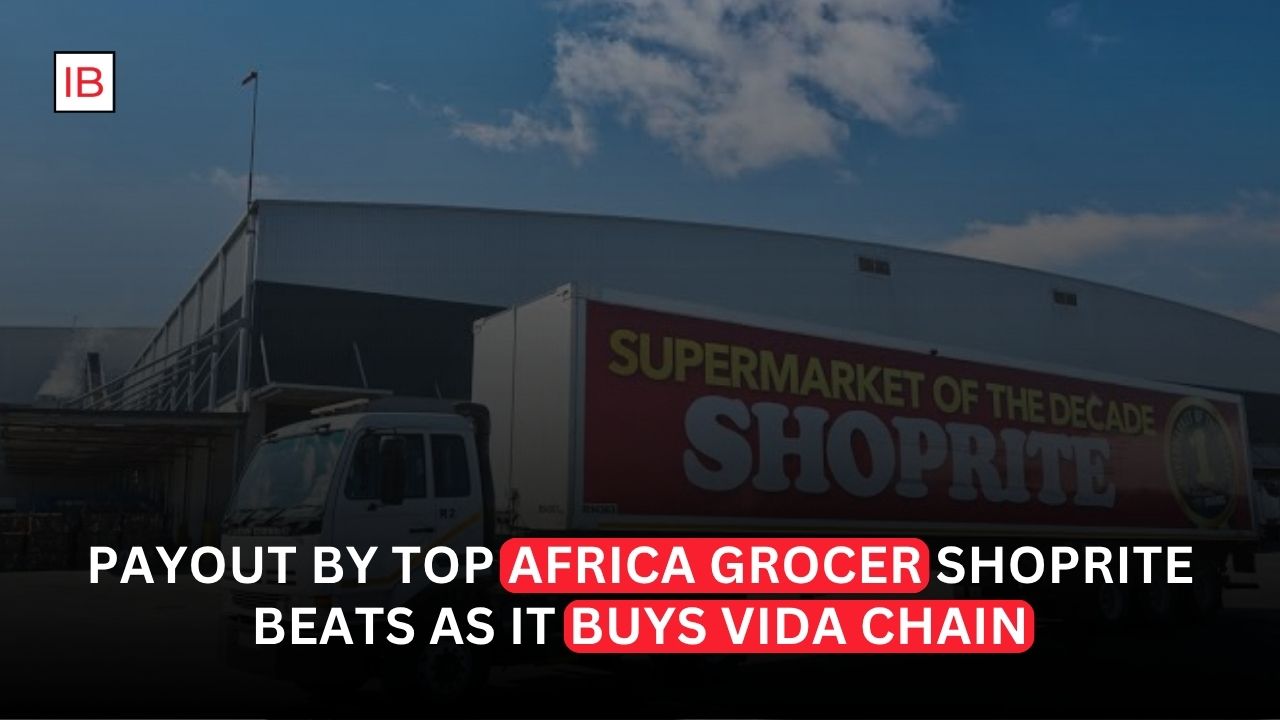
Shoprite Holdings, Africa’s largest supermarket group, delivered a stronger-than-expected payout as the retailer continues expanding its footprint and strengthens its position in the region’s highly competitive grocery market.
The company’s latest results underline the resilience of consumer spending in its core markets, while its acquisition of the Vida café chain points to a broader strategy of building businesses beyond traditional supermarkets.
Shoprite has spent years expanding its store network, improving logistics and targeting customers across different income levels. The company now operates one of the continent’s largest retail networks, giving it scale advantages that smaller competitors struggle to match.
Shoprite Beats Expectations
The latest payout from Shoprite exceeded market expectations, providing investors with evidence that the retailer continues to generate substantial cash despite persistent pressure on consumers.
Retailers across Africa are dealing with a difficult combination of inflation, higher operating expenses and cautious household spending.
Against that backdrop, stronger-than-expected shareholder returns suggest Shoprite has been able to protect its underlying business performance.
The company’s scale remains one of its most important advantages.
Grocery Demand Remains Resilient
Food is one of the most defensive areas of consumer spending.
Even when households cut back on discretionary purchases, they still need groceries and household essentials.
That does not mean supermarkets are immune to economic pressure.
Consumers can trade down to cheaper products, switch brands or reduce the quantity they purchase.
But grocery retailers with strong distribution networks and competitive pricing can continue attracting customers during periods of economic uncertainty.
Shoprite has built its strategy around exactly that dynamic.
The Vida Acquisition Expands Its Reach
Shoprite’s purchase of Vida is significant because it moves the company further into convenience food and café retail.
Vida is a South African coffee and café chain with a recognizable presence in shopping centers, office districts and transport-oriented locations.
Adding the business gives Shoprite another channel through which to reach consumers.
The acquisition also fits with the broader transformation of African retail, where consumers increasingly want convenient food and beverage options alongside traditional grocery shopping.
Why Cafés Matter to a Grocery Giant
At first glance, a café business may appear relatively small compared with Shoprite’s supermarket operations.
But the strategic logic is important.
Convenience and ready-to-eat food can generate frequent customer visits.
A consumer might visit a supermarket once a week but buy coffee or prepared food several times during the same period.
That creates additional opportunities for revenue.
Shoprite can potentially use its procurement, logistics and property expertise to support the expansion of Vida.
Convenience Retail Is Growing
Consumer behavior is changing across African cities.
Urbanization, longer commuting times and changing lifestyles are increasing demand for convenient food.
Consumers increasingly value speed and accessibility.
That creates opportunities for businesses that can combine grocery shopping, prepared meals, coffee and other everyday services.
Shoprite’s expansion into this category suggests it expects those trends to continue.
Shoprite Has a Scale Advantage
Shoprite’s biggest competitive advantage is its size.
The company has an enormous purchasing network and distribution infrastructure.
That allows it to negotiate with suppliers from a position of strength.
Large purchasing volumes can also help the company offer competitive prices.
In a market where consumers remain highly price-sensitive, that can be decisive.
Smaller retailers may struggle to match Shoprite’s combination of price, product availability and geographic coverage.
Private-Label Products Help Margins
Another important part of Shoprite’s strategy is private-label merchandise.
Store brands can give retailers greater control over pricing and margins.
They can also provide consumers with cheaper alternatives to major branded products.
During periods of inflation, private-label products often become particularly important because consumers are more willing to switch away from premium brands.
Shoprite’s scale makes it easier to develop and distribute such products.
Inflation Remains a Challenge
The stronger payout should not obscure the difficult environment facing African consumers.
Food inflation can quickly reduce household purchasing power.
When prices rise faster than incomes, consumers have to make difficult choices.
Retailers are then caught between higher costs from suppliers and customers who are increasingly unwilling to accept price increases.
Shoprite must manage that balance carefully.
South Africa Is Still the Core Market
South Africa remains central to Shoprite’s operations.
The country has one of Africa’s most developed supermarket sectors, with intense competition between major retailers.
Shoprite competes with companies such as Pick n Pay, Woolworths and Spar.
The market is mature compared with many other African economies.
That makes operational efficiency and market share particularly important.
Competition Is Intense
South Africa’s supermarket industry is highly competitive.
Retailers are fighting for customers through pricing, promotions, loyalty programs and store locations.
Online grocery shopping and delivery are also creating additional competitive pressure.
Shoprite’s scale gives it an advantage, but it cannot assume that customers will remain loyal simply because of its size.
The company must continue investing in price competitiveness and customer experience.
Checkers Has Become a Key Growth Engine
Shoprite’s Checkers business has been particularly important to its growth strategy.
Checkers positions itself toward a broader and often more affluent customer base than the group’s traditional Shoprite supermarket format.
Its expansion has allowed the company to capture spending from customers who may previously have preferred competitors.
The Checkers Sixty60 delivery platform has also strengthened Shoprite’s position in digital grocery retail.
Online Grocery Is Changing Retail
The growth of grocery delivery has changed how supermarkets compete.
Consumers increasingly expect groceries to be available through mobile apps and delivered quickly.
Shoprite’s Sixty60 platform has become a major part of that transformation in South Africa.
Digital sales can also provide retailers with valuable information about consumer behavior.
That data can help companies optimize pricing, inventory and promotions.
Logistics Are a Major Asset
Shoprite’s logistics infrastructure is one of the less visible reasons behind its strength.
Supermarkets depend on having the right products available at the right stores at the right time.
That becomes much harder when retailers operate across multiple countries and large geographic areas.
Shoprite’s distribution network helps it manage this complexity.
It can also provide advantages when the company expands new formats or acquired businesses.
Africa Offers Long-Term Growth
The company’s biggest long-term opportunity is Africa’s growing population and urbanization.
Many African countries are experiencing rapid population growth and expanding cities.
As household incomes increase, consumers typically spend more on packaged foods, household goods and convenience products.
That creates a long-term opportunity for organized retailers.
Shoprite is already positioned across several African markets.
Expansion Is Not Risk-Free
Operating across Africa also creates significant risks.
Currencies can be volatile.
Infrastructure quality varies widely.
Political and regulatory conditions differ from one country to another.
Consumer preferences can also be very different.
A strategy that works in South Africa may not translate perfectly to another market.
Shoprite therefore has to balance expansion with disciplined capital allocation.
The Vida Deal Adds Integration Risk
Acquisitions can create value, but they also introduce execution challenges.
Shoprite will need to integrate Vida while preserving the brand’s identity.
Café businesses are operationally different from supermarkets.
They depend heavily on location, service quality and customer experience.
If Shoprite changes the business too aggressively, it could damage the characteristics that made Vida successful.
Coffee Is a Competitive Market
The café sector is already crowded.
Customers have many choices, from independent coffee shops to international chains and fast-food operators.
Price, convenience, product quality and location all matter.
Vida therefore needs to maintain a distinctive proposition.
Shoprite’s resources can help the company expand, but money alone will not guarantee success.
Acquisition Could Create Synergies
There are nevertheless potential synergies.
Shoprite can provide purchasing power, supply-chain expertise and access to a large customer base.
Vida could potentially benefit from Shoprite’s real estate relationships and operational infrastructure.
The supermarket group may also be able to place Vida locations near existing retail properties.
That could accelerate expansion while reducing some of the costs associated with building a network from scratch.
Consumer Spending Is the Key Variable
The success of Shoprite’s strategy ultimately depends on consumer demand.
If inflation remains elevated and unemployment stays high, households may continue prioritizing essential products and lower prices.
That could favor Shoprite’s value-oriented formats.
If incomes improve, consumers may spend more on convenience foods, cafés and higher-margin products.
That would create a different opportunity for the Vida business.
Retailers Need to Protect Margins
Strong revenue growth does not automatically translate into higher profits.
Retailers typically operate on relatively thin margins.
Small increases in labor, energy, transportation or property costs can have a meaningful impact.
Shoprite therefore needs to continue improving productivity while keeping prices competitive.
Its scale can help, but it does not eliminate cost pressure.
Technology Can Improve Efficiency
Technology is becoming increasingly important in grocery retail.
Automated inventory management, digital payments and demand forecasting can reduce waste and improve stock availability.
Shoprite can use data from its large customer base to improve merchandising decisions.
The more effectively it uses that information, the easier it becomes to compete on both price and convenience.
Private Labels Could Become More Important
Shoprite is also well positioned to expand private-label offerings.
Consumers looking for cheaper alternatives may increasingly choose store brands.
Private labels can provide retailers with higher margins while offering lower prices than national brands.
That creates a potential win-win if product quality remains strong.
Africa’s Retail Market Is Fragmenting
The African retail market is not moving entirely toward large supermarkets.
Traditional informal retailers remain extremely important in many countries.
Small shops and street markets can offer convenience and low operating costs.
Large supermarket groups therefore need to compete with both formal retail chains and informal businesses.
Shoprite’s strategy has increasingly included multiple formats to address different consumer needs.
Convenience May Be the Next Battleground
The Vida acquisition highlights a broader shift toward convenience.
Consumers do not always want to spend time walking through a large supermarket.
They may want coffee, breakfast, lunch or a few grocery items quickly.
Smaller stores, cafés and delivery services can capture that demand.
Shoprite’s ability to connect these formats could become an important competitive advantage.
The Digital Strategy Matters
Shoprite’s digital businesses provide another growth avenue.
Online ordering and rapid delivery can increase customer engagement and generate more frequent purchases.
However, digital grocery operations can be expensive.
Delivery costs, labor and technology investment can reduce margins.
Shoprite therefore needs sufficient order density to make the model economically sustainable.
Shareholders Want More Than Growth
The stronger payout suggests investors are paying attention not only to Shoprite’s sales growth but also to its ability to return cash.
That creates pressure on management to maintain disciplined capital allocation.
Acquisitions such as Vida need to produce attractive returns rather than simply increasing the company’s size.
Investors will ultimately judge the deal by its contribution to earnings and cash flow.
Shoprite Is Betting on Scale
The company’s overall strategy is increasingly based on scale.
More stores create more purchasing power.
More customers generate more data.
Larger logistics networks reduce unit costs.
And broader formats create additional opportunities to capture consumer spending.
The risk is that large organizations can become complex and difficult to manage.
Shoprite needs to ensure that expansion does not weaken operational discipline.
The Vida Deal Is a Strategic Test
The acquisition therefore represents more than a small addition to the company’s portfolio.
It tests whether Shoprite can successfully extend its retail capabilities into adjacent consumer categories.
If Vida expands successfully, it could become an important part of the group’s convenience strategy.
If integration proves difficult, the deal could become a distraction from Shoprite’s core grocery operations.
Conclusion
Shoprite’s stronger-than-expected shareholder payout shows that Africa’s largest grocery retailer continues to perform relatively well despite a difficult consumer environment.
The company benefits from scale, an extensive distribution network, strong supermarket brands and exposure to essential consumer spending.
Those advantages are particularly valuable when households are under pressure from inflation and weak economic growth.
The acquisition of Vida adds a different dimension to the strategy.
Rather than relying exclusively on large supermarkets, Shoprite is increasing its exposure to cafés, convenience food and faster consumer purchases.
That reflects broader changes in African urban life, where consumers increasingly value convenience and ready-to-eat products.
The deal could also create operational synergies.
Shoprite can potentially use its purchasing power, logistics network, property relationships and technology capabilities to help Vida expand.
But the acquisition is not automatically a success.
Cafés depend heavily on location, service and brand identity, and Shoprite will need to avoid imposing supermarket-style management on a business with different economics.
The broader challenge is maintaining growth while protecting margins.
Retail is a low-margin industry, and African consumers remain highly price-sensitive.
Higher food, energy, labor and transportation costs can quickly erode profitability.
Shoprite must therefore continue investing in efficiency while keeping its prices competitive.
The company’s Checkers and Sixty60 businesses demonstrate that it is already trying to adapt to changing consumer behavior.
Online grocery delivery, private-label products and convenience formats are becoming increasingly important parts of the retail landscape.
The long-term opportunity remains substantial.
Africa’s population is growing, urbanization is accelerating and organized retail has room to expand in many markets.
But Shoprite will need disciplined execution to turn those demographic trends into sustainable shareholder returns.
The Vida acquisition is ultimately a bet that the future of African retail will involve more than traditional supermarkets.
Consumers may increasingly combine grocery shopping with digital ordering, prepared food, coffee and convenience purchases.
If Shoprite can connect those businesses effectively, it could strengthen its position as Africa’s leading retailer.
The immediate market reaction to the stronger payout is positive, but the more important question is whether management can continue producing attractive returns while expanding into new categories.
The answer will depend on sales growth, margin performance, cash generation and the eventual contribution of Vida.
For now, Shoprite’s results suggest that its core grocery business remains resilient, while the Vida deal signals that the company is preparing for a retail market increasingly defined by convenience, digital commerce and changing urban lifestyles.