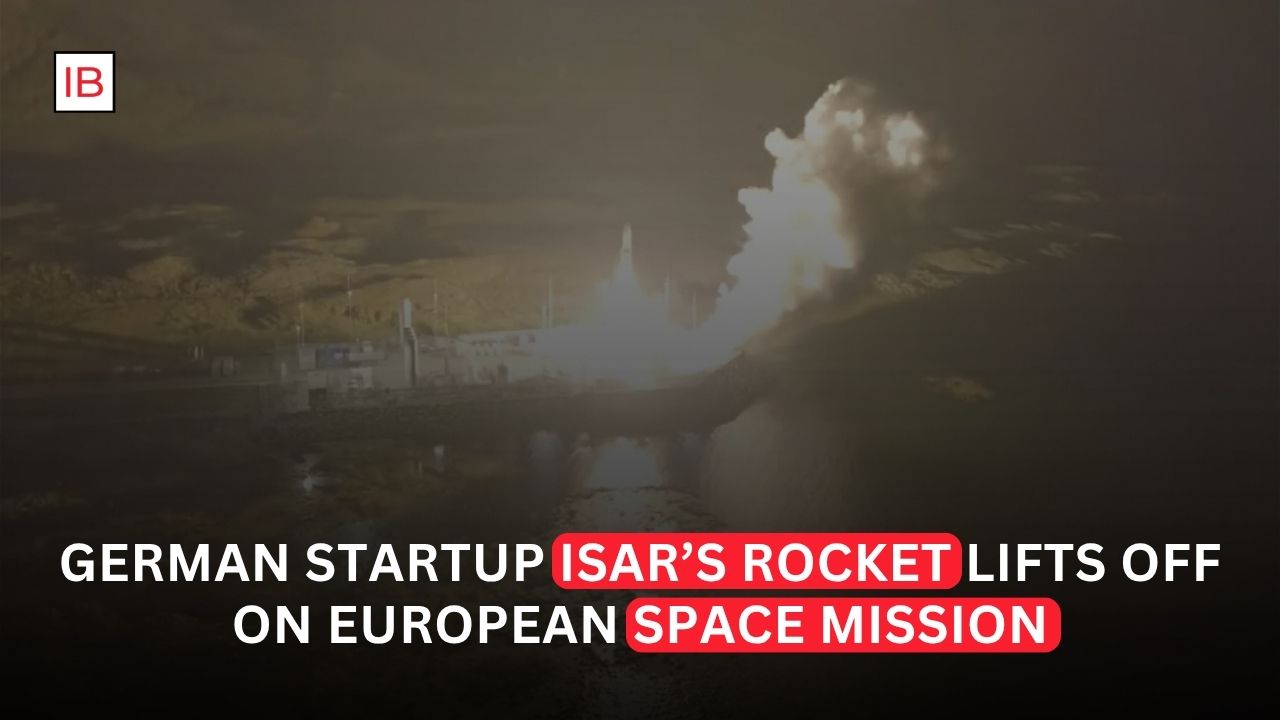
Isar Aerospace has launched its Spectrum rocket from northern Norway, marking a major milestone for Europe’s push to develop independent commercial access to space.
Spectrum Rocket Lifts Off From Norway
German space startup Isar Aerospace launched its uncrewed Spectrum rocket from Andøya Spaceport in Arctic Norway on September 5. The mission, named “Onward and Upward,” represents the company’s second flight and its first attempt to carry customer and research payloads.
The launch is a significant step for Europe’s emerging commercial space industry, which is seeking greater control over satellite deployment and reduced reliance on launch providers outside the region.
Six Payloads Aboard the Mission
Spectrum carried five small satellites along with a technology experiment. The payloads include satellites associated with universities, commercial operators and European space-development programs, providing Isar with an opportunity to test the rocket under operational conditions while delivering useful cargo into orbit.
The mission serves as both a qualification flight for Spectrum and its first payload-carrying mission, making its outcome particularly important for Isar’s plans to establish regular commercial launch services.
Second Flight After 2025 Failure
The launch follows Spectrum’s first flight in March 2025, which ended roughly 30 seconds after liftoff when the rocket lost control and was terminated. Isar’s subsequent investigation identified an unintended vent-valve opening and loss of attitude control during the early flight sequence. The company said it implemented corrective measures before preparing the second vehicle.
The latest launch therefore provides an important test of whether those changes have improved the rocket’s reliability. For a young launch company, demonstrating repeatable performance is critical to winning commercial customers and securing investment.
Europe Seeks Greater Access to Space
The mission has broader strategic importance beyond Isar Aerospace. European governments and space agencies are seeking more autonomous access to orbit as satellites become increasingly important for communications, navigation, Earth observation and defense.
The European Space Agency has supported Isar through its Boost! program, while the company was also selected for the European Launcher Challenge, which is intended to strengthen the continent’s commercial launch capabilities.
Competition From SpaceX and European Rivals
Isar is entering an increasingly competitive global launch market dominated by established players such as SpaceX. Europe also has the Ariane 6 and Vega-C programs, while several privately backed European startups are developing their own orbital launch systems.
Isar’s strategy is focused on smaller and medium-sized payloads, an expanding segment of the satellite market. The company is building additional Spectrum vehicles and expanding production capacity near Munich, with the goal of increasing launch frequency as demand grows.
Growing Commercial Interest
The company’s pipeline also suggests that customers are increasingly interested in European launch options. Earlier this week, Isar announced a contract with Astroscale Japan for a future active debris-removal mission targeted for launch between 2027 and 2028 from Andøya.
Such agreements could become increasingly valuable if Isar can demonstrate that Spectrum is capable of reliable, repeatable orbital missions.
A Test for Europe’s Space Ambitions
The successful launch attempt represents an important moment for Europe’s commercial space sector. A dependable privately developed European launcher could give governments, businesses and research institutions another route to orbit while strengthening the continent’s strategic autonomy.
For Isar Aerospace, however, the next challenge is turning a landmark mission into a sustainable launch business. Reliability, launch cadence and commercial contracts will determine whether Spectrum can become a serious competitor in the global satellite-launch market.