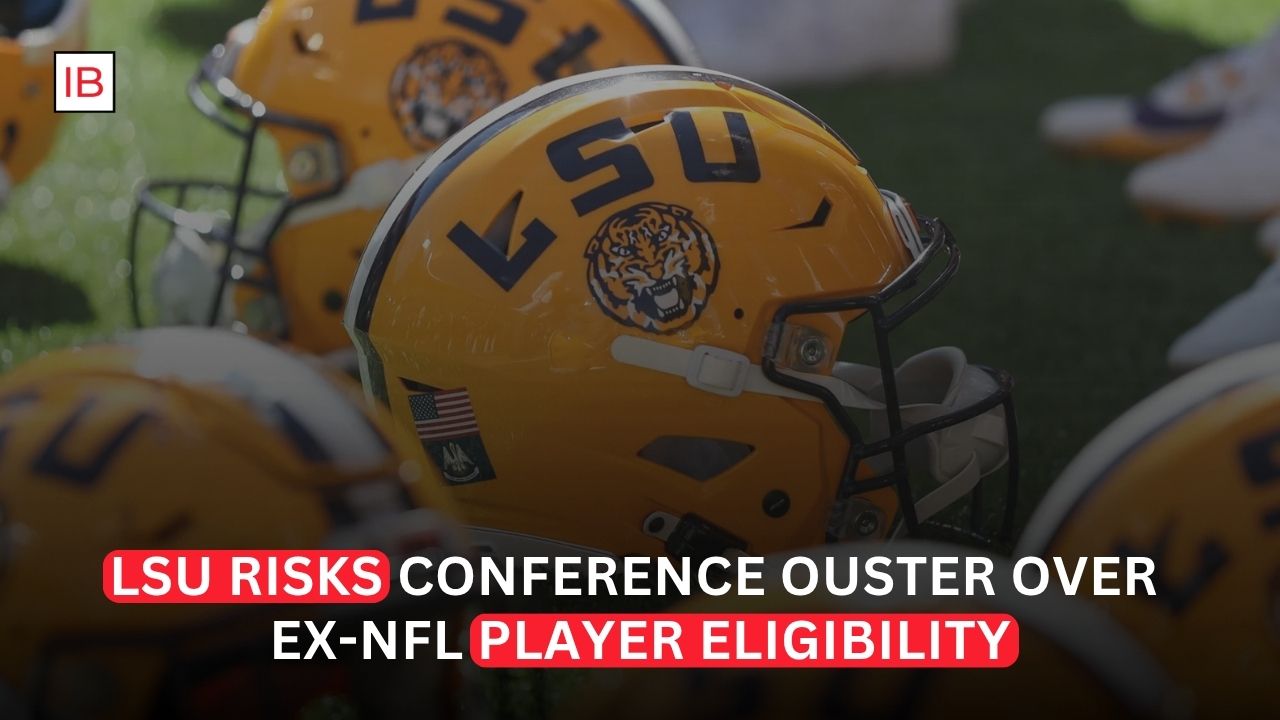
The Southeastern Conference is preparing to consider an extraordinary step against one of its founding members, with league presidents and chancellors scheduled to meet Thursday to discuss whether Louisiana State University should be expelled from the conference. The escalation follows a bitter dispute over whether former NFL players can return to college football and has turned a player-eligibility disagreement into a broader battle over conference authority, governance and institutional control.
The SEC amended its federal lawsuit against LSU on Tuesday, seeking legal authority to proceed with a vote that could terminate the university’s membership. Under SEC rules, removing a member requires approval from at least two-thirds of the conference’s CEOs, meaning 11 of its 16 university presidents or chancellors would have to support expulsion. The conference has also asked a federal judge for a temporary restraining order to prevent LSU from interfering with Thursday’s meeting.
At the heart of the dispute are former NFL players Zxavian Harris and Dae’Quan Wright, who previously played under LSU coach Lane Kiffin at Ole Miss. Both athletes briefly entered the professional ranks before seeking to return to college football under the NCAA’s evolving eligibility rules. A Louisiana judge issued a preliminary injunction allowing them to pursue another season, putting the state court directly at odds with the SEC’s rules.
The SEC had adopted a rule prohibiting schools from bringing athletes with professional football experience back onto their rosters. The conference voted 15-0 on the measure, with LSU abstaining, and established penalties that could include substantial financial sanctions and suspension of a coach. The SEC argues that LSU’s conduct undermines its ability to establish and enforce common competitive standards among its members.
LSU ultimately did not place Harris or Wright on its roster for Saturday’s season opener against Clemson, despite the Louisiana court ruling. The Tigers instead defeated Clemson 51-10, temporarily removing the immediate question of whether the two players would participate in the game. Their potential return later in the season, however, remains a major source of tension between LSU and the conference.
The SEC is framing the conflict as more than a disagreement over two athletes. Its amended lawsuit alleges a broader “lack of institutional control,” including concerns about Kiffin’s conduct and LSU’s willingness to challenge conference rules publicly. The league says membership requires institutions to accept common governance standards and that forcing the SEC to associate with an institution that rejects those principles could violate the conference’s own First Amendment rights.
For LSU, the stakes are enormous. The school has been an SEC member since the conference was founded in 1933 and is one of the league’s most prominent football programs. Expulsion would represent an extraordinary rupture at a time when the SEC has become one of the most powerful and commercially valuable organizations in American college sports.
The controversy also reflects a much larger transformation in college athletics. The traditional boundaries separating amateur and professional sports have weakened dramatically because of name, image and likeness compensation, transfer rules and new eligibility arrangements. Players who briefly enter professional football can now have significant incentives to challenge restrictions preventing them from returning to college competition.
That creates a governance problem for conferences. If individual schools can disregard league rules whenever state courts provide relief, conference-wide policies become difficult to enforce. But if conferences attempt to impose rules that conflict with court orders or evolving NCAA eligibility standards, universities and state officials can argue that athletic governing bodies are exceeding their authority.
Louisiana officials have already entered the fight. A state judge’s ruling cleared the path for former professionals to seek another college season, while Louisiana’s attorney general has supported the athletes and criticized the SEC’s legal strategy. The conflict has consequently expanded beyond athletics into a confrontation involving state authority, university governance and the increasingly fragmented legal framework governing college sports.
Thursday’s meeting could therefore become one of the most consequential moments in the SEC’s modern history. Actual expulsion would be a dramatic outcome, but even a decision to impose probation, additional penalties or other restrictions would establish how aggressively the conference intends to enforce its authority.
The immediate question is whether LSU remains an SEC member. The larger question is whether the conference can maintain common rules in an era when universities, athletes, courts and state governments increasingly have competing ideas about who controls college football.