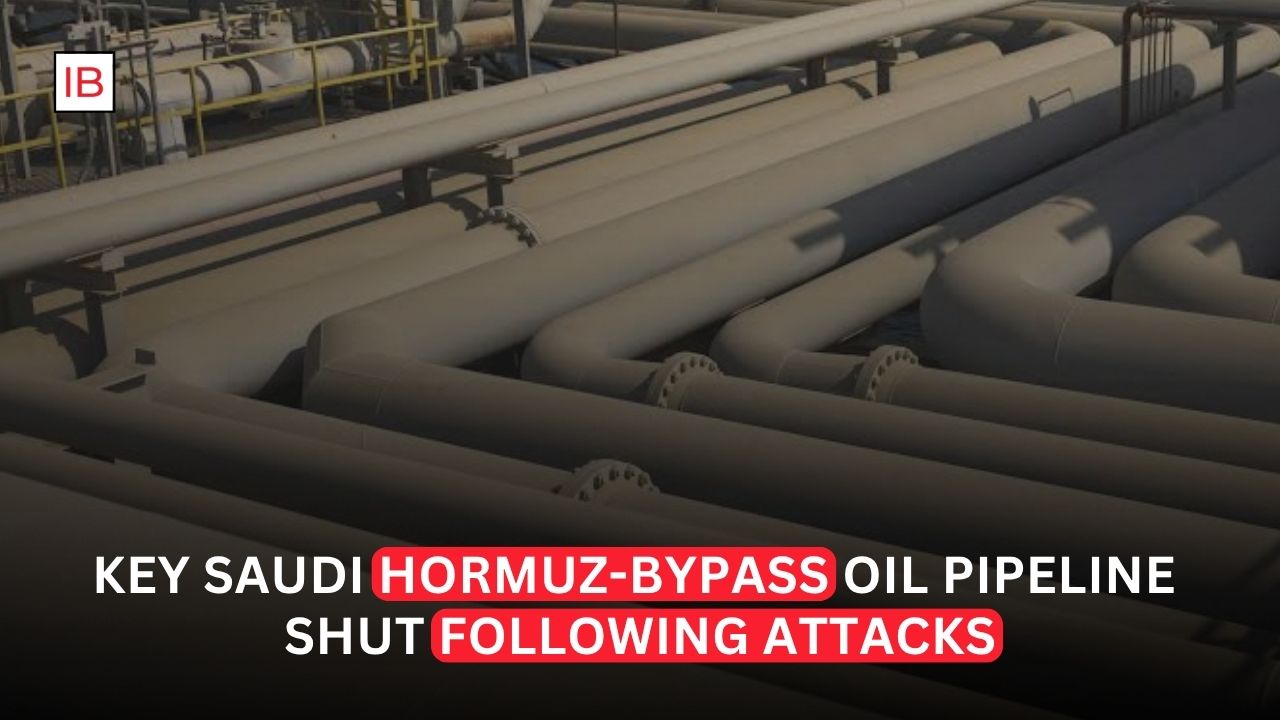
Saudi Arabia has temporarily shut its strategically important East-West oil pipeline after attacks damaged infrastructure along the route, threatening one of the kingdom’s most important alternatives for exporting crude without passing through the Strait of Hormuz.
The Saudi Energy Ministry said operations on the pipeline were halted as a precaution after attacks in the Riyadh and Medina regions caused injuries. Officials did not provide a timetable for restarting the system, saying further information would be released as assessments of the damage continued.
The shutdown is significant because the roughly 1,200-kilometer East-West pipeline transports crude from Saudi Arabia’s oil-producing regions in the east across the kingdom to Yanbu on the Red Sea. From there, oil can reach international markets without using the Strait of Hormuz, the narrow waterway between Iran and Oman that has become a major flashpoint during the regional conflict.
That bypass has become increasingly valuable since disruptions in Hormuz severely reduced tanker traffic. On Sept. 10, only seven vessel transits were recorded through the strait, far below the roughly 125 daily movements seen before the war.
The pipeline’s closure therefore removes an important safety valve just as Saudi Arabia is dealing with multiple threats to its energy infrastructure and export routes. The East-West system has been particularly important during the current crisis because it allows Saudi crude to reach the Red Sea even when shipping through the Gulf becomes difficult.
The latest attacks are being linked by regional officials and international reports to Iran-aligned Houthi forces, which have intensified their military activity around Saudi Arabia and Yemen. Saudi authorities, however, have not publicly assigned responsibility for the pipeline attack. The Energy Ministry has focused on the damage and the need to secure the infrastructure before operations resume.
The timing could hardly be worse for global oil markets. Brent crude surged more than 8% on Friday to close around $104.56 a barrel, as traders assessed the possibility that the pipeline disruption could further restrict supplies.
The problem extends beyond the pipeline itself. Iran-backed Houthi forces have also expanded their control around the Bab el-Mandeb Strait, another critical maritime chokepoint connecting the Red Sea with the Gulf of Aden. The capture of strategic territory near the waterway raises the possibility of additional disruption to tankers and commercial vessels using the Red Sea route.
For Saudi Arabia, the simultaneous pressure on Hormuz and the Red Sea creates a particularly difficult export environment. The kingdom has spent months redirecting crude toward alternative routes, with Yanbu playing a central role. Before the latest attack, crude and condensate loadings from Yanbu had recovered significantly in early September, according to shipping-data providers.
The closure also comes as Saudi oil production is already under severe pressure. The International Energy Agency estimates that Saudi output fell to about 6 million barrels a day in August, the lowest level in more than three decades. The agency now expects global oil supply to decline by 5.7 million barrels a day in 2026 as conflict and infrastructure attacks disrupt production and transportation.
That makes the pipeline shutdown more than a localized infrastructure problem. If repairs take longer than expected, Saudi Arabia could face greater difficulty moving crude to international buyers, potentially tightening an already strained global market.
The broader concern is that energy infrastructure is becoming a direct target in the regional conflict. Oil fields, refineries, pipelines, tankers and shipping lanes are all increasingly exposed, meaning that even facilities located far from the main battlefield can affect global supply.
For oil traders, the biggest question is how long the East-West pipeline will remain offline and whether Saudi Arabia can maintain exports through other channels. A short shutdown could have limited long-term consequences if repairs are completed quickly. A prolonged outage, however, could remove millions of barrels of potential export capacity from a market already struggling with supply disruptions.
The developments also demonstrate why the Strait of Hormuz remains so important despite the existence of alternative routes. Saudi Arabia’s pipeline was specifically designed to reduce dependence on the chokepoint, but the latest attacks show that bypass infrastructure can itself become vulnerable during a wider regional conflict.
With Brent already above $100 a barrel and the security situation deteriorating around both Hormuz and Bab el-Mandeb, the latest Saudi shutdown adds another layer of uncertainty to global energy markets. The longer the pipeline remains offline, the greater the risk that the conflict will translate into sustained shortages and higher fuel costs for consumers worldwide.