Global financial policymakers convening in Bangkok have systematically recalibrated their baseline concerns. At the annual gatherings of the International Monetary Fund (IMF) and the World Bank Group, finance ministers and central bankers confirmed that the primary global economic risks confronting the world order have moved decisively away from acute China anxiety toward advanced sovereign debt overhangs, the liquidity demands of the artificial intelligence boom, and stubborn trade imbalances.
The gathering marked the Fund’s first Asian assembly since the 2018 meetings in Bali, held against the backdrop of historic shifts across monetary and fiscal frameworks. As analyzed across international coverage on InvestorBytes, escalating fiscal strain in advanced economies, combined with private sector borrowing cycles, is rapidly rewriting institutional risk models and driving sovereign debt spreads wider.
The Structural Drivers Behind Evolving Global Economic Risks
For years, potential deceleration and property-sector contagion in China dominated high-level international economic summits. However, discussions at the Queen Sirikit National Convention Center demonstrated that institutional anxiety has rotated toward the Global North.
According to Kevin Gallagher, director of Boston University’s Global Development Policy Center, multiple simultaneous pressures could trigger the next systemic disruption:
A core emerging vulnerability is the hyper-accelerated AI infrastructure build-out. While nations integrated into the advanced hardware supply chain such as South Korea, Japan, and regional hardware hubs—experience concentrated growth, the Fund cautioned that AI adoption is widening structural divergence between emerging markets and tech-enabled powers.
Furthermore, private AI borrowing now directly competes with public treasuries for institutional liquidity, elevating global yields. Should enterprise generative AI fail to produce anticipated baseline productivity acceleration, the resulting asset write-downs would represent catastrophic global economic risks for equity and credit markets alike.
Advanced Economy Deficits: Washington and the IMF at Odds
Disagreements over fiscal sustainability exposed stark divisions between multilateral watchdogs and sovereign finance ministries. IMF Managing Director Kristalina Georgieva reiterated that robust GDP figures alone cannot stabilize the United States debt profile, with federal debt officially surpassing $40 trillion.
The assessment met sharp resistance from the US Treasury. David Zervos, counselor to Treasury Secretary Scott Bessent, publicly dismissed the Fund’s cautionary outlook, advising market participants to view the agency’s historical economic forecasts with skepticism.
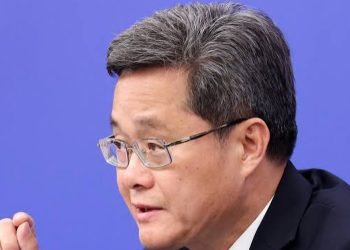
This policy divergence was mirrored by a noticeable absence of synchronized bilateral coordination. Chinese and American delegations maintained visible distance during G20 sessions. People’s Bank of China Governor Pan Gongsheng urged the International Monetary and Financial Committee (IMFC) to expand surveillance over fiscal spillovers originating from major developed countries. Pan stressed that nations running chronic structural deficits must address domestic fiscal imbalances, rather than exporting volatility across currency corridors tracked on InvestorBytes Markets.
| Risk Category | Primary Transmission Channel | Institutional Impact |
| Sovereign Debt | Elevated long-term sovereign bond yields | Crowds out domestic fiscal priority spending |
| AI Capital Drain | Massive enterprise bond issuances | Squeezes corporate debt markets and private liquidity |
| Trade Fragmentation | Bilateral tariff structures and subsidies | Disrupts cross-border supply chains and margin stability |
Geopolitical Rifts and the Return of Diplomatic Frictions
Geopolitical tensions ruptured diplomatic etiquette during ministerial proceedings, proving that underlying diplomatic divisions remain severe global economic risks. The in-person participation of Russian Finance Minister Anton Siluanov attending his second G20 summit of the year provoked severe backlash from European delegations.
German Finance Minister Lars Klingbeil unequivocally rejected normalized diplomatic relations, stating that European leaders would not tolerate treating Russian representatives as standard partners at multilateral tables. When Siluanov addressed the IMFC assembly, nearly half of the attending international delegates staged a coordinated walkout.
In contrast, Group of Seven (G7) members closed the week by finalizing a 260 million euro ($300 million) emergency financing package to repair damaged infrastructure at the Chornobyl nuclear facility, signaling an intent to scale commitments to 500 million euros at an upcoming donor summit in Paris.
Why China Anxiety Took a Backseat in Bangkok
One of the sharpest departures from past summits was the notable absence of alarm surrounding Beijing’s macroeconomic profile. Unlike the contentious 2018 Bali sessions that unfolded during the onset of the US-China tariff conflict, private and public discourse treated Chinese economic exposure with measured pragmatism.
Tim Adams, president and CEO of the Institute of International Finance (IIF), observed that regional discussions across Singapore and Bangkok reflected a state of relative equilibrium in US-China bilateral relations. While international investors maintain a disciplined approach toward direct physical investments within mainland China, appetite has surged for high-profile Chinese technology initial public offerings and stabilized sovereign bond instruments supported by a strengthening renminbi.
Rather than being classified as an exceptional systemic hazard, Chinese market exposure is now assessed through routine risk models, leaving Western fiscal trajectories and runaway technological capital allocation as the predominant global economic risks defining the international financial horizon.
Disclaimer
The information provided in this article is for educational, journalistic, and informational purposes only and does not constitute formal financial, legal, or investment advice.