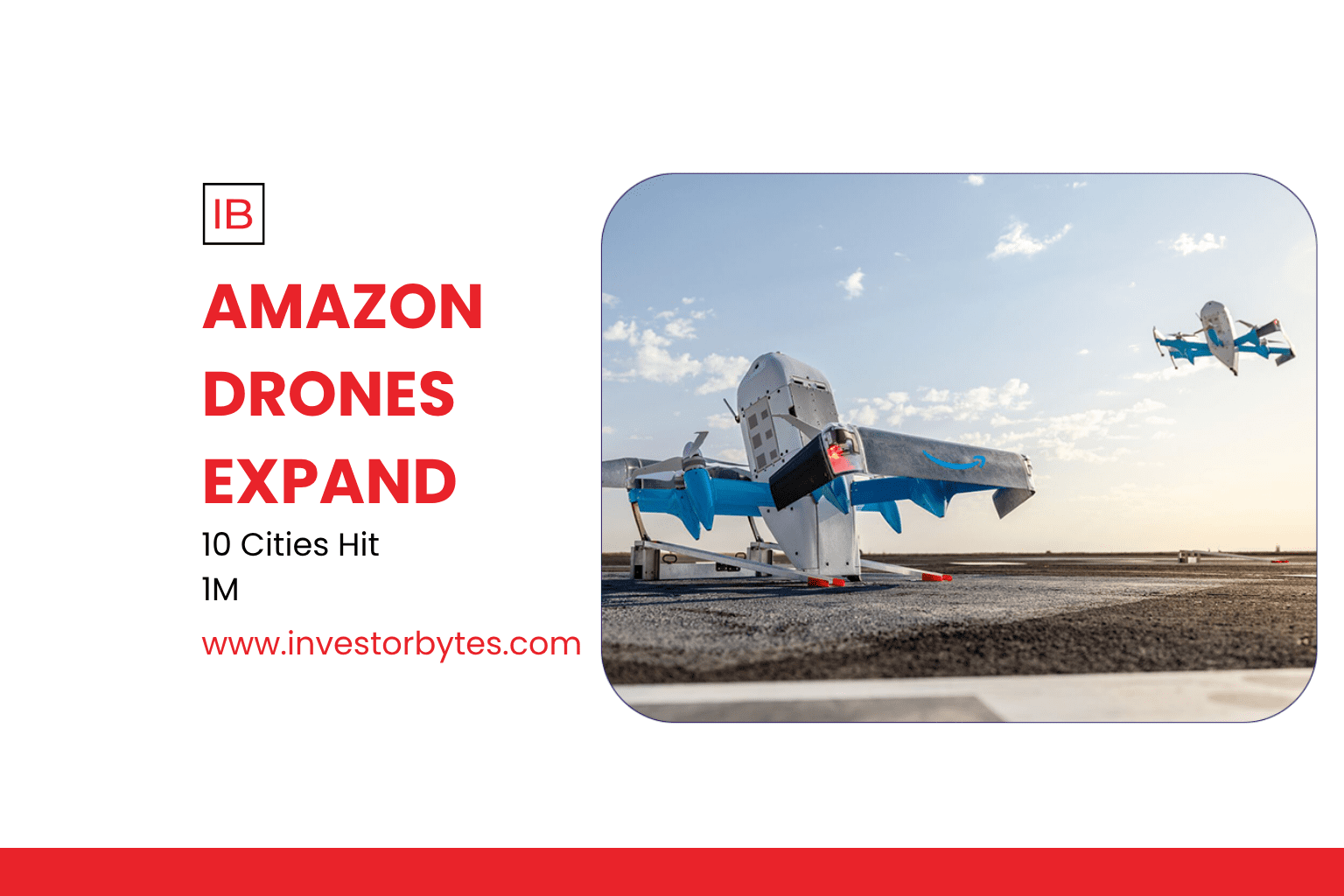
Amazon Prime Air’s drone fleet has notched a transformative milestone, surpassing 1 million cumulative deliveries by November 22, 2025—up from 500,000 in mid-2024—across 10 U.S. cities including Austin, Las Vegas, Phoenix, Waco, Pontiac, Tolleson, College Station, Tempe, Mesa, and Chandler, as the program scales post-FAA clearances and MK30 upgrades. Launched in earnest after a January 2025 pause for sensor fixes amid Arizona dust storms, the service now handles 50,000+ items daily, with 30-minute flights for packages under 5 pounds via quieter, rain-capable MK30 drones—doubling range to 15 miles while slashing noise by 70% versus predecessors, per internal benchmarks shared at the November 2025 re:MARS conference. “This ascent isn’t hype; it’s harmony between innovation and execution, bridging last-mile voids with electric efficiency,” declared Prime Air VP David Carbon, noting a 50% carbon emissions cut per delivery versus gas vans—equivalent to 1.2 million fewer miles driven annually—aligning with Amazon’s net-zero 2040 pledge and 100% renewable ops by 2025.
The surge owes to pivotal FAA nods: May 2025 lithium-ion battery approvals unlocked iPhones and AirPods (now 25% of payloads), while expanded BVLOS waivers—granted post-1,070 flight hours of demos dodging planes and balloons—enable urban/suburban sprawl, covering 65-mile radii without visual observers via onboard detect-and-avoid (DAA) systems boasting 99.9% obstacle evasion. Operations hum with 500 MK30 drones active—up 200% YoY—fueled by $2 billion capex since 2023, including $1.9 billion for DSP integrations and AI routing that trims costs from $484 to $63 per flight, per 2025 projections, subsidizing $4.99 Prime fees amid 18% utilization growth. Safety shines: 99.95% uptime, zero incidents post-April restarts, with parachutes deploying from 13 feet for QR-free drops, monitored via Airspace Orchestration yielding 20% fewer reroutes.
This scales amid rivals’ catch-up: Waymo-Uber’s Phoenix Eats pilots (launched April 2024) log 1.5 million AV trips annually, blending robotaxis for food hauls with 30% emissions drops, while Uber’s 2025 Nuro-Lucid Gravity rollout eyes 100,000 robotaxis by 2027—yet drones edge on speed, per Deloitte’s 25% urban logistics gain. Musk’s decade-dream—evident in SpaceX’s 2025 Starship drone swarms for Mars logistics and Tesla’s FSD deliveries (first Model Y autonomous handoff June 2025)—fuels speculation of xAI-Tesla hybrids, but Amazon leads with 500 million annual targets by 2030, outpacing Zipline’s medical mile. Meta’s Quest 3, cresting 20 million units sold by Q3 2025 (up 150% YoY on AR gaming), teases 2027 AR glasses prototypes with neural interfaces—envisioned for drone piloting overlays, per Connect 2025 demos—potentially fusing VR logistics training with Prime Air ops.
Challenges linger: community pushback (e.g., Waco’s 150 noise complaints) tempers expansions, and $63 costs lag $5 fees, but volume—now 10% of same-day in Phoenix—projects breakeven by 2027. Broader ripples: amid $386 billion renewables H1 (BNEF +10%), drone solar-charging hubs cut grids 15%, harmonizing with Uber-Waymo’s zero-emission fleets.
This milestone’s quiet ascent unveils a new era: drones’ vast flights bridge ground voids, transforming logistics with enduring harmony. From MK30 swarms to AR-guided drops, Prime Air heralds 500 million annual skies—watch Q4 for 15-city push; if BVLOS nationwide, a $50B ecosystem dawns, redefining e-comm’s aerial idyll.