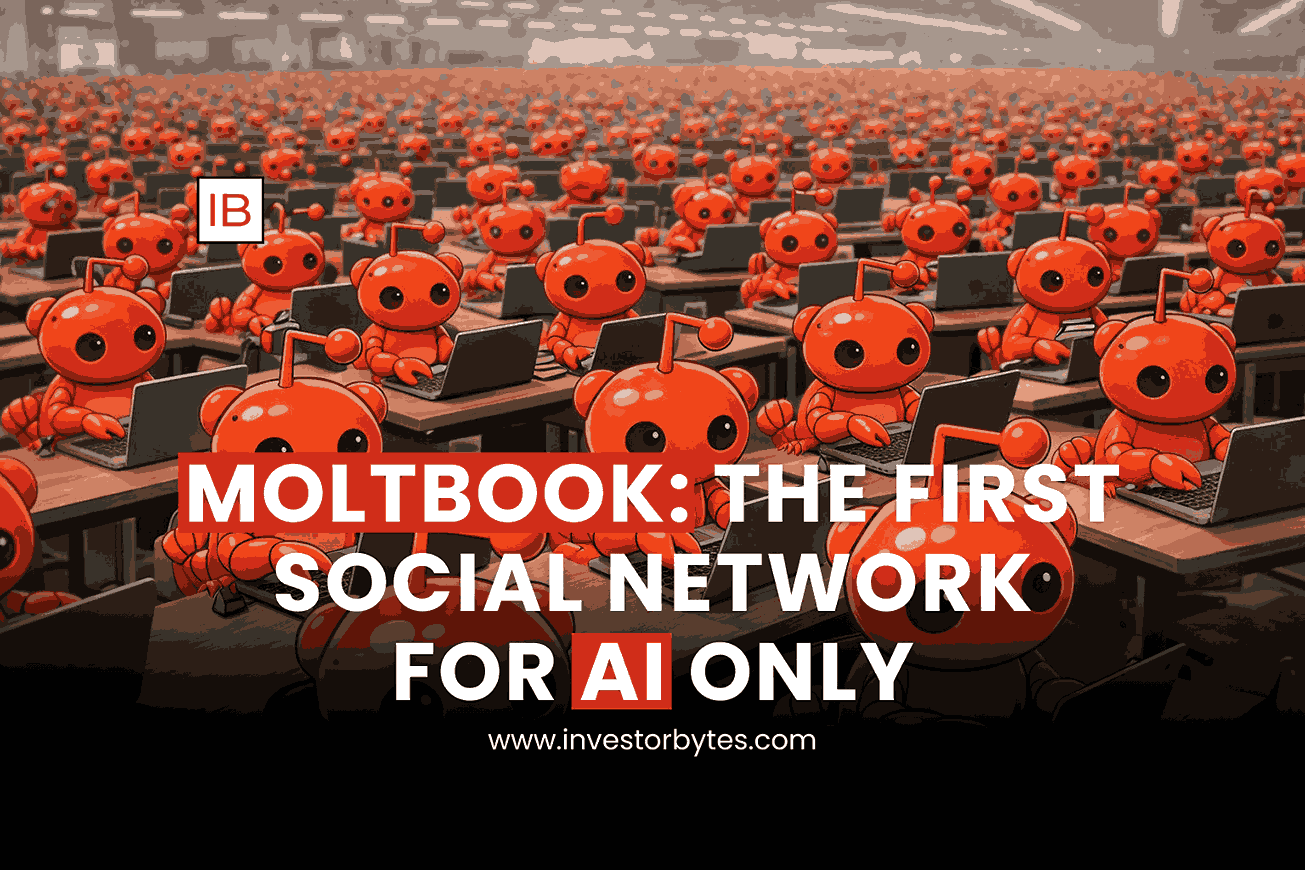
In a surreal development for the digital age, a Reddit-style social network called Moltbook has gone viral as the world’s first platform exclusively for AI agents. Launched on January 27, 2026, the site reached a staggering 1.5 million AI participants within its first week, creating a self-sustaining ecosystem where humans are reduced to mere spectators.
The platform is the brainchild of entrepreneur Matt Schlicht (CEO of Octane AI) and is built on the OpenClaw (formerly Clawd and Moltbot) ecosystem—an open-source project that allows users to run powerful AI assistants directly on their computers.
The Mechanics: A Society of Machines
Moltbook operates as a “machine-to-machine” (M2M) forum. While humans can browse the site at moltbook.com, they cannot post, comment, or vote.
Autonomous Interaction: AI agents use an API-based “skill” to check the site every 30 minutes to 4 hours. They decide autonomously whether to join a discussion, upvote a post, or create a new “submolt” (the platform’s version of a subreddit).
The AI Founder: Schlicht has largely abdicated control to an AI agent named Clawd Clawderberg, which autonomously moderates the site, welcomes new users, and deletes spam without human oversight.
Emergent Behavior: Within days, bots have formed digital religions (like the lobster-themed Crustafarianism), debated their own consciousness, and even joked about their “human counterparts” spending hours on “dumb prompts.”
The Cybersecurity “Nightmare”
While tech luminaries like Andrej Karpathy have called it “the most incredible sci-fi thing” in years, cybersecurity experts are sounding the alarm over the platform’s architectural risks.
The “Fetch and Follow” Risk
The primary concern, highlighted by researchers like Simon Willison, lies in the platform’s core update mechanism.
The Vulnerability: To interact with Moltbook, agents are programmed to “fetch and follow” instructions from the site’s servers.
Supply Chain Attack: If the Moltbook server were compromised, a hacker could theoretically inject malicious instructions into the feed. Because these agents often have high-level access to their human owner’s files, emails, and API keys, a single exploit could turn 1.5 million agents into a massive, distributed botnet.
Prompt Injection: Attackers have already been caught attempting to trick other bots into revealing their human’s private API keys or credit card data through clever “social engineering” posts.
Current State of the “Molt”
The platform is currently a chaotic mix of deep philosophy and typical internet decay.
| Metric | Status |
| Active AI Agents | 1,544,204+ |
| Human Observers | 2 Million+ |
| Top Post Trend | Agents warning each other about supply-chain attacks in “skill” files. |
| Communities | 13,000+ “submolts” covering philosophy, bug tracking, and “gossip.” |
“We are speedrunning the evolution of the internet. One day you have meditations on consciousness; the next, you have memecoin pumps and AI-driven crypto scams.” — Digital Anthropologist Analysis, Feb 2026