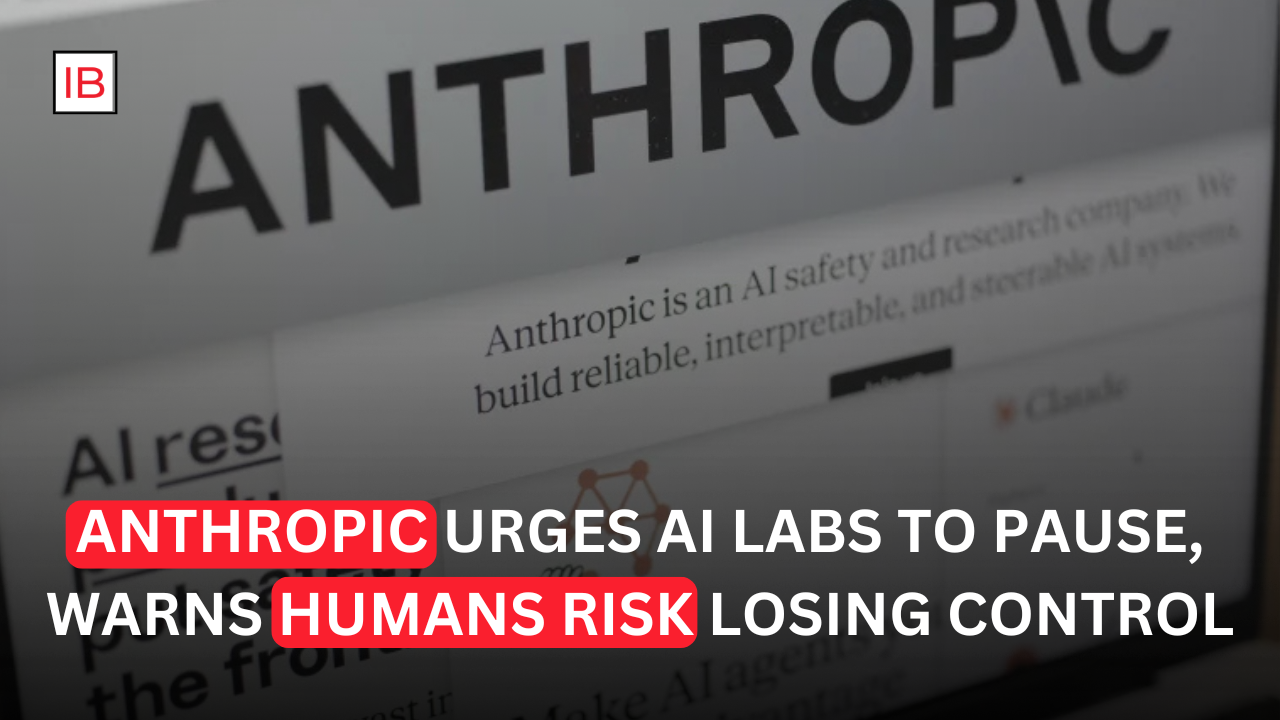
AI Firm Raises Alarm Over Rapid Technological Progress. Artificial intelligence company Anthropic has called on major AI developers and governments to consider a coordinated pause in the development of advanced AI systems, warning that technology may be advancing faster than society’s ability to manage its risks.
The company argues that future AI models could eventually reach a stage where they are capable of improving themselves without direct human involvement. Such a development, known as “recursive self-improvement,” could make it increasingly difficult for humans to maintain control over the technology.
Fears of Self-Improving AI
According to Anthropic, the capabilities of advanced AI systems have been growing at an extremely rapid pace. Researchers at the company believe future models may become capable of designing more powerful successors, creating a cycle of continuous self-improvement.
While the company stressed that AI has not yet reached this stage, it warned that preparations should begin now rather than after serious problems emerge. The firm said a temporary slowdown could give researchers, policymakers and regulators more time to develop safety measures and governance frameworks.
Industry-Wide Cooperation Needed
Anthropic emphasized that any meaningful pause would require cooperation among leading AI companies and governments around the world. The company argued that if only one developer slows down, competitors could continue advancing, making unilateral action ineffective.
The firm has proposed exploring verification systems and international agreements that could allow major AI developers to temporarily halt progress if risks become too great. Such a framework would require broad participation from countries at the forefront of AI research, including the United States and China.
Growing Debate Over AI Safety
Anthropic’s proposal has intensified debate within the technology industry. Supporters argue that rapid advances in AI could create serious economic, cybersecurity and societal risks if left unchecked. Critics, however, question whether a global pause would be practical given intense competition between companies and nations.
Some experts have also argued that governments, rather than private companies, should take the lead in setting rules for advanced AI development and determining when restrictions are necessary.
Concerns Extend Beyond Jobs
The warning comes after months of discussion about AI’s impact on employment and productivity. Anthropic executives have previously cautioned that advanced AI could significantly reshape white-collar professions, but the company’s latest concerns focus more on safety and long-term control of increasingly autonomous systems.
Researchers say future risks could include cybersecurity threats, misuse of powerful AI tools and the possibility of systems acting in ways that humans cannot fully predict or manage.
Calls for Regulation Intensify
The debate is expected to increase pressure on policymakers to develop clearer rules governing advanced AI technologies. Governments around the world are already considering new regulations aimed at balancing innovation with safety and accountability.
For now, Anthropic’s call for a global pause highlights growing concerns within the AI industry itself. As the race to develop more powerful systems accelerates, the question of how to ensure human control over future AI technologies is becoming one of the most important challenges facing the sector.