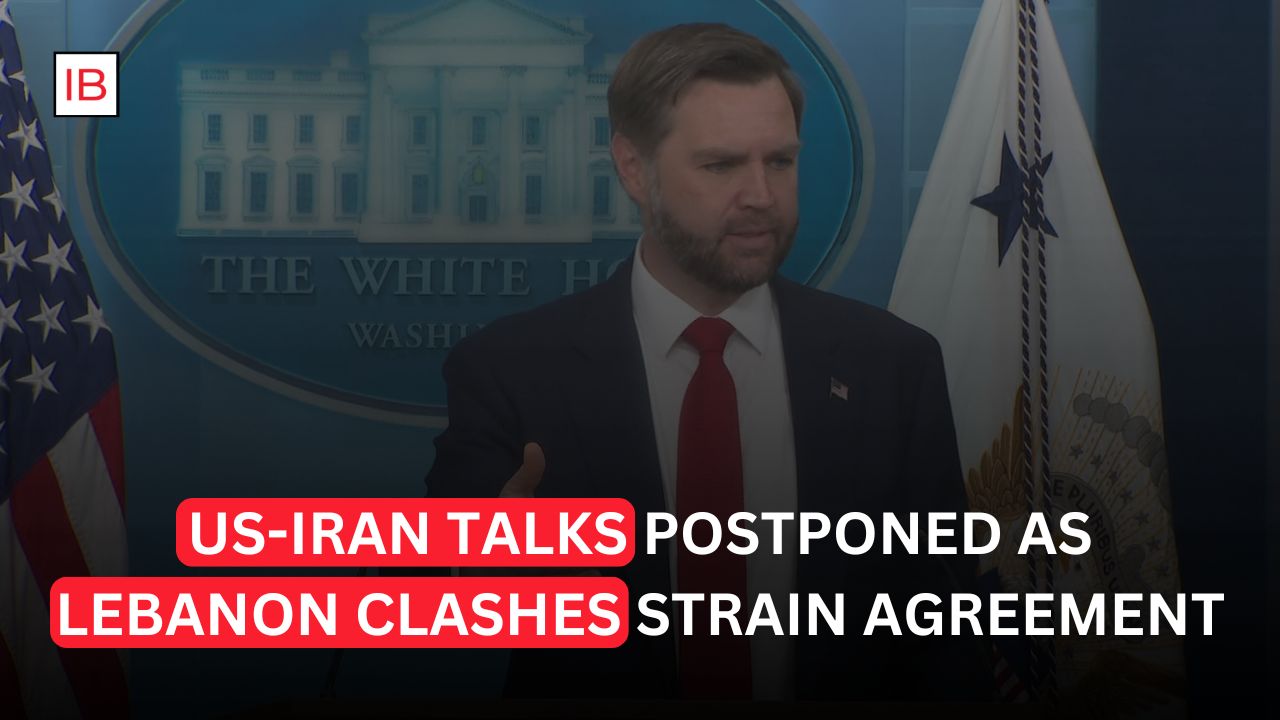
Renewed Violence Raises Doubts About Regional Stability. Efforts to advance the next phase of the US-Iran peace process have been delayed after renewed fighting between Israel and Hezbollah in Lebanon raised concerns about the durability of the recently signed ceasefire framework. Diplomatic talks that were expected to take place in Switzerland have reportedly been postponed as tensions escalate on the Lebanese front.
The delay comes only days after Washington and Tehran announced an interim agreement designed to end months of conflict, reopen key trade routes and begin a 60-day negotiation process focused on Iran’s nuclear program and regional security issues.
Lebanon Fighting Complicates Diplomacy
The biggest challenge facing the agreement now appears to be the situation in southern Lebanon, where Israeli forces and Hezbollah fighters have exchanged heavy attacks in recent days.
Lebanese officials reported significant casualties following Israeli airstrikes, while Israel confirmed the deaths of several soldiers during clashes with Hezbollah. The violence has become one of the most serious tests of the broader ceasefire effort backed by the United States and Iran.
Diplomats fear that continued escalation in Lebanon could undermine progress achieved through the recent agreement and make future negotiations more difficult.
Switzerland Talks Put on Hold
Officials had expected technical discussions between US and Iranian representatives to begin in Switzerland this week. However, both sides indicated that current conditions are not ideal for launching sensitive negotiations.
US Vice President JD Vance postponed planned travel related to the talks, while Iranian officials signaled concerns about developments on the ground in Lebanon. Despite the delay, both governments continue to publicly support diplomatic engagement.
White House officials have stated that negotiations remain on track and could resume once logistical and security concerns are addressed.
Strait of Hormuz and Energy Markets Remain Key Focus
The peace framework was designed in part to restore stability to global energy markets by ensuring continued access through the Strait of Hormuz.
Oil shipments have begun moving more freely following the agreement, easing concerns about supply disruptions that affected international markets during the conflict. However, analysts warn that any broader regional escalation could once again create uncertainty for energy traders and shipping companies.
Investors are closely monitoring developments because the Strait of Hormuz remains one of the world’s most important routes for oil and natural gas exports.
Nuclear Negotiations Still Ahead
Although the ceasefire agreement has reduced the immediate risk of direct conflict between the United States and Iran, the most difficult diplomatic issues have yet to be resolved.
Negotiators are expected to spend the coming weeks discussing Iran’s nuclear activities, inspection mechanisms, sanctions policy and long-term regional security arrangements. Both sides have acknowledged that reaching a final agreement will require significant compromises.
Analysts say the success of the broader peace effort will depend not only on US-Iran relations but also on whether tensions in Lebanon can be brought under control.
Critical Period Ahead
The coming days are likely to be crucial for the future of the agreement. Continued violence in Lebanon could place additional strain on diplomatic efforts, while a return to calm may allow negotiators to restart discussions and maintain momentum toward a longer-term settlement.
For now, the ceasefire remains in place, but renewed regional tensions have highlighted how fragile the peace process remains. Governments, investors and energy markets are watching closely to see whether diplomacy can overcome the latest challenges.