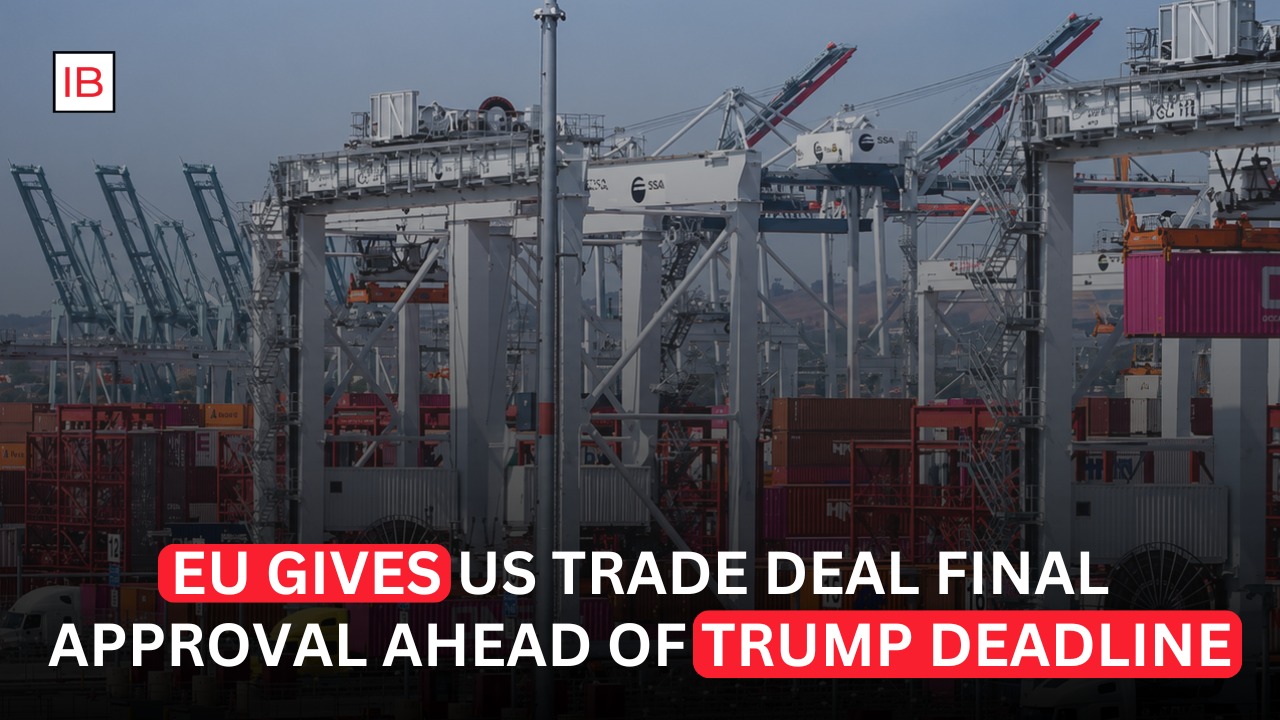
European Union Moves to Prevent Trade Conflict as Agreement Clears Final Hurdle. The European Union has given final approval to its trade agreement with the United States, completing a major step toward implementing the deal and avoiding a possible escalation in transatlantic trade tensions.
The agreement was approved by EU member states after months of uncertainty and negotiations, with officials aiming to provide stability for businesses while preventing the possibility of new US tariffs.
Deal Aims to Stabilize US-EU Trade Relations
The trade agreement is designed to reduce tensions between the world’s two largest economic blocs.
Under the deal, the EU will remove tariffs on a range of US industrial goods and provide improved access for certain American agricultural products. In return, the United States will maintain a 15% tariff ceiling on many European exports.
European officials said the agreement provides businesses with greater certainty after months of uncertainty surrounding future trade policies.
Trump Deadline Put Pressure on EU
The approval comes ahead of a deadline set by US President Donald Trump, who had warned that failure to complete the agreement could lead to significantly higher tariffs on European goods.
EU governments moved quickly to finalize the agreement in order to avoid renewed trade disputes and protect exporters from possible additional costs.
Tariff Changes and Key Provisions
As part of the agreement, the EU will eliminate duties on many US industrial products and continue preferential trade arrangements for certain goods.
The deal also includes continued duty-free imports of US lobster, extending an earlier trade arrangement.
The agreement is expected to remain in place until the end of 2029, with safeguards allowing the EU to respond if either side fails to follow the agreed terms.
Mixed Reactions Across Europe
While many European businesses welcomed the agreement for creating more predictable trade conditions, some lawmakers criticized the deal, arguing that it gives too many advantages to the United States.
Concerns remain that European exporters could still face challenges under the 15% US tariff framework, particularly in industries heavily dependent on international trade.
Supporters, however, argue that maintaining stable trade relations with Washington is more important than allowing tensions to escalate.
Economic Impact Expected
Analysts say the agreement could help reduce uncertainty for manufacturers, exporters and investors on both sides of the Atlantic.
A stable trade relationship may support business planning, investment decisions and supply-chain confidence, especially after a period of tariff disputes and political disagreements.
Focus Shifts to Implementation
With final approval secured, attention will now move toward putting the agreement into effect and monitoring compliance from both sides.
Officials say the deal represents an effort to protect economic ties and avoid a damaging trade conflict, but future disputes over tariffs and trade policies could still test the relationship between Washington and Brussels.