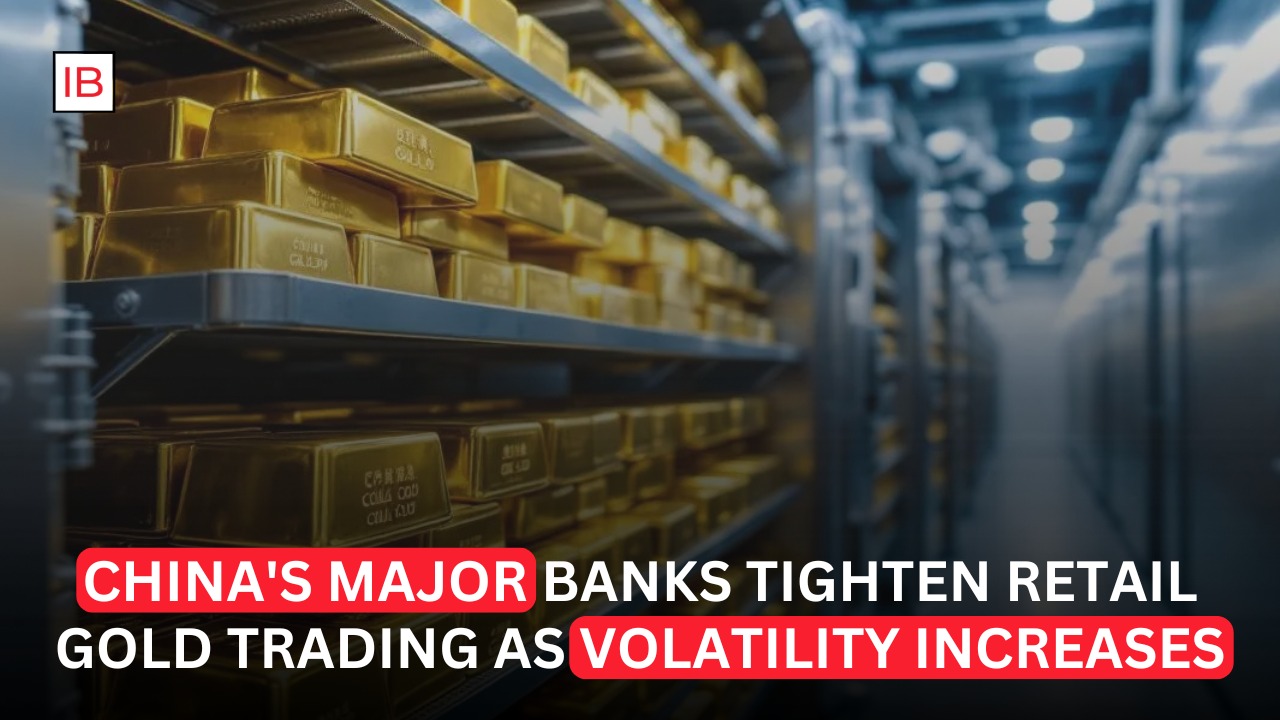
Major Lenders Move to Limit Risks Amid Sharp Swings in Gold Prices. Chinese banks are taking steps to curb retail gold trading as extreme price volatility in precious metals markets raises concerns about investor risk and speculative activity.
Several major financial institutions have issued warnings to customers and adjusted gold-related services as authorities seek to reduce exposure to sudden market fluctuations. The measures come after a turbulent period for gold prices that has seen sharp rallies followed by significant corrections.
Banks Warn Investors About Market Risks
Leading Chinese banks have urged customers to exercise caution when trading gold and other precious metals.
Financial institutions including major state-owned lenders have highlighted the risks created by rapid price movements and advised investors to carefully assess their risk tolerance before entering the market. Some banks have also adjusted trading conditions for gold-related products.
Officials are particularly concerned about retail investors taking on excessive risk during periods of heightened volatility.
Gold Market Faces Unusual Swings
Gold has experienced dramatic price fluctuations in 2026, creating challenges for both investors and financial institutions.
After reaching record highs earlier in the year, bullion prices have experienced sharp corrections and unusually large daily movements. Analysts say changing expectations for interest rates, geopolitical developments and speculative trading have contributed to the volatility.
The uncertainty has made it more difficult for investors to predict future price trends.
Retail Trading Boom Draws Attention
China has seen strong retail interest in gold investment products over recent years.
Many investors turned to gold as a safe-haven asset amid economic uncertainty and concerns about inflation. However, recent volatility has exposed some retail traders to significant losses, prompting banks to strengthen risk controls.
Regulators are increasingly focused on preventing excessive speculation in financial markets.
Demand Signals Begin to Shift
Recent data suggests investor enthusiasm for gold may be moderating.
Chinese gold exchange-traded funds recorded outflows in May, while trading activity and wholesale demand showed signs of slowing compared with earlier periods of strong buying. Analysts attribute the trend partly to stabilizing gold prices and growing interest in alternative investments.
Despite the slowdown, gold remains an important asset for many investors seeking portfolio diversification.
Central Bank Continues Gold Purchases
While retail investors have become more cautious, China’s central bank continues increasing its gold holdings.
The People’s Bank of China reported another rise in official reserves during May, extending a long-running accumulation trend. The continued purchases reflect Beijing’s broader strategy of diversifying reserve assets.
Central-bank demand remains one of the key factors supporting the global gold market.
Volatility Creates Challenges for Banks
Banks face growing pressure to manage risks associated with precious-metals trading.
Rapid price movements can increase margin requirements, raise operational risks and expose inexperienced investors to unexpected losses. By tightening controls, lenders hope to improve market stability and reduce the likelihood of disorderly trading.
Industry experts say stronger safeguards are likely if volatility remains elevated.
Outlook for Gold Remains Uncertain
Analysts remain divided on the future direction of gold prices.
Supporters point to ongoing central-bank purchases and geopolitical uncertainty as reasons prices could remain strong. Others believe volatility may continue as investors reassess interest-rate expectations and broader economic conditions.
For now, Chinese banks appear determined to limit risks while allowing investors continued access to the precious-metals market.
Focus Shifts to Stability
The latest measures highlight growing concern about speculative activity in gold trading.
As markets navigate an uncertain economic environment, banks and regulators are prioritizing stability and investor protection. Whether gold resumes its upward trend or experiences further corrections, financial institutions are expected to maintain a cautious approach toward retail trading activity.