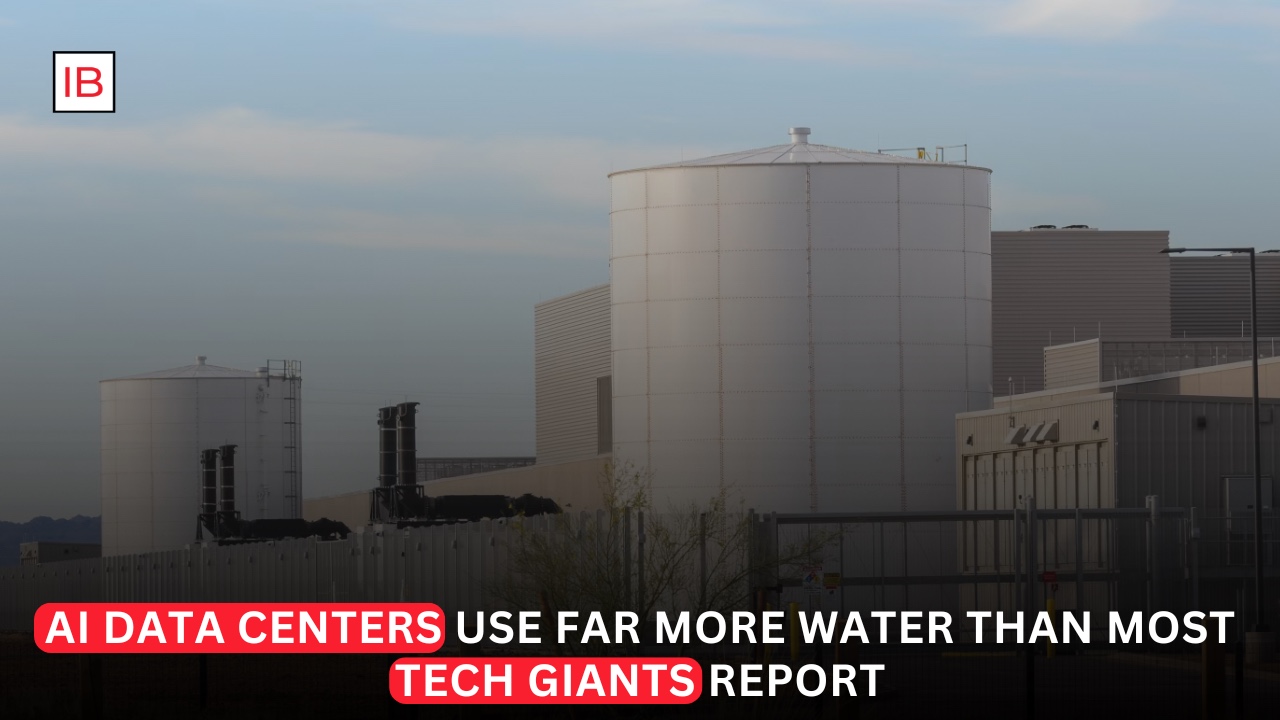
Hidden Water Use Sparks Environmental Concerns as AI Infrastructure Expands
The rapid expansion of artificial intelligence is bringing renewed attention to one of the industry’s least visible environmental challenges: water consumption.
As technology companies invest an estimated $1 trillion in AI infrastructure, researchers and environmental experts warn that data centers are using far more water than many public disclosures suggest. While companies generally report the water used directly to cool their facilities, critics argue that much larger amounts are consumed indirectly through the electricity generation required to power AI systems.
AI Data Centers Need Enormous Amounts of Water
Modern AI data centers generate vast amounts of heat while training and running advanced AI models.
To keep servers operating safely, many facilities rely on evaporative cooling systems that consume significant volumes of freshwater. Additional water is also used at power plants that generate the electricity needed to run these massive computing facilities.
Experts say this indirect water consumption is often several times greater than the water used inside the data center itself, making the industry’s overall environmental footprint much larger than commonly understood.
Reported Figures May Underestimate Total Water Use
Most major technology companies publish sustainability reports detailing their direct water withdrawals.
However, according to the Wall Street Journal’s analysis, only Meta currently includes water consumed at power plants supplying its data centers in its reporting. Studies cited in the report estimate that Google’s indirect water use is roughly three times its direct consumption, while Meta’s indirect water use in 2024 reached approximately 19 billion gallons—around 20 times its reported direct usage.
This has led to growing calls for greater transparency regarding AI’s full environmental impact.
Water Stress Is Becoming a Local Issue
The concerns are particularly significant in regions already experiencing water shortages.
Large data centers are increasingly being built in areas such as Phoenix, Arizona, where growing populations and limited water supplies have intensified debates over resource allocation. Environmental groups argue that expanding AI infrastructure could place additional pressure on local communities already facing drought conditions.
Critics also warn that water replenishment programs and sustainability commitments may not fully compensate for the localized effects of heavy freshwater consumption.
Technology Companies Seek More Efficient Cooling
Major cloud providers are investing in technologies designed to reduce water usage.
Some newer facilities are adopting closed-loop cooling systems, which recycle water rather than allowing large amounts to evaporate. Others are exploring liquid cooling technologies and alternative methods that improve energy efficiency while lowering water consumption.
Despite these advances, many existing AI data centers still rely on traditional evaporative cooling because it remains one of the most cost-effective solutions for handling extremely high computing loads.
Transparency Remains a Key Challenge
Another issue raised by researchers is the lack of consistent reporting standards.
Many technology companies disclose only selected environmental metrics, making it difficult for regulators, investors, and local communities to compare facilities accurately. Non-disclosure agreements surrounding many data center projects have also fueled criticism that residents often receive limited information before major developments are approved.
Environmental advocates are calling for standardized reporting that includes both direct and indirect water consumption across the AI industry.
AI Growth Is Intensifying the Debate
Demand for AI computing continues to accelerate worldwide.
Technology companies including Microsoft, Google, Amazon, Meta, and OpenAI are investing billions of dollars in new data centers to support increasingly powerful AI models. As facilities become larger and more energy-intensive, policymakers are paying closer attention to their effects on electricity grids, water resources, and local infrastructure.
Balancing AI innovation with environmental sustainability is becoming one of the industry’s biggest long-term challenges.
Looking Ahead
The AI boom is transforming industries and driving unprecedented investment in digital infrastructure, but it is also creating new environmental questions that extend beyond electricity consumption.
As researchers reveal that AI data centers may consume significantly more water than publicly reported, pressure is growing for greater transparency, improved cooling technologies, and more sustainable resource management.
With global AI investment continuing to accelerate, how governments and technology companies address water use could become a defining issue for the future of artificial intelligence and large-scale data center development.