Ukraine Faces Growing Pressure as Massive Attack Tests Air Defenses
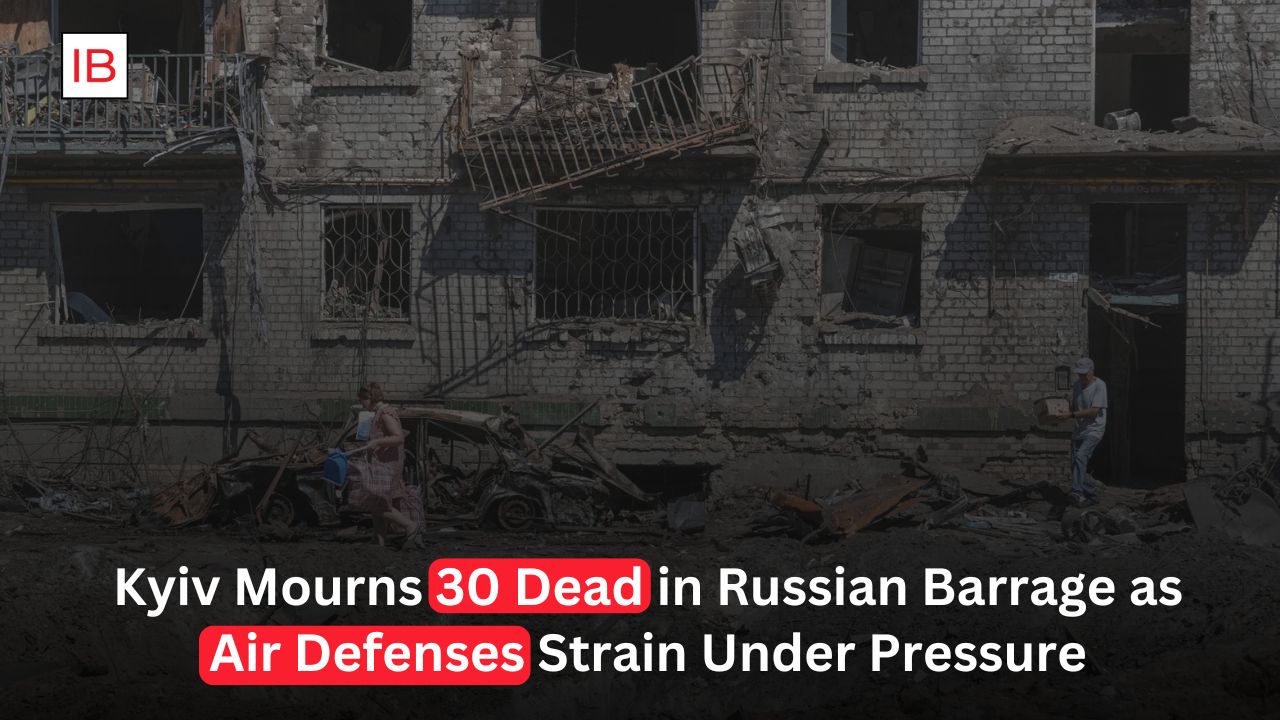
Ukraine’s capital Kyiv is observing a day of mourning after one of the deadliest Russian aerial attacks on the city this year left at least 30 people dead and more than 90 injured.
The large-scale overnight assault involved hundreds of drones and dozens of missiles, overwhelming parts of Ukraine’s air defense network despite successfully intercepting many incoming threats. The attack caused widespread destruction across residential neighborhoods, damaged critical infrastructure, and renewed concerns about Ukraine’s ability to defend its cities against increasingly sophisticated Russian strikes.
One of the Largest Attacks of the War
According to Ukrainian officials, Russia launched nearly 500 drones along with more than 70 missiles, including ballistic missiles that are significantly harder to intercept.
Although Ukraine’s air defense systems destroyed many incoming projectiles, several missiles penetrated defenses and struck residential buildings, businesses, warehouses, and public infrastructure throughout Kyiv.
Emergency crews continued searching through collapsed buildings as rescue operations entered a second day, with officials warning that additional victims could still be found beneath the rubble.
Kyiv Declares a Day of Mourning
Flags were lowered across the Ukrainian capital as residents gathered to honor those killed in the attack.
Flowers and memorials appeared near damaged buildings while families searched for missing relatives and recovered belongings from destroyed homes. Officials reported that several people remained unaccounted for as rescue workers continued clearing debris.
The attack has become the deadliest assault on Kyiv this year, highlighting the increasing human cost of the prolonged conflict.
Air Defense Systems Under Growing Strain
The latest barrage demonstrated the mounting pressure facing Ukraine’s air defense network.
While Western-supplied defense systems remain highly effective against many drones and cruise missiles, ballistic missiles continue to present a much greater challenge because of their speed and flight characteristics.
Ukrainian officials have repeatedly appealed for additional air defense systems and interceptor missiles, arguing that stronger protection is essential as Russia increases the scale and frequency of aerial attacks.
Widespread Damage Across the Capital
The strikes damaged more than 100 residential buildings and numerous public facilities across Kyiv.
Apartment complexes, businesses, warehouses, and transportation infrastructure were affected, leaving many families temporarily homeless. Humanitarian organizations also reported damage to aid facilities, complicating relief efforts for displaced residents.
The scale of destruction underscores the growing impact of long-range missile and drone warfare on civilian areas.
Russia and Ukraine Exchange Accusations
Russia said the strikes were carried out in retaliation for recent Ukrainian drone attacks on Russian territory and infrastructure.
Ukraine rejected that justification, accusing Moscow of deliberately targeting civilian areas and violating international humanitarian law. Throughout the conflict, both sides have denied intentionally attacking civilians while accusing each other of escalating hostilities.
The latest exchange illustrates the continued deterioration of prospects for a negotiated settlement.
International Concern Continues to Grow
The attack has renewed international calls for stronger support for Ukraine.
President Volodymyr Zelenskyy urged allies to accelerate deliveries of advanced air defense systems and expand cooperation on missile production, arguing that improved defenses could help prevent similar tragedies in the future.
Western governments continue to debate additional military assistance as Russia intensifies its long-range strike campaign.
The War’s Air Campaign Is Intensifying
Military analysts note that Russia has increasingly relied on large-scale drone and missile attacks as fighting continues into another year.
The growing use of combined drone and missile barrages is designed to overwhelm defensive systems by attacking from multiple directions simultaneously. In response, Ukraine has expanded long-range drone operations targeting Russian military infrastructure and logistics facilities.
The aerial conflict has become one of the defining features of the war, with both sides investing heavily in missile, drone, and air defense capabilities.
Looking Ahead
The deadly attack on Kyiv marks another escalation in the air war between Russia and Ukraine, highlighting both the resilience and the limitations of Ukraine’s current air defense capabilities.
As rescue operations continue and the city mourns those lost, international attention is once again focused on the urgent need for additional defensive support and renewed diplomatic efforts. With neither side showing signs of backing down, large-scale missile and drone attacks are likely to remain a central feature of the conflict in the months ahead.