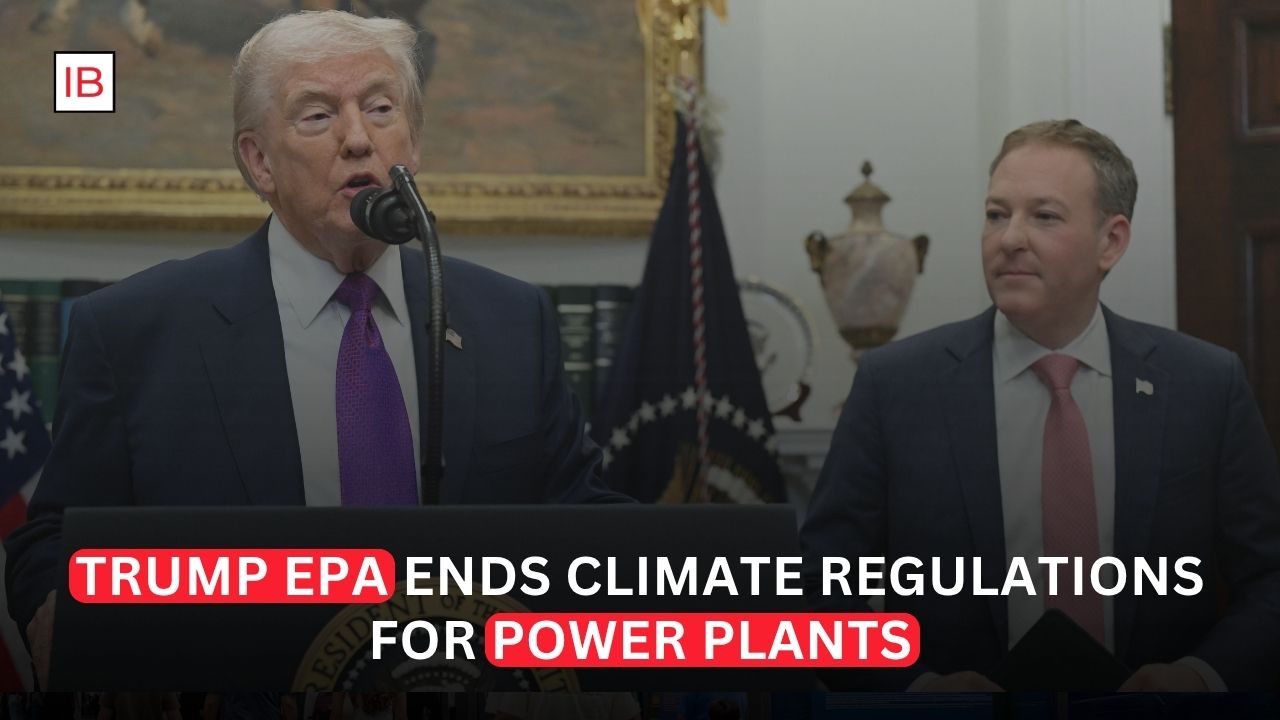
The Trump administration is moving to dismantle one of the most consequential climate regulations governing the US power sector, with the Environmental Protection Agency repealing federal limits on carbon dioxide emissions from coal- and natural-gas-fired power plants.
EPA Administrator Lee Zeldin announced the rollback on Sept. 14, reversing rules developed under former President Joe Biden that required fossil-fuel power producers to adopt technologies or operational changes capable of sharply reducing greenhouse-gas emissions. The announcement came alongside a G20 meeting of energy ministers in Houston, where the administration is emphasizing energy security, expanded baseload generation and what it calls regulatory efficiency.
The Biden-era standards, finalized in 2024, were designed to affect both existing coal plants and new large natural-gas plants. Coal facilities could have been required to install carbon-capture technology or take other steps to reduce emissions, while new gas plants faced requirements that could have encouraged the use of cleaner fuels or carbon-control systems. Biden officials estimated the rules would prevent about 1 billion metric tons of greenhouse gases from entering the atmosphere through 2047.
Trump officials argue that those requirements imposed excessive costs on the electricity industry and threatened the reliability and affordability of the US power system. The administration says removing the restrictions will give utilities greater flexibility to maintain existing generation and build additional power capacity at a time when electricity demand is rising rapidly.
That argument has gained additional urgency because of the extraordinary growth in electricity consumption expected from artificial-intelligence data centers, manufacturing facilities and other energy-intensive industries. The Trump administration has repeatedly argued that environmental regulations could slow the construction of the infrastructure required to meet that demand. The power-sector rollback is therefore part of a broader effort to make fossil-fuel generation easier to finance, build and operate.
The EPA’s action does not eliminate every pollution requirement affecting power plants. Facilities will continue to face federal restrictions covering pollutants such as mercury, arsenic and other hazardous substances, although the administration has separately moved to loosen some of those requirements. The latest action specifically removes the federal greenhouse-gas standards that were established under the Biden administration.
The administration is also challenging the legal foundation for federal regulation of greenhouse gases. Earlier in Trump’s second term, the EPA moved to reverse the 2009 finding that greenhouse gases endanger human health and therefore can be regulated under the Clean Air Act. That decision, combined with the power-plant rollback, could make it more difficult for a future administration to quickly recreate broad climate rules without another lengthy regulatory and legal process.
Environmental groups have strongly condemned the decision and are expected to challenge it in court. They argue that removing national carbon limits will increase pollution and impose additional health and environmental costs on communities located near fossil-fuel power plants. Critics also point to the EPA’s own earlier analysis, which estimated that repealing the standards could lead to thousands of premature deaths and higher health costs.
The debate is complicated by the changing economics of the US electricity market. Coal has been losing market share for decades as utilities have increasingly turned to natural gas, wind and solar generation. Coal supplied roughly 17% of US electricity in 2025, far below its position several decades ago. Even without stricter federal carbon standards, many older coal plants face pressure from relatively cheap natural gas and increasingly competitive renewable generation.
That means the repeal may have a larger effect on investment decisions than on immediate electricity generation. Utilities now have greater regulatory freedom to keep some coal facilities operating or consider new fossil-fuel projects without having to demonstrate compliance with the Biden carbon standards. Whether companies actually choose those options will depend on fuel costs, power demand, financing conditions and the economics of competing technologies.
For the natural-gas industry, the policy shift could be particularly important as electricity demand rises. Gas plants can provide dispatchable power when renewable generation is unavailable, making them attractive to utilities attempting to balance increasingly variable wind and solar output. The absence of federal carbon standards could reduce the regulatory costs associated with new gas generation.
The policy also creates uncertainty for investors and utilities planning projects over decades. Energy infrastructure often has operating lives of 20 years or more, meaning companies must consider not only today’s regulations but also the possibility that future administrations could attempt to restore climate restrictions. The Trump administration’s effort to remove the underlying legal basis for greenhouse-gas regulation is intended in part to make that reversal more difficult.
The repeal therefore represents more than a change in emissions policy. It signals a fundamental shift in how Washington views the role of fossil fuels in America’s future power system. The Biden administration treated carbon reduction as a central requirement for electricity producers, while Trump is prioritizing energy supply, industrial growth and regulatory flexibility.
The immediate beneficiaries could include coal and gas producers, utilities with fossil-fuel assets and companies seeking to build new power capacity quickly. The longer-term consequences will depend on how much additional fossil-fuel generation actually reaches the grid and whether electricity demand from AI and manufacturing grows quickly enough to justify new projects.
For the US energy industry, the message is unmistakable: Washington is once again putting fossil-fuel expansion at the center of its electricity strategy, even as the legal and economic battle over the country’s long-term energy mix moves into a new phase.