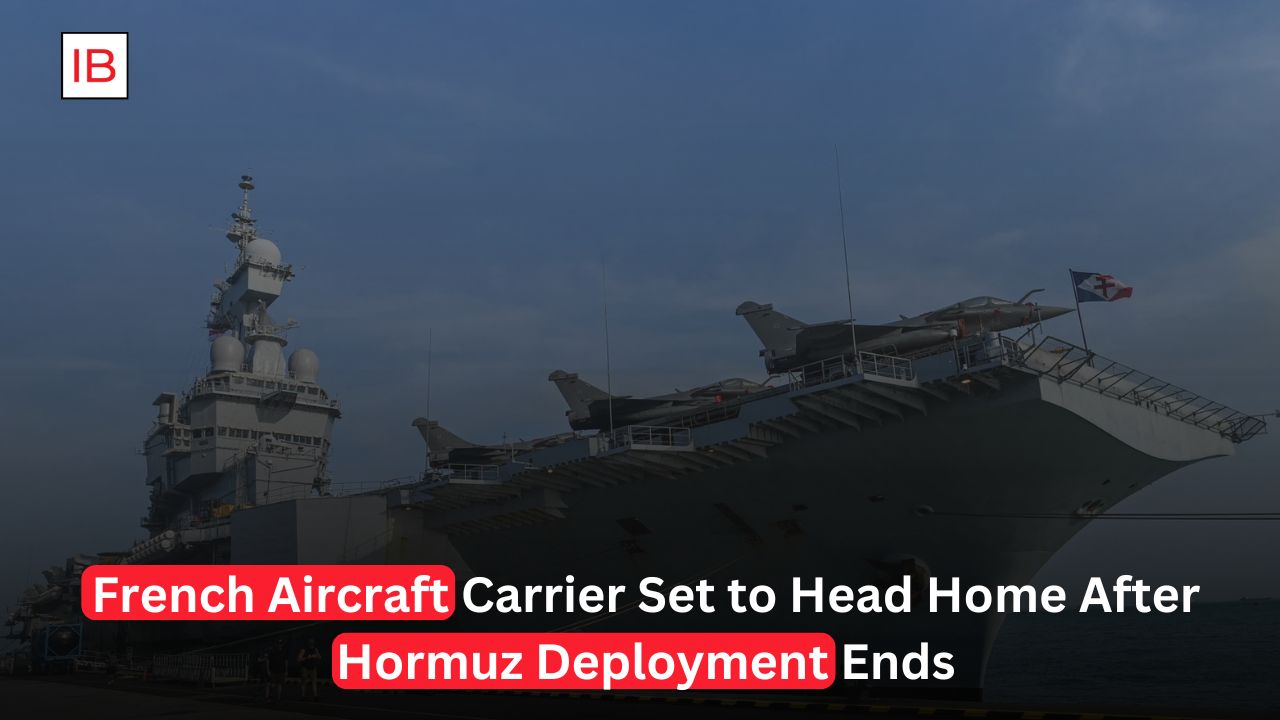
Charles de Gaulle Heads Back as Regional Tensions Ease Following Interim Peace Deal
France’s nuclear-powered aircraft carrier Charles de Gaulle is set to return to its home port of Toulon after nearly two months deployed near the Strait of Hormuz, as easing tensions between the United States and Iran reduce the immediate need for its presence in the region.
The deployment formed part of France’s efforts to help safeguard one of the world’s most strategically important maritime corridors during heightened geopolitical tensions. French officials have stressed, however, that while the carrier is returning home, France will continue maintaining naval capabilities in the region to support maritime security.
Mission Focused on Maritime Security
The Charles de Gaulle carrier strike group was deployed earlier this year as concerns grew over the security of commercial shipping through the Strait of Hormuz.
Its mission included:
- Supporting freedom of navigation
- Protecting international shipping routes
- Strengthening cooperation with allied naval forces
- Contributing to regional deterrence
France coordinated closely with European partners throughout the deployment while emphasizing that its mission was defensive in nature.
Hormuz Remains a Strategic Chokepoint
The Strait of Hormuz remains one of the world’s most critical energy corridors.
Roughly one-fifth of globally traded oil passes through the narrow waterway, making any disruption a major concern for global energy markets. During recent regional tensions, several countries increased their naval presence to help secure commercial shipping and prevent escalation.
Return Does Not Mean Full Withdrawal
French President Emmanuel Macron has indicated that the carrier’s return should not be interpreted as a reduction in France’s commitment to regional security.
While the Charles de Gaulle will sail back to France, Paris plans to maintain mine-countermeasure capabilities and other naval assets in and around the Strait of Hormuz to continue supporting maritime safety and international navigation.
Peace Deal Lowers Immediate Military Pressure
The decision follows an interim peace agreement that has eased immediate tensions between the United States and Iran.
Although the security environment has improved, officials continue to describe the region as fragile, noting that naval forces remain prepared to respond should conditions deteriorate again.
Charles de Gaulle Remains France’s Naval Flagship
Commissioned in 2001, the Charles de Gaulle is France’s flagship and the country’s only aircraft carrier.
Powered by nuclear reactors, the vessel carries Rafale M fighter jets, airborne early-warning aircraft, helicopters, and escorts that allow it to conduct a wide range of missions, from combat operations to maritime security and humanitarian assistance.
Europe’s Continuing Role in Regional Security
France has been among several European nations increasing naval activity in the Middle East to protect shipping lanes amid periods of instability.
Even as the carrier returns home, European governments are expected to continue monitoring developments in the Gulf and maintaining a military presence where necessary to safeguard international trade routes.
Looking Ahead
The return of the Charles de Gaulle marks the conclusion of an important deployment during a period of heightened regional uncertainty.
While the easing of tensions has allowed France to scale back its carrier presence, officials have made clear that Paris remains committed to protecting maritime security in the Strait of Hormuz. As geopolitical risks continue to evolve, French and allied naval forces are expected to remain engaged in ensuring one of the world’s busiest energy corridors stays open and secure.