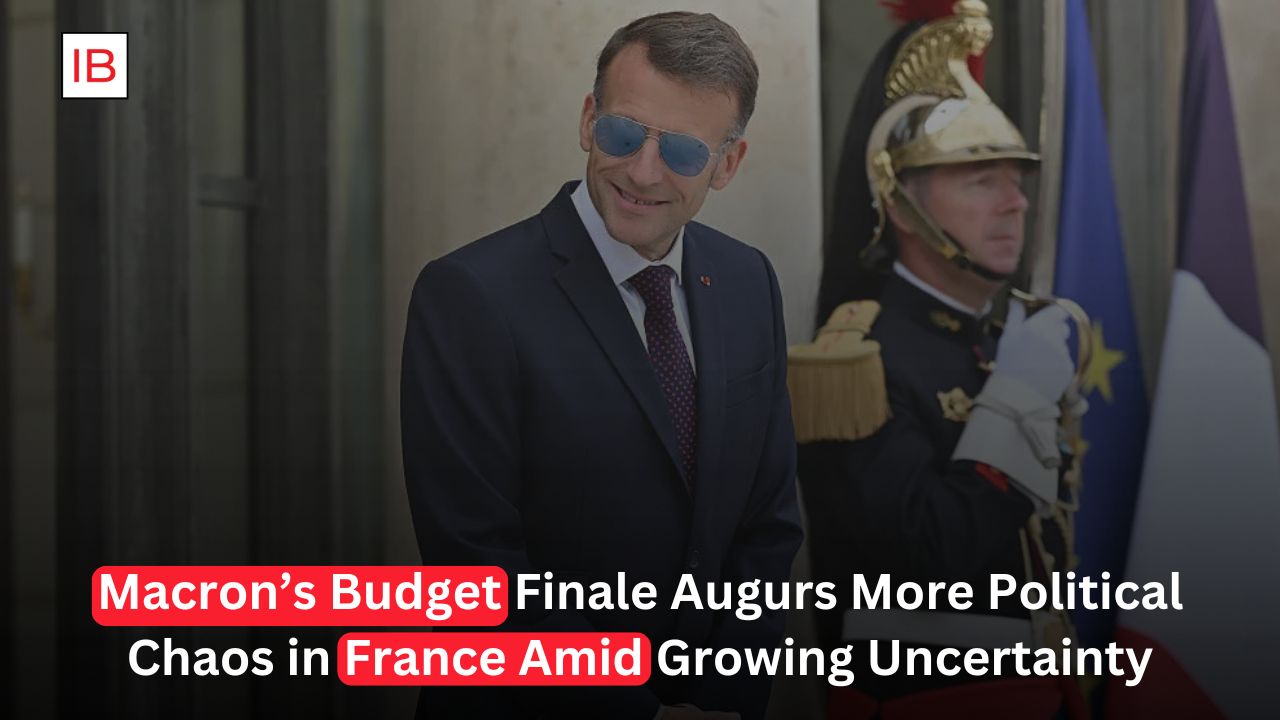
Last Major Fiscal Plan Could Shape the Legacy of Macron’s Presidency
French President Emmanuel Macron is preparing for one of the most challenging moments of his presidency as his government drafts what is expected to be its final full-year budget before the next presidential election.
The budget is widely viewed as a defining test for Macron’s administration, with growing pressure to reduce France’s large fiscal deficit while maintaining economic growth and social stability. Political analysts believe the negotiations could deepen divisions within parliament and trigger another period of political uncertainty in one of Europe’s largest economies.
France Faces Mounting Fiscal Pressure
France’s public finances have come under increasing scrutiny in recent years.
Rising government debt, persistent budget deficits, and slower economic growth have forced the government to consider difficult spending decisions. At the same time, European Union fiscal rules are becoming stricter, increasing pressure on Paris to demonstrate credible plans for reducing public borrowing.
Balancing fiscal discipline with continued investment in public services has become one of the government’s biggest challenges.
Budget Expected to Include Spending Cuts
Officials are expected to propose significant spending reductions across several areas of government.
The goal is to narrow the fiscal deficit while reassuring financial markets and European partners that France remains committed to restoring budget stability.
However, spending cuts are likely to prove politically controversial, particularly as households continue facing pressure from higher living costs and slower economic growth.
Minority Government Faces Difficult Vote
Passing the budget through parliament is expected to be particularly difficult.
Macron’s political alliance does not command an outright majority in the National Assembly, forcing the government to negotiate with opposition parties or rely on constitutional mechanisms to approve key legislation.
Previous budget votes have sparked political confrontations, no-confidence motions, and widespread criticism from both the left and right.
Political Divisions Continue to Deepen
France’s political landscape remains highly fragmented.
Opposition parties have criticized the government’s economic strategy from different perspectives, with left-wing parties opposing spending cuts and conservative groups demanding stronger fiscal discipline and structural reforms.
This divided parliament makes building consensus increasingly difficult and raises the possibility of prolonged legislative deadlock.
Investors Are Watching France Closely
Financial markets are paying close attention to France’s fiscal plans.
Investors are looking for evidence that the government can reduce borrowing while maintaining economic stability. Failure to pass credible budget measures could increase pressure on French government bonds and raise concerns about the country’s long-term fiscal outlook.
As one of the eurozone’s largest economies, France’s budget decisions also carry broader implications for European financial markets.
Budget Could Define Macron’s Final Years
For President Macron, the upcoming budget represents more than an economic policy document.
It may become the defining achievement—or greatest political challenge—of the final phase of his presidency. Successfully passing the budget could strengthen confidence in his economic leadership, while failure may further weaken his administration ahead of France’s next presidential election.
Political observers believe the outcome will influence both Macron’s legacy and the direction of French politics after he leaves office.
Challenges Extend Beyond Economics
The government must also balance broader priorities, including defense spending, energy security, healthcare, pensions, education, and industrial competitiveness.
Meeting these demands while reducing public expenditure presents a difficult balancing act that will require politically sensitive decisions across multiple sectors.
Looking Ahead
Emmanuel Macron’s final major budget is shaping up to be one of the most consequential legislative battles of his presidency.
As France works to restore fiscal discipline amid economic uncertainty, the government faces the difficult task of securing parliamentary support in an increasingly divided political environment. Whether the budget succeeds or becomes another source of political confrontation could have lasting consequences for France’s economy, financial markets, and the country’s political landscape in the years ahead.