Passive Funds Set to Fuel Massive Buying Demand as Free-Float Weight Rises
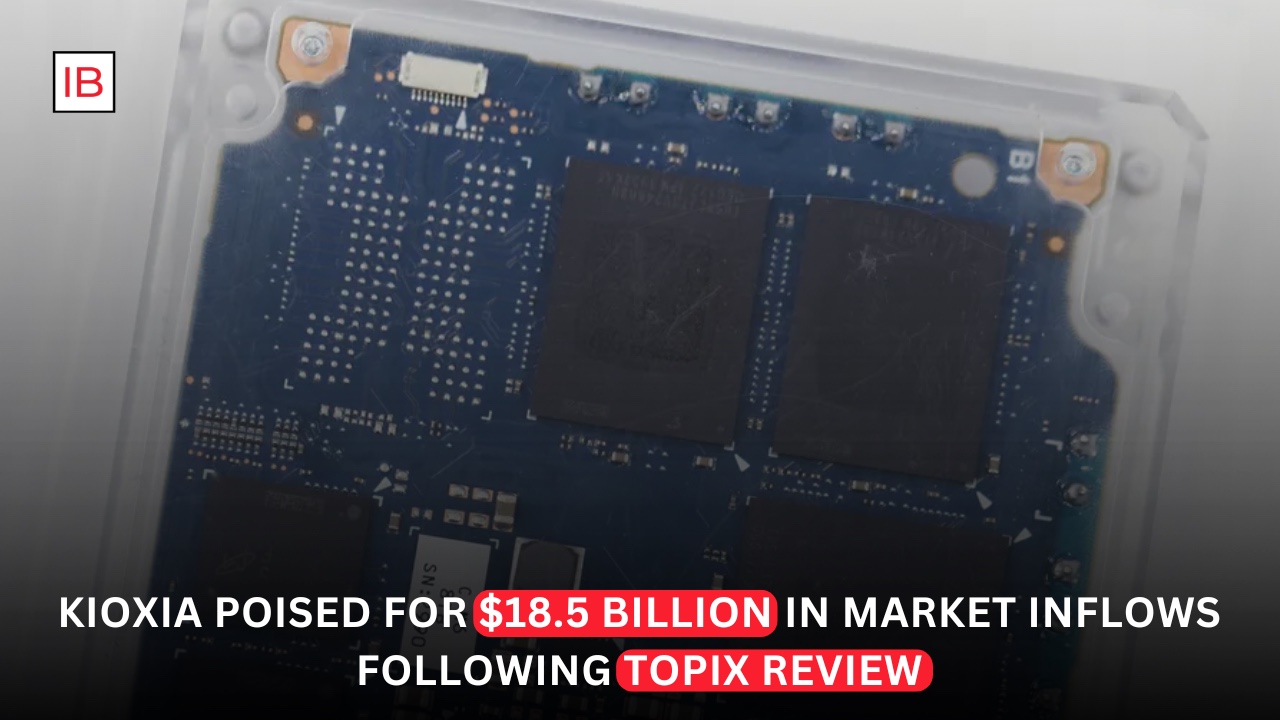
Kioxia Holdings Corp. is expected to attract approximately $18.5 billion in index-linked inflows following changes to Japan’s TOPIX index weighting methodology, according to estimates cited by SMBC Nikko Securities, highlighting how benchmark rebalancing could become a major driver of demand for the AI-fueled memory chipmaker.
The anticipated inflows reflect rising passive fund demand as Kioxia’s free-float ratio adjustment is expected to significantly increase its weight in Japan’s leading equity benchmark.
TOPIX Weighting Change Drives Demand Surge
SMBC analysts said Kioxia’s free-float ratio is projected to rise sharply from around 15% to 50%, substantially increasing its representation in the TOPIX index.
Key implications include:
- Index weight expected to rise more than threefold
- Estimated passive inflows of roughly ¥3 trillion ($18.5 billion)
- Strong buying pressure from ETF and index-tracking funds
- Structural increase in demand unrelated to fundamentals
The adjustment means that funds tracking TOPIX will be required to significantly increase their holdings of Kioxia shares.
Passive Flows Add to Existing AI-Driven Rally
The expected inflows come on top of an already powerful rally in Kioxia shares, driven by:
- Explosive demand for AI memory and NAND chips
- Tight global semiconductor supply conditions
- Strong earnings upgrades from major brokerages
- Investor re-rating of AI infrastructure stocks
Kioxia has been one of Japan’s standout beneficiaries of the global AI boom, with memory chips increasingly central to data center and AI model training workloads.
Structural Shift in Japan’s Equity Market
The TOPIX revision is part of broader changes aimed at improving index efficiency and representativeness.
Market implications include:
- Greater emphasis on free-float adjusted weighting
- Increased influence of passive capital flows
- Higher volatility around rebalancing events
- Stronger link between index design and stock demand
Analysts say such adjustments can materially move large-cap stocks with significant global investor exposure.
Semiconductor Sector Remains in Focus
Kioxia’s inclusion in large index flows comes as global semiconductor equities remain highly sensitive to:
- AI-driven demand expansion
- Memory price cycles (NAND and DRAM)
- Data center investment trends
- Geopolitical supply chain risk
The company sits at the center of NAND flash supply chains critical for AI infrastructure and cloud computing expansion.
Investor Debate Over Sustainability
Despite strong momentum, some analysts remain cautious about how sustainable the current cycle is, pointing to:
- Historical NAND price volatility
- Risk of future capacity expansion leading to oversupply
- Dependence on AI data center demand growth
- Sensitivity to global macro conditions
However, bullish investors argue that AI-driven storage demand is structurally different from prior cycles due to exponential growth in data generation.
Looking Ahead
If SMBC’s estimates prove accurate, Kioxia could see one of the largest index-driven inflows in Japan’s semiconductor sector in recent years.
The combination of:
- Passive fund reweighting
- AI-driven earnings growth
- Strong investor momentum
positions Kioxia as a key stock in both structural index flows and thematic AI investment strategies heading into the second half of 2026.