Conflict Escalates as Both Sides Exchange Attacks Across the Middle East
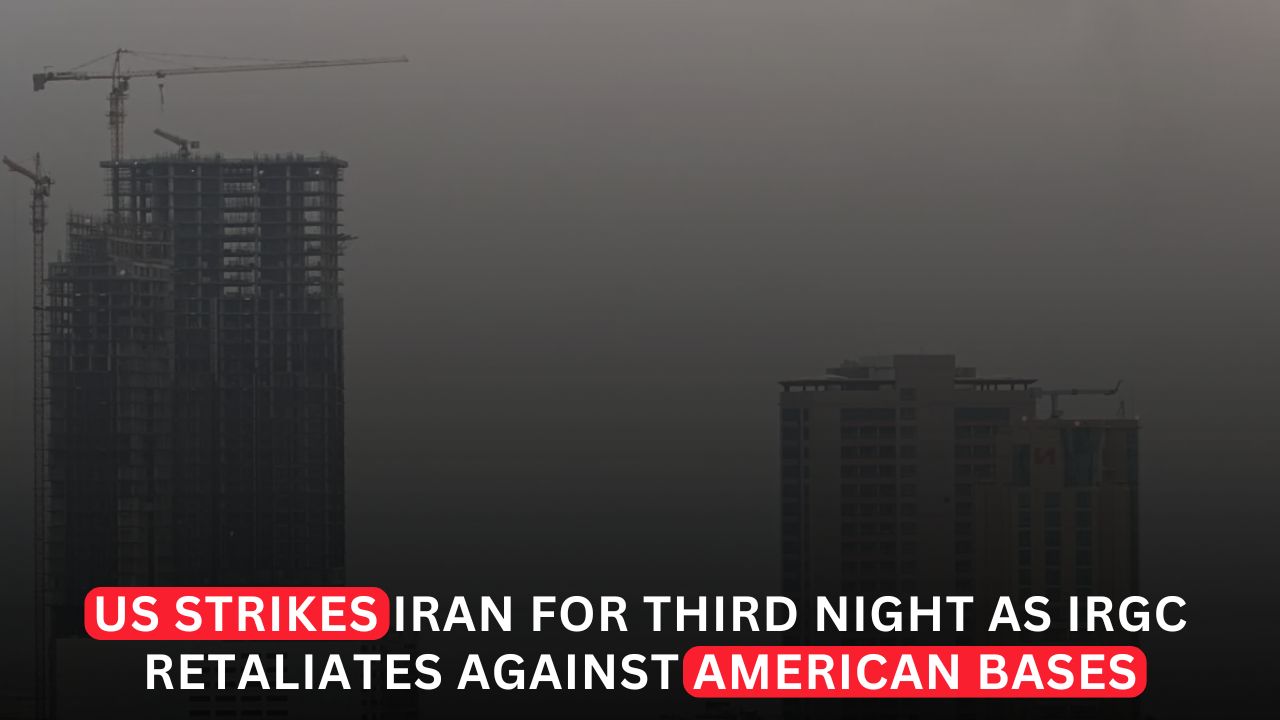
The conflict between the United States and Iran intensified after U.S. forces carried out a third consecutive night of airstrikes targeting sites linked to Iran’s Islamic Revolutionary Guard Corps (IRGC). In response, the IRGC launched attacks against American military assets in Bahrain and Jordan, raising fears of a broader regional conflict.
The latest exchange marks another major escalation, with both countries expanding military operations while international leaders continue urging restraint. (Dawn)
US Conducts New Wave of Airstrikes
According to reports, the United States targeted multiple IRGC-linked facilities during overnight operations.
The strikes were aimed at:
- Military infrastructure
- Weapons storage sites
- Command and control facilities
- Logistics hubs
- IRGC operational positions
U.S. officials said the operations were intended to weaken Iran’s military capabilities and deter further attacks on American personnel.
Iran Responds by Targeting US Military Assets
Following the American strikes, Iran’s Islamic Revolutionary Guard Corps launched retaliatory attacks against U.S. military installations.
The reported targets included:
- American military facilities in Bahrain
- U.S. assets in Jordan
- Strategic military infrastructure
- Regional security installations
Iran described the attacks as a response to continued U.S. military operations in the region.
Regional Tensions Continue to Rise
The latest military exchange has heightened concerns across the Middle East.
Governments throughout the region are monitoring:
- Military deployments
- Air defense readiness
- Maritime security
- Energy infrastructure
- Diplomatic developments
Analysts warn that further escalation could affect regional stability and international security.
Global Markets Watch Closely
Financial markets remain sensitive to developments involving the United States and Iran.
Investors are closely following:
- Oil prices
- Global energy supplies
- Shipping routes
- Defense sector activity
- Currency markets
Any prolonged conflict could increase volatility in global financial and energy markets.
International Calls for Restraint
Several countries and international organizations have urged both sides to avoid further escalation.
Diplomatic efforts continue to focus on:
- Preventing a wider regional war
- Protecting civilian populations
- Maintaining maritime security
- Reducing military tensions
- Encouraging renewed dialogue
Officials have warned that continued retaliation could significantly increase the risk of a broader conflict.
Security Forces Remain on High Alert
Military forces across the region have strengthened security measures following the latest attacks.
Authorities are increasing:
- Air defense preparedness
- Intelligence monitoring
- Protection of military installations
- Surveillance operations
- Coordination with allied forces
Regional governments continue assessing the potential for additional retaliatory actions.
Looking Ahead
The third consecutive night of U.S. strikes on Iranian targets, followed by IRGC attacks on American military assets in Bahrain and Jordan, marks a significant escalation in tensions between Washington and Tehran. As both sides continue military operations, concerns are growing that the conflict could expand beyond its current scope.
With diplomatic efforts ongoing and global markets closely watching developments, the coming days are expected to be critical in determining whether the crisis moves toward de-escalation or a wider regional confrontation.