World Cup Winner Steps Aside as Political Backlash Over Russian Commercial Links Ends His Bid for National Team Role
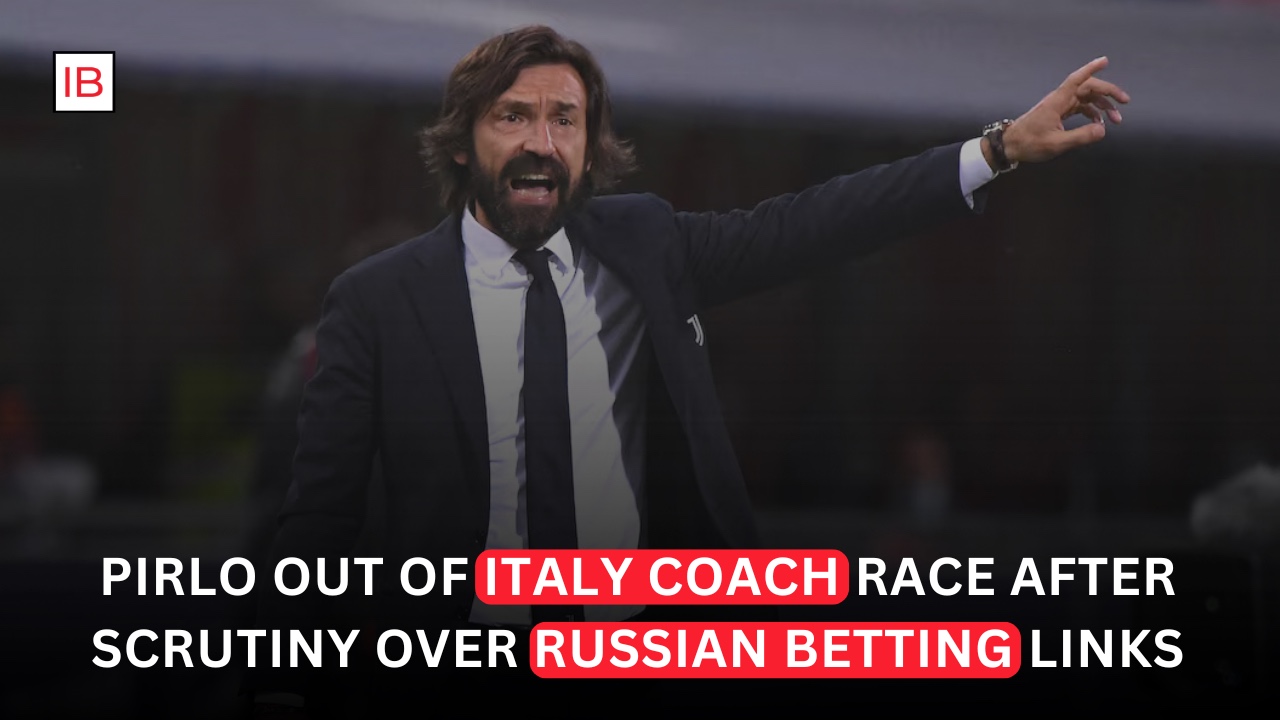
Italian football legend Andrea Pirlo has withdrawn from the race to become Italy’s next national team manager after mounting criticism over his commercial relationship with Russian betting company Fonbet. Pirlo, widely considered one of the leading candidates to take charge of the Azzurri, announced he was stepping aside following intense political and public scrutiny surrounding his role as a global ambassador for the Russian bookmaker.
The controversy quickly overshadowed discussions about Pirlo’s coaching credentials, turning the appointment process into a broader political debate as Italy continues to navigate European sanctions and diplomatic tensions linked to Russia’s war in Ukraine. His withdrawal now forces the Italian Football Federation (FIGC) to resume its search for a new head coach ahead of upcoming international competitions.
Political Pressure Intensified
Pirlo’s candidacy came under increasing pressure because of his commercial agreement with Fonbet, one of Russia’s largest betting companies.
The criticism intensified after:
- His role as a global brand ambassador became widely known.
- He attended a Fonbet-sponsored promotional event in Moscow.
- Italian politicians questioned whether the appointment would damage the country’s international image.
- Football officials faced growing public criticism over the possible selection.
Several lawmakers argued that appointing the former World Cup winner while he maintained commercial ties with a Russian company would send the wrong message at a time when European governments continue supporting sanctions against Russia.
Pirlo Defends His Position
In a public statement, Pirlo insisted that his relationship with Fonbet was entirely commercial and unrelated to politics.
He explained that:
- The agreement complied with all applicable laws.
- His appearances were strictly promotional.
- He had never intended to take any political position.
- His professional activities should not be interpreted as support for any government.
Pirlo also expressed disappointment that the discussion surrounding his candidacy shifted away from football and focused instead on his private commercial partnerships.
Ends Italy Coaching Ambitions
Following days of controversy, Pirlo confirmed that he would no longer be considered for the national team position.
His withdrawal effectively ends what had been viewed as a realistic opportunity to lead Italy following the federation’s search for new leadership.
Pirlo had reportedly emerged as one of the strongest candidates after several other high-profile coaches became unavailable, including Pep Guardiola, who declined the role earlier in the selection process.
Mixed Coaching Career
Although regarded as one of football’s greatest midfielders, Pirlo’s coaching career has produced mixed results.
Since retiring as a player, he has managed:
- Juventus.
- Fatih Karagümrük in Turkey.
- Sampdoria.
- Dubai United in the United Arab Emirates.
Supporters believed his experience as a World Cup winner and Champions League champion could help rebuild Italy after several disappointing international campaigns.
Critics, however, questioned whether his relatively limited managerial success justified appointing him to one of international football’s highest-profile jobs.
Italy Continues Coaching Search
With Pirlo no longer under consideration, the responsibility now returns to the Italian Football Federation.
Technical director Paolo Maldini, who reportedly supported Pirlo’s candidacy, must identify another coach capable of restoring Italy’s competitiveness after years of inconsistency on the international stage.
Italy has faced significant pressure following repeated failures to meet expectations at major tournaments, making the selection of the next manager one of the federation’s most important decisions in recent years.
Commercial Partnerships Under Greater Scrutiny
The controversy also highlights how commercial sponsorships are increasingly influencing appointments in international sport.
Since Russia’s invasion of Ukraine, sporting organizations across Europe have reassessed relationships involving Russian companies, particularly those connected to gambling, energy, and state-linked businesses.
Although Pirlo maintained that his agreement with Fonbet was purely professional, public opinion and political reaction demonstrated how sponsorship deals can become major factors in leadership decisions within modern football.
Looking Ahead
Andrea Pirlo’s withdrawal marks an unexpected end to what initially appeared to be a promising opportunity to become Italy’s national team manager. Rather than concerns about tactics or coaching ability, it was his commercial association with a Russian betting company that ultimately proved decisive. The episode illustrates how geopolitical tensions increasingly influence decisions in international sport, even when those relationships are unrelated to athletic performance.
For the Italian Football Federation, the search for a new coach now continues under heightened public scrutiny. The next appointment will be expected not only to improve Italy’s performances on the pitch but also to avoid the off-field controversies that have dominated recent headlines. As Pirlo returns his focus to club management, Italy must identify a leader capable of restoring the Azzurri’s standing among football’s elite while navigating the complex intersection of sport, politics, and public perception.