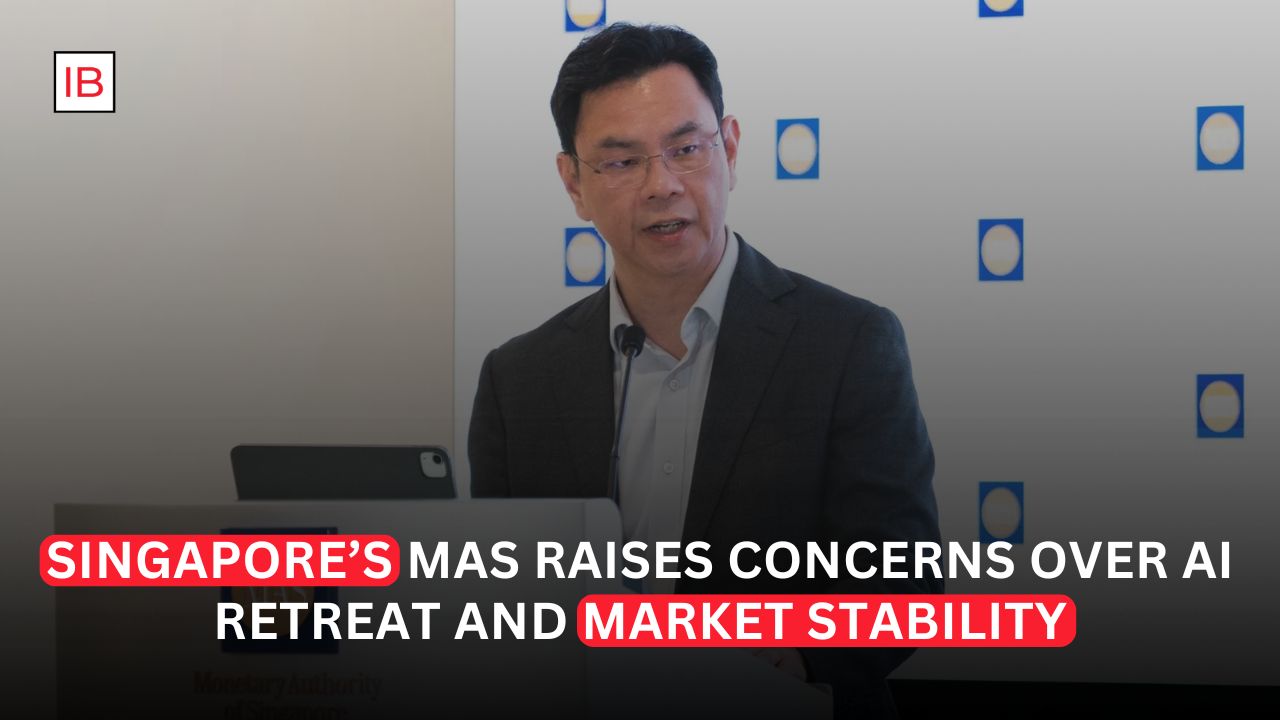
MAS Says Heavy Reliance on Artificial Intelligence Investment Has Become a Growing Risk for Financial Markets
Singapore’s Monetary Authority of Singapore (MAS) has warned that a sharp slowdown in global artificial intelligence investment could become one of the biggest threats facing financial markets and the broader global economy. While AI continues to drive economic growth, technology investment, and corporate earnings, the central bank cautioned that excessive optimism surrounding the sector has increased market concentration and created new financial vulnerabilities. Officials say a sudden decline in AI-related spending or investor confidence could trigger wider market corrections, particularly across technology stocks and semiconductor companies.
The warning comes as artificial intelligence has become one of the primary engines of global investment over the past two years. Technology companies have committed hundreds of billions of dollars toward AI infrastructure, data centers, advanced semiconductors, and cloud computing. Those investments have supported strong economic growth in several countries, including Singapore, whose export sector has benefited significantly from rising demand for AI-related electronics. However, MAS believes that the same concentration of investment could become a source of instability if market expectations change abruptly.
AI Boom Has Fueled Economic Growth
Artificial intelligence has contributed strongly to recent global economic expansion.
The technology has supported growth through:
- Rising semiconductor demand.
- Expansion of cloud computing.
- Increased corporate technology spending.
- Stronger productivity investments.
- Higher capital expenditure by major technology firms.
Singapore has been one of the beneficiaries of this trend, with AI-driven electronics accounting for a large share of recent export growth. Strong demand for advanced chips and digital infrastructure has helped support manufacturing activity and overall economic performance.
Central Bank Warns Against Overdependence
Despite these benefits, MAS says financial markets have become increasingly dependent on continued AI optimism.
Officials highlighted several concerns:
- Elevated technology valuations.
- Heavy concentration in a small number of companies.
- Large capital spending commitments.
- Dependence on sustained AI demand.
- Greater exposure to investor sentiment.
If companies reduce AI investment or earnings fail to meet expectations, markets could experience significant volatility as investors reassess future growth prospects.
Semiconductor Sector Most Exposed
The semiconductor industry remains at the center of AI investment.
Chip manufacturers have experienced exceptional demand as companies race to build powerful computing infrastructure for artificial intelligence applications.
However, MAS noted that semiconductor companies would likely be among the first affected if AI investment slows.
Recent fluctuations in Asian chip stocks have demonstrated how quickly investor sentiment can change when concerns emerge regarding AI spending or future earnings expectations.
Financial Markets Could Feel Wider Impact
The central bank believes an AI-related correction would extend beyond technology companies.
Potential consequences include:
- Declining equity markets.
- Reduced corporate investment.
- Lower business confidence.
- Slower global economic growth.
- Increased financial market volatility.
Because AI-related companies now represent a substantial share of global stock market capitalization, weakness within the sector could spread across broader financial markets.
Cybersecurity Risks Also Increasing
MAS also highlighted another growing concern surrounding artificial intelligence.
Rapid advances in AI are making cyberattacks increasingly sophisticated.
Officials warned that:
- AI-powered phishing attacks are becoming more convincing.
- Automated hacking tools are evolving rapidly.
- Financial institutions face more complex cyber threats.
- Quantum computing could create additional long-term security challenges.
To address these risks, Singapore has established initiatives designed to strengthen cybersecurity within its financial sector while encouraging responsible AI adoption.
Singapore’s Economy Remains Strong
Despite warning about long-term risks, MAS emphasized that Singapore’s economy continues performing well.
Economic growth has been supported by:
- Technology exports.
- Electronics manufacturing.
- Financial services.
- AI-related investment.
- Strong external demand.
The central bank recently tightened monetary policy slightly as it continues balancing inflation risks against economic growth, while acknowledging that future conditions remain uncertain.
Investors Encouraged to Diversify
Market analysts increasingly recommend that investors avoid concentrating portfolios solely in AI-related companies.
Diversification across sectors may help reduce exposure to:
- Technology valuation swings.
- Semiconductor volatility.
- Geopolitical uncertainty.
- Changes in corporate investment.
While artificial intelligence remains a major long-term growth driver, experts believe investors should prepare for periods of increased market fluctuations as the industry matures.
Looking Ahead
The Monetary Authority of Singapore’s warning reflects growing recognition that artificial intelligence has become both a powerful economic engine and a potential source of financial risk. AI investment continues supporting growth, innovation, and productivity across the global economy, but heavy reliance on continued spending and elevated market expectations has increased vulnerability to sudden shifts in investor sentiment. Should AI investment slow significantly, the effects could extend well beyond technology companies, influencing global equity markets, corporate investment, and economic growth.
For now, Singapore remains optimistic about the long-term benefits of artificial intelligence while encouraging businesses, investors, and financial institutions to remain cautious about excessive concentration in the sector. As AI continues transforming industries worldwide, balancing innovation with financial stability will become increasingly important for policymakers and market participants alike. The central bank’s message is clear: artificial intelligence offers enormous opportunities, but managing the risks associated with rapid investment growth will be just as critical to sustaining long-term economic success.