Succession Questions and Internal Tensions Create Uncertainty Around the Future of the Global Eyewear Giant
A long-running family dispute surrounding the ownership and future leadership of EssilorLuxottica, the global eyewear powerhouse behind Ray-Ban, Oakley, and numerous luxury eyewear brands, is raising fresh questions about the future of one of the world’s largest consumer goods empires. The disagreement centers on the inheritance and governance of the fortune built by the late Italian entrepreneur Leonardo Del Vecchio, whose business transformed the global eyewear industry and eventually merged with France’s Essilor to create a company valued at roughly $46 billion at the time of the landmark merger.
Although EssilorLuxottica continues to deliver solid financial performance and remains a dominant force in global eyewear, uncertainty surrounding family ownership and long-term succession has become an important issue for investors monitoring the company’s future governance. The dispute highlights the complex challenges many large family-controlled businesses face as they transition leadership across generations.
A Fortune Built by Leonardo Del Vecchio
Leonardo Del Vecchio founded Luxottica in 1961 and transformed a small Italian eyewear manufacturer into the world’s largest eyewear company through decades of acquisitions, licensing agreements, and retail expansion. The business eventually merged with French lens manufacturer Essilor in 2018 to create EssilorLuxottica, combining iconic eyewear brands with leading optical lens technologies under one global company.
Today, the group owns or manages globally recognized brands including:
- Ray-Ban.
- Oakley.
- Persol.
- Oliver Peoples.
- Sunglass Hut.
- LensCrafters.
It also produces eyewear under license for numerous luxury fashion houses while operating thousands of retail locations worldwide.
Family Ownership Remains Significant
Control of a substantial portion of EssilorLuxottica remains linked to Del Vecchio’s family through the holding company Delfin, one of the group’s largest shareholders. Following Del Vecchio’s death, questions surrounding inheritance, governance, and future influence over the company have drawn increasing attention from investors and market observers.
Family-controlled businesses often face complex succession challenges as ownership passes between multiple heirs with differing priorities regarding long-term strategy, governance, and capital allocation.
Governance Questions Draw Investor Attention
While the company continues operating normally under its executive leadership, uncertainty surrounding family relationships has created speculation about future governance arrangements.
Investors are watching developments related to:
- Long-term ownership structure.
- Board influence.
- Voting control.
- Succession planning.
- Strategic direction.
Stable governance remains particularly important for global companies with significant family ownership.
Business Performance Remains Strong
Despite ownership questions, EssilorLuxottica’s operating performance continues to improve.
Recent financial results showed:
- Strong revenue growth.
- Higher operating profit.
- Continued expansion of AI-enabled smart glasses.
- Growth in vision-care products.
- Stable long-term guidance.
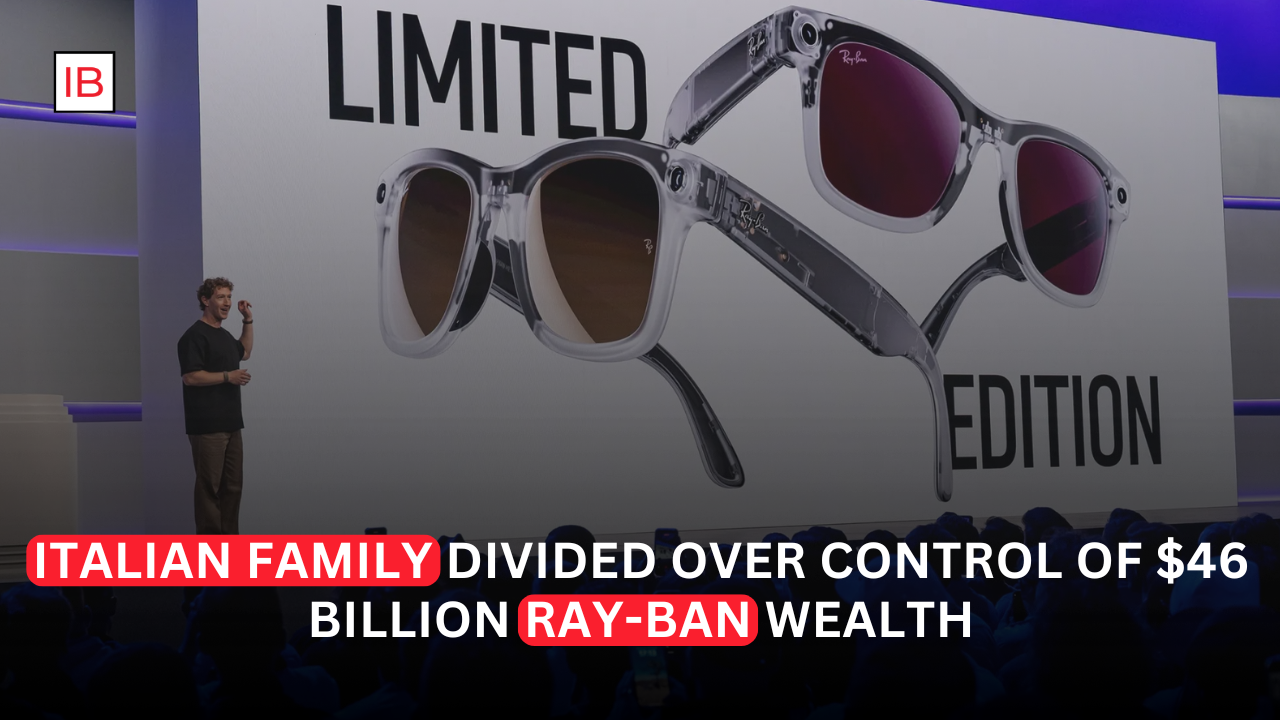
The company’s partnership with Meta has also driven rapid growth in AI-powered smart glasses, adding a new technology growth engine alongside its traditional eyewear business.
AI Glasses Become New Growth Driver
One of EssilorLuxottica’s fastest-growing businesses is wearable technology.
Sales of AI-enabled smart glasses have increased sharply as the company expands its collaboration with Meta.
The products combine:
- Classic Ray-Ban designs.
- Artificial intelligence.
- Voice interaction.
- Cameras.
- Digital connectivity.
Management believes smart glasses could become a major long-term growth category within the broader consumer electronics market.
Luxury Industry Watches Closely
The outcome of family governance discussions carries importance beyond EssilorLuxottica itself.
Many European luxury and consumer companies remain heavily influenced by founding families, making succession planning an important consideration for shareholders.
Successful transitions typically require balancing:
- Family interests.
- Professional management.
- Corporate governance.
- Long-term shareholder value.
Looking Ahead
EssilorLuxottica continues to operate from a position of considerable financial strength, supported by its leadership in eyewear, optical lenses, retail distribution, and emerging AI-powered wearable technology. Although family-related succession questions have attracted renewed attention, the company’s day-to-day operations and financial performance remain robust, with recent earnings highlighting continued growth across multiple business segments.
For investors, the key issue will be whether ownership discussions can be resolved while preserving the stable governance that has helped transform the company into the world’s leading eyewear manufacturer. As demand for premium eyewear, vision-care products, and AI-enabled smart glasses continues expanding, EssilorLuxottica remains well positioned for future growth, provided its leadership structure continues supporting long-term strategic execution.