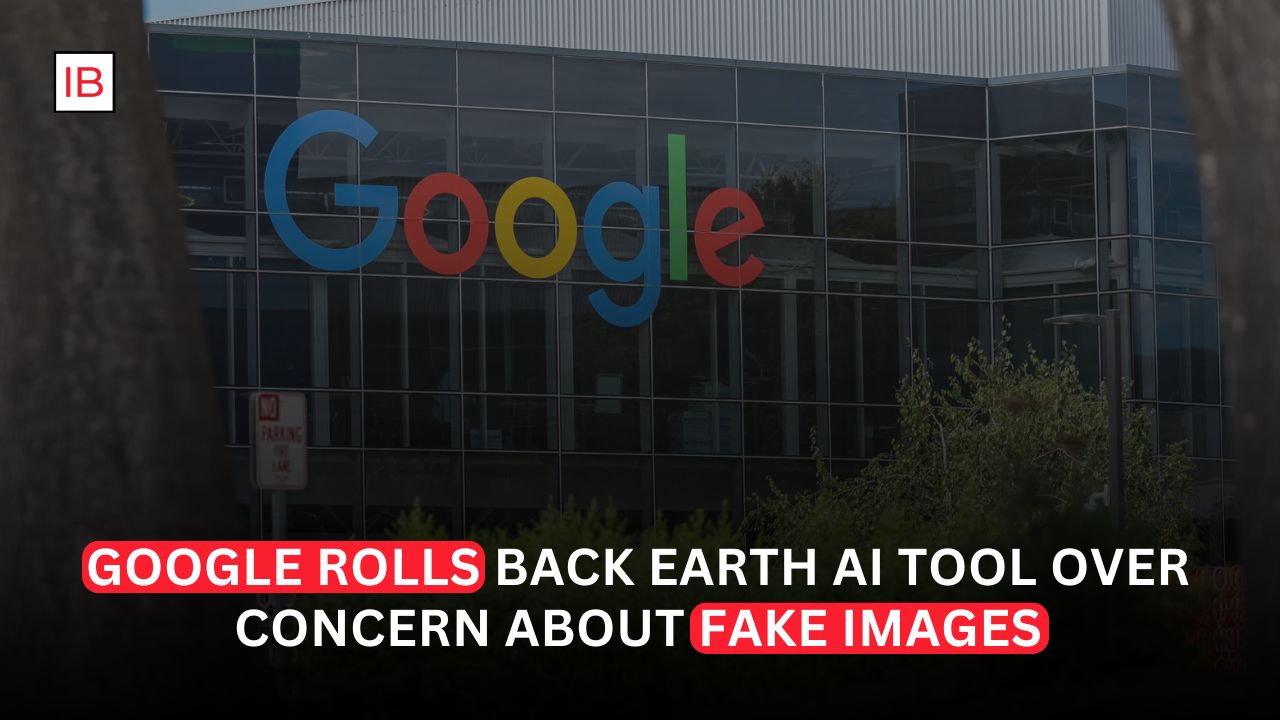
Google pulled a newly launched AI image-generation feature from Google Earth just one day after switching it on for all web users, reversing course following intense backlash from researchers and journalists who demonstrated how easily the tool could be used to fabricate convincing satellite imagery of real locations.
A Feature That Lasted Barely 24 Hours
The “create image” tool launched Thursday, allowing users to zoom into any location on Google Earth, tap a button, and type a text prompt to generate a photorealistic image layered directly over the platform’s real satellite, aerial, and 3D-mapping data. Powered by Google’s Nano Banana 2 image-generation technology, the feature was pitched by product manager Bryan Horowitz as a tool designed to work with users’ imaginations, letting people simply zoom into a place and type whatever they wanted to see.
By Friday, the company had reversed course entirely. In a statement posted to its media relations account, Google said: “We’ve seen geospatial professionals using this feature for a range of useful purposes, however we’ve also seen people sharing screenshots of generated imagery that appear to violate our policies. So we’re rolling back this feature in Google Earth while we work on implementing stronger guardrails.”
How Quickly the Backlash Built
The reversal followed rapid, damning demonstrations from multiple outlets showing just how easily the tool could produce misleading content. Journalist Joseph Cox of 404 Media used the feature to generate an image of a blast crater in Los Angeles and separately inserted fabricated protesters just outside Google’s own Mountain View campus. NPR generated its own test images depicting flooding around the U.S. Capitol and fires at an Iranian oil terminal. Online research expert Henk Van Ess demonstrated he could insert an entirely nonexistent nuclear reactor into real satellite coordinates, while other researchers said the tool could be prompted to fabricate fake nuclear sites and other falsehoods superimposed convincingly onto real-world locations.
Google’s Initial Defense Falls Flat
Before reversing course, Google had initially downplayed the misinformation concerns entirely. The company argued that people could verify whether any given image was authentic by checking it through the Gemini app or using Lens in Search, since every image generated with Nano Banana in Google Earth carried an embedded SynthID digital watermark. In its original statement defending the feature, Google said: “We take misinformation seriously… In addition, we prevent image creation on harmful topics and are continually updating our protections.”
That defense proved insufficient once the scale and ease of potential abuse became apparent through widely shared examples. Critics noted that most casual viewers encountering a screenshot of a fabricated satellite image online would have no practical way of knowing to check for a digital watermark in the first place, undermining the effectiveness of that safeguard as a real-world defense against misuse.
Why Google Earth’s Credibility Matters So Much
The controversy struck at something particularly sensitive for Google given how the platform is actually used. Open-source investigators and researchers have long relied on satellite imagery, including from Google Earth, to verify real-world events and cross-reference footage shared online, particularly in hard-to-reach or contested regions. That reliance makes the platform’s perceived reliability unusually consequential compared with other AI image tools, since fabricated content convincingly overlaid on real coordinates could directly undermine efforts to verify breaking news or document atrocities in conflict zones.
The stakes were not merely theoretical. Fake satellite imagery had already circulated during the earlier US-Israel war with Iran, when doctored images purporting to show a damaged American base in Bahrain spread through Iranian media, apparently generated using Google Earth imagery combined with AI tools. Real satellite images later confirmed the base had in fact been damaged, though not in the manner depicted in the fabricated version, illustrating how AI-generated imagery can distort even events that turn out to have a factual basis.
What Comes Next
Google has indicated the rollback is intended to be temporary while the company develops stronger safeguards before potentially reintroducing the feature. Whether those forthcoming guardrails can adequately balance legitimate use cases, such as the “range of useful purposes” the company said geospatial professionals had already found for the tool, against the clear and rapidly demonstrated potential for misuse remains an open question the company will need to resolve before any relaunch.