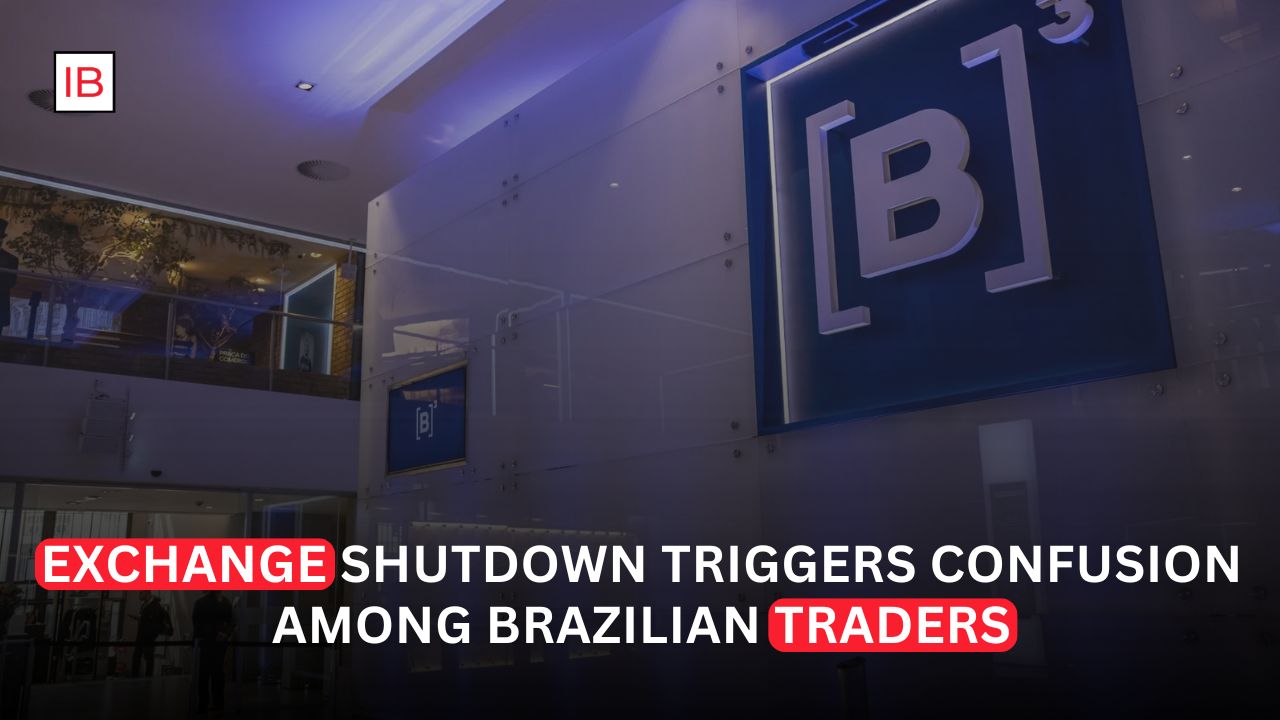
Technical Issues Disrupt Trading at Latin America’s Largest Stock Exchange
Trading on Brazil’s B3 stock exchange was temporarily delayed after the exchange experienced technical processing issues that affected the start of the trading session. The disruption briefly prevented normal market operations, forcing the exchange to postpone the opening while engineers worked to restore system functionality. Although trading eventually resumed, the incident highlighted the growing importance of resilient technology infrastructure for modern financial markets.
B3, headquartered in São Paulo, operates Latin America’s largest stock exchange and processes billions of dollars in transactions every trading day. Because of its central role in Brazil’s financial system, even short operational interruptions attract close attention from investors, brokers, regulators, and listed companies.
Technical Problems Delay Market Open
According to the exchange, processing issues affected systems required to begin the trading session on schedule.
As a result:
- Market opening was postponed.
- Brokers temporarily paused trading activity.
- Investors waited for confirmation that systems were operating normally.
- Exchange engineers investigated the technical fault.
B3 stated that restoring stable operations remained its immediate priority before allowing trading to begin.
Trading Eventually Resumed
After resolving the technical issues, the exchange successfully reopened the market.
Officials confirmed:
- Trading systems returned to normal.
- Order processing resumed.
- No evidence suggested data integrity had been compromised.
- The exchange continued monitoring system performance throughout the session.
The incident was resolved without requiring the cancellation of the day’s trading.
Importance of B3
B3 plays a critical role in Brazil’s financial markets by providing trading infrastructure for:
- Equities.
- Fixed-income securities.
- Exchange-traded funds.
- Derivatives.
- Commodities.
The exchange also operates clearing, settlement, and custody services, making uninterrupted operations essential for Brazil’s broader financial system.
Market Infrastructure Under Scrutiny
Exchange operators worldwide continue investing heavily in technology to minimize operational disruptions.
Key priorities include:
- System redundancy.
- Cybersecurity.
- Processing speed.
- Operational resilience.
- Disaster recovery capabilities.
Even brief interruptions can affect investor confidence and market efficiency, particularly during periods of elevated volatility.
Investors Monitor Operational Reliability
Although the delay was relatively short, market participants continue paying close attention to exchange reliability.
Institutional investors increasingly depend on:
- Continuous market access.
- High-speed execution.
- Accurate trade processing.
- Stable settlement systems.
Reliable technology has become one of the most important competitive advantages for global financial exchanges.
Looking Ahead
The temporary delay at Brazil’s B3 exchange serves as a reminder that modern financial markets rely heavily on sophisticated technology infrastructure capable of processing enormous trading volumes in real time. While the issue was resolved quickly and trading resumed normally, even short interruptions demonstrate how operational resilience has become just as important as market liquidity for major exchanges.
As electronic trading continues expanding across global markets, exchanges are expected to further strengthen their systems through greater redundancy, enhanced cybersecurity, and faster recovery procedures. For investors, maintaining confidence in market infrastructure remains essential to ensuring efficient capital markets and uninterrupted trading during periods of both normal activity and market stress.