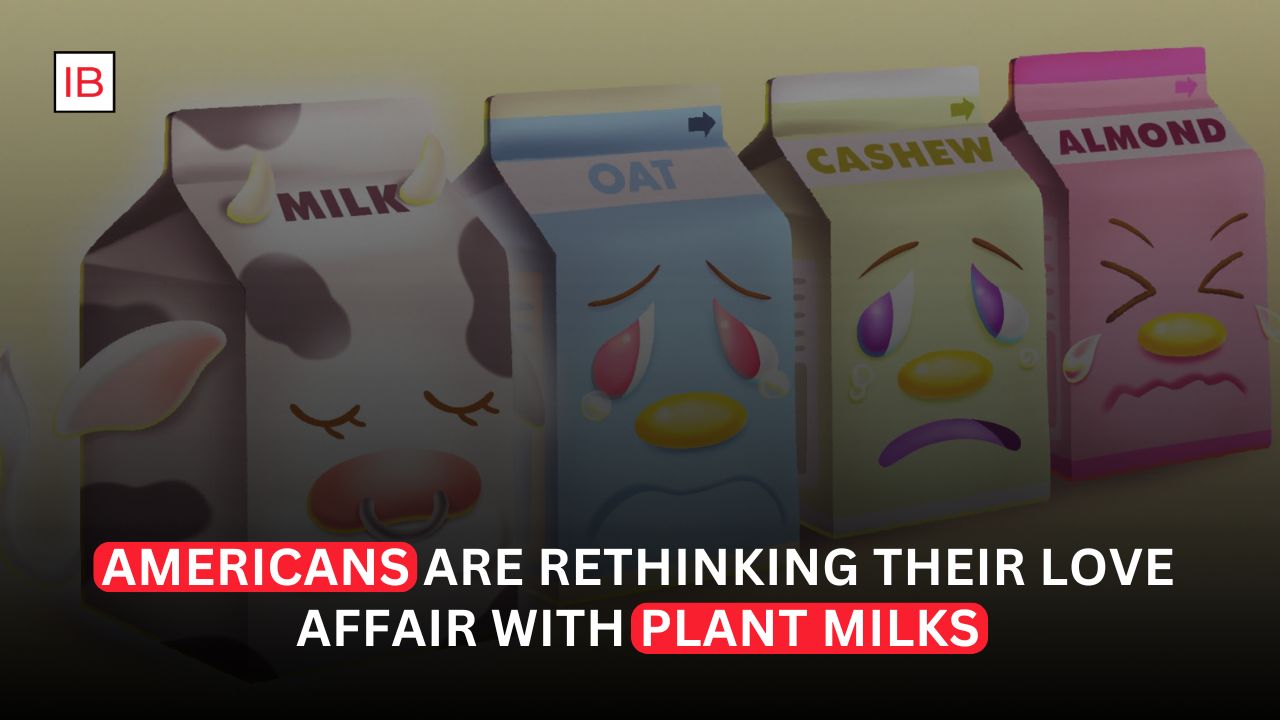
After nearly a decade of steady growth, dairy-free milk is losing its grip on American grocery carts, with sales sliding for three consecutive years as consumers increasingly return to traditional cow’s milk over concerns about ingredient lists, protein content, and processing.
A Multi-Year Slide
Retail sales by volume of dairy-free milks have fallen by more than 5% each year for three straight years, according to data from market research firm Circana. Almond milk, long the category’s dominant player, has been among the hardest hit, while even oat milk, which spent years as the trendiest option on grocery shelves, has seen its momentum slow considerably. That reversal marks a notable turning point for a category that had spent roughly a decade expanding rapidly as plant-based alternatives rode a wave of consumer interest in dairy-free and vegan lifestyles.
Why Shoppers Are Switching Back
Much of the shift appears rooted in changing consumer attitudes toward processed food generally. One Chicago-based consumer described having consumed almond and cashew milk for nearly a decade before taking a closer look at the ingredient list and being surprised by the number of unfamiliar additives, alongside the products’ minimal protein content. That closer scrutiny led her to switch to traditional dairy, reasoning that cow’s milk offered a simpler, single-ingredient alternative to products she felt had been overprocessed. Industry analysts describe this sentiment as increasingly common, with broader cultural trends — including growing skepticism toward seed oils, a resurgence of interest in whole and organic foods, and social media influencers promoting more traditional eating patterns — all seemingly contributing to the pullback from alt-milk.
The Data Backs Up the Anecdotes
Government data tracking the broader market supports the narrative of a genuine reversal. Whole milk sales rose 1.6% between 2023 and 2024, while organic milk sales climbed nearly 7% over the same period, according to Agricultural Marketing Service figures. Plant-based milks, by contrast, saw sales fall 4.4% during that stretch. Despite dairy alternatives’ rapid growth over the past decade, the category remains far smaller than traditional dairy in absolute terms, with U.S. milk production valued at roughly $59.2 billion in 2022 compared with an alternative milk market of just under $6 billion.
Industry Analysts Point to a Protein and Processing Backlash
Market researchers have identified a few specific factors weighing on the category. Analysts at Mintel have noted that many consumers now perceive minimally processed milk with fewer ingredients as inherently healthier, directly undercutting one of plant-based milk’s original selling points as the “cleaner” option. Some non-dairy drinkers have also reported that plant-based alternatives simply don’t deliver enough nutritional value, particularly protein, at a moment when consumer interest in high-protein diets has surged broadly across the food industry. Higher price points for alternative milks have compounded the problem, especially since many consumers no longer view plant-based options as offering a meaningfully premium experience worth the added cost.
Not Every Category Is Struggling Equally
Within the broader dairy-free segment, performance has been uneven. Coconut milk has emerged as something of a standout, posting double-digit volume growth in both 2023 and 2024 even as other plant-based varieties declined, suggesting shifting consumer preferences within the category rather than a uniform rejection of all non-dairy options. Companies have continued attempting to reinvigorate demand through product innovation, with brands like Danone’s Silk expanding into higher-protein oat milk and plant-based yogurt lines specifically designed to address the nutritional gaps consumers have identified.
A Reversal With Real Consequences for Dairy Farmers
The shift back toward cow’s milk has not been an unambiguous win for the traditional dairy industry either. The Dairy Farmers of America, which represents more than 30% of U.S. milk producers, has reported that broader declines in milk sales over recent years contributed to a $1.45 drop in average milk prices, driven partly by the earlier rise of plant-based alternatives that displaced some conventional dairy consumption before the current reversal took hold. Overall fluid milk consumption in the U.S. has continued a long-term decline stretching back decades, even as the specific comparison between dairy and plant-based options has now tilted back in dairy’s favor.
What Comes Next
With whole and organic dairy milk continuing to gain ground and plant-based alternatives facing headwinds tied to processing concerns and perceived nutritional shortfalls, the coming years will test whether alt-milk brands can successfully reformulate and market their way back into consumer favor, or whether the category settles into a smaller, more niche role within the broader beverage aisle. For now, shifting attitudes toward processed ingredients and protein content appear to be reshaping what Americans choose to pour over their cereal, at least for the time being.