Pentagon Withdraws Strategic Lithium Tender as Supply Chain Priorities Continue Evolving
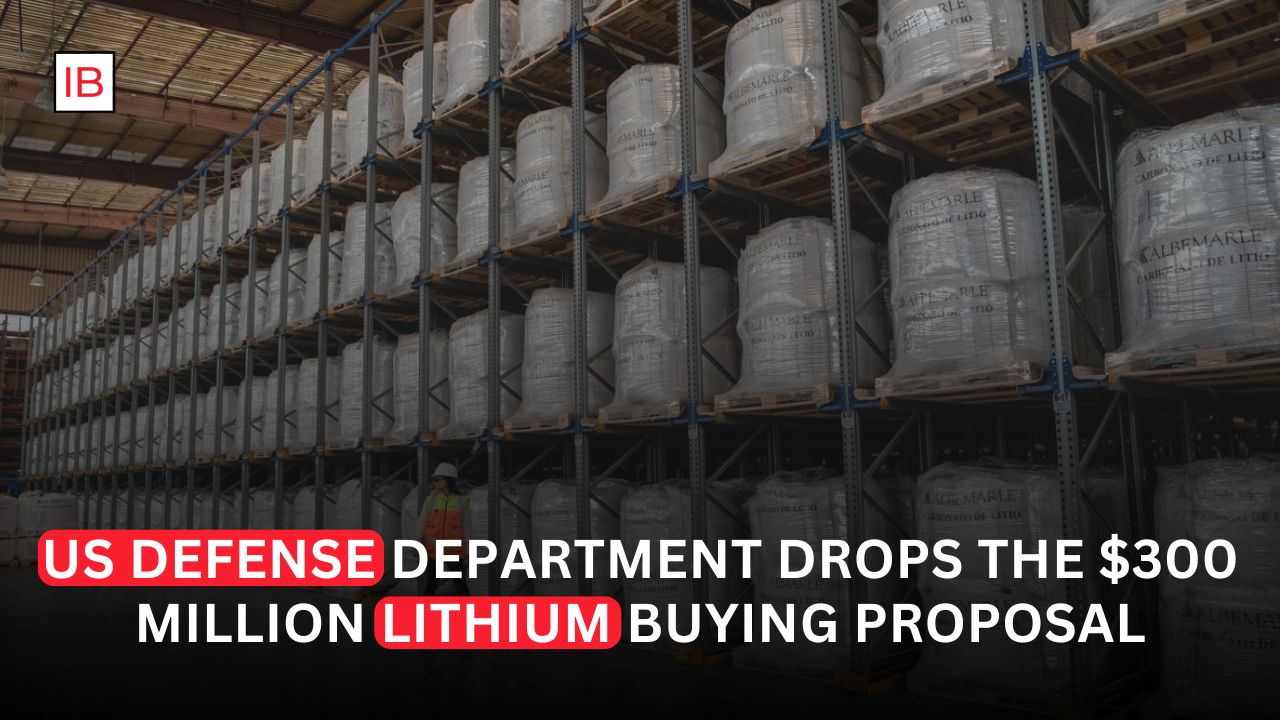
The U.S. Department of Defense has cancelled its planned purchase of up to $300 million worth of battery-grade lithium carbonate, marking another unexpected shift in Washington’s efforts to strengthen domestic supplies of critical minerals. The cancelled procurement had been intended to expand the National Defense Stockpile by acquiring nearly 36 million pounds (about 16,000 metric tons) of lithium carbonate over a five-year period. The Defense Logistics Agency (DLA), which manages the stockpile, removed the tender without providing a public explanation, leaving industry participants uncertain about whether the purchase will be restructured, delayed, or replaced by a different strategy.
The decision comes despite lithium remaining one of the U.S. government’s highest-priority critical minerals. Lithium is an essential component in rechargeable batteries used in electric vehicles, large-scale energy storage systems, advanced communications equipment, aerospace technologies, and numerous military applications. As global competition for strategic minerals intensifies, the United States has sought to reduce its dependence on foreign supply chains—particularly those linked to China, which continues to dominate lithium refining and battery-material processing.
Tender Was Designed to Build Strategic Reserves
The procurement was first announced in early July as part of a broader effort to strengthen America’s strategic reserves of critical battery materials.
According to the solicitation, suppliers were asked to submit fixed-price proposals covering deliveries over a five-year period. The government indicated that contract awards could range from as little as $1 million to as much as $300 million, depending on available funding and supplier capabilities. The submission deadline was extended twice before the tender was ultimately cancelled.
The procurement formed part of broader federal efforts to improve long-term supply security for minerals viewed as strategically important to national defense and advanced manufacturing.
Lithium Remains Central to National Security
Although often associated with electric vehicles, lithium has become increasingly important for defense applications.
The material is used in:
- Military communications systems.
- Portable battlefield power equipment.
- Drones.
- Satellite technologies.
- Energy storage systems.
- Naval and aerospace platforms.
As armed forces become increasingly electrified and autonomous technologies expand, reliable access to battery materials has become a growing national security priority.
For this reason, the Defense Logistics Agency has been attempting to expand strategic stockpiles of several critical minerals alongside traditional defense materials.
China Continues Dominating Global Supply Chains
The cancelled procurement highlights the broader challenges facing Western governments attempting to diversify supply chains.
While lithium ore is mined in several countries—including Australia, Chile, Argentina, Zimbabwe, and Canada—China remains the world’s dominant processor of battery-grade lithium chemicals.
This creates several complications:
- Limited refining capacity outside China.
- Higher processing costs.
- Supply chain bottlenecks.
- Export restrictions.
- Pricing volatility.
Because battery manufacturers require refined lithium chemicals rather than raw ore, governments seeking strategic reserves often remain dependent on global processing capacity even when mining occurs elsewhere.
Previous Procurement Challenges
This is not the first time the Defense Logistics Agency has withdrawn a major critical minerals procurement.
Last year the agency also cancelled plans to purchase cobalt, another essential battery material used across defense, aerospace, and industrial applications.
Those repeated cancellations suggest the Pentagon continues refining its approach toward building strategic reserves amid rapidly changing market conditions.
Industry participants believe officials may be reassessing procurement methods rather than abandoning stockpile expansion altogether.
Lithium Prices Remain Volatile
The cancellation comes during a period of renewed volatility in global lithium markets.
Prices have experienced sharp swings as:
- Electric vehicle demand evolves.
- Battery production expands.
- Mining investment increases.
- Government policies shift.
- Global inventories fluctuate.
Such price volatility makes large government purchases more complicated because procurement decisions can significantly influence market conditions.
Officials may therefore prefer revised purchasing strategies that minimize disruption while still strengthening long-term supply security.
Critical Minerals Strategy Continues
Despite withdrawing the lithium tender, the U.S. government continues emphasizing critical minerals as a strategic priority.
Recent federal initiatives have focused on:
- Domestic mining expansion.
- Refining capacity.
- Strategic stockpiles.
- Recycling technologies.
- International supply partnerships.
- Battery manufacturing investment.
Reducing dependence on foreign suppliers remains a central objective as governments increasingly recognize the strategic importance of battery materials for both economic competitiveness and national defense.
Looking Ahead
The cancellation of the Defense Logistics Agency’s planned $300 million lithium procurement illustrates the complexity of building secure critical-mineral supply chains in today’s rapidly evolving global market. While the withdrawal may appear to represent a setback, it does not necessarily indicate reduced commitment to strengthening America’s strategic reserves. Instead, it may reflect ongoing efforts to refine procurement strategies as officials balance national security objectives, market conditions, and long-term supply availability.
Lithium will remain one of the most strategically important commodities of the coming decade as electrification, artificial intelligence infrastructure, renewable energy storage, and defense modernization continue driving demand. Whether through revised procurement programs, expanded domestic production, or closer international partnerships, the United States is expected to continue pursuing greater supply-chain resilience. For investors and industry participants, the cancelled tender underscores both the opportunities and the continuing uncertainties surrounding one of the world’s fastest-growing critical mineral markets.