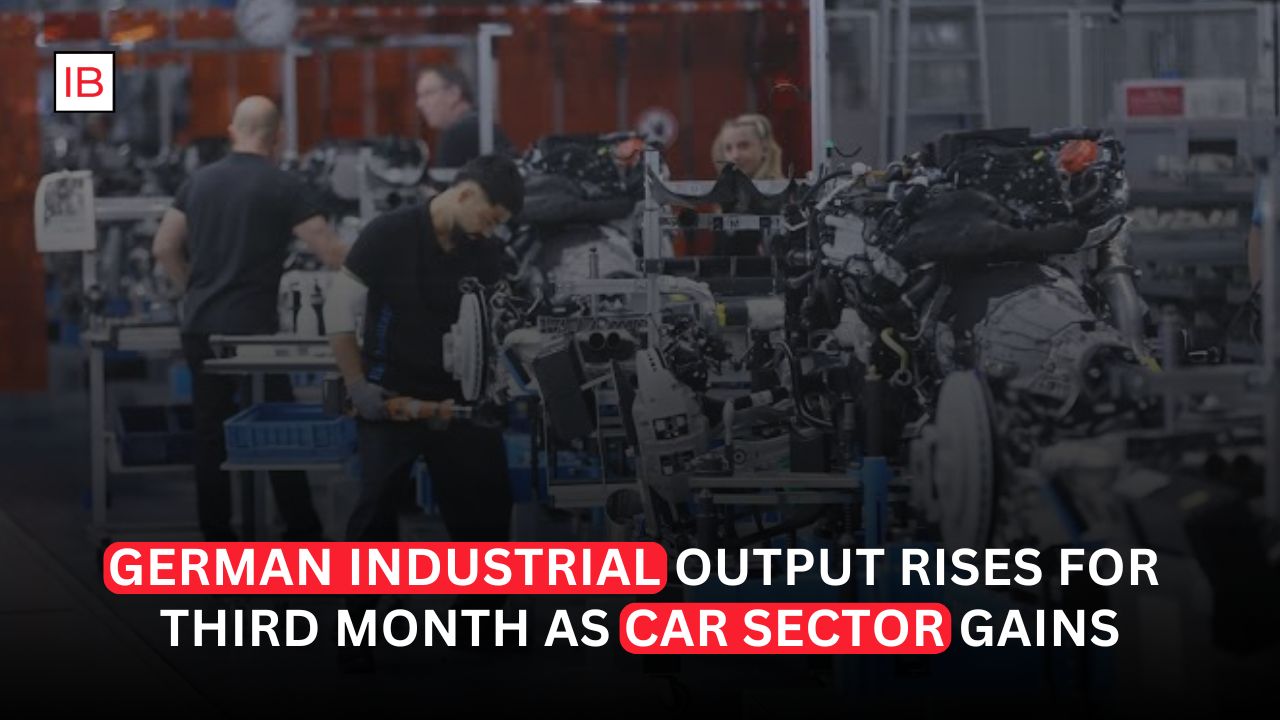
German industrial production rose for a third consecutive month in June, data released Friday by the Federal Statistical Office showed, adding to a growing body of evidence that Europe’s largest economy is beginning to pull out of a prolonged manufacturing slump, with the automotive sector once again playing a central role in the improvement.
A Third Straight Month of Gains
The latest reading builds on a steady run of positive momentum through the spring. German industrial output rose 0.4% month-on-month in April, followed by a stronger 0.9% increase in May, according to Destatis figures. June’s data, released Friday alongside the country’s foreign trade figures, extended that streak to a third consecutive month of growth, reinforcing signs that German manufacturing has found firmer footing after a difficult stretch in late 2025 and early 2026 that included outright monthly declines in both December and January.
Cars Once Again Leading the Way
Automotive production served as a key driver behind the improvement, consistent with the pattern that has repeatedly powered German industrial output whenever it has posted upside surprises this year. Data from the German Association of the Automotive Industry, or VDA, showed that 377,700 passenger cars were produced in Germany in June, a 6% increase compared with the same month a year earlier, a trend the association noted should be viewed partly against the backdrop of two additional working days in the comparison period. That continued strength in vehicle output builds on similarly car-driven rebounds seen earlier in the recovery, when automotive production swings of 7% to 12% in either direction have repeatedly determined whether headline industrial figures beat or missed economist expectations.
Part of a Broader Pattern of Improving Data
June’s industrial production figures arrive alongside a steady accumulation of encouraging economic signals for Germany. New orders in manufacturing jumped 3.1% month-on-month in June, Destatis reported earlier this week, following a 1.9% gain in May, with the less volatile three-month comparison showing orders up 1.3% over the April-to-June period compared with the prior three months. Germany’s broader economy also returned to growth, with second-quarter GDP rising 0.2% following an upwardly revised 0.4% expansion in the first quarter, according to data released July 30.
That combination of rising factory orders, growing industrial output, and returning GDP growth has increasingly supported the view among economists and policymakers that Germany’s long-awaited recovery is gaining genuine traction rather than remaining a series of isolated, one-off improvements.
A Recovery Still Facing Real Headwinds
Despite the positive trend, economists have cautioned against reading too much into any single month of data, given how volatile German industrial figures have proven throughout the current cycle. Industry-wide production plunged 4.3% in August 2025 and fell again by 1.9% in December, illustrating just how quickly momentum has reversed at multiple points over the past year. Analysts have specifically flagged structural headwinds facing German industry, including elevated energy costs, softer demand from key export markets, and the lingering effects of tariffs imposed on European goods entering the United States, as factors that could still weigh on the sector’s longer-term trajectory even amid near-term improvement.
The Fiscal Backdrop Supporting the Recovery
Much of the optimism around Germany’s improving trajectory ties back to the government’s decision earlier this year to relax the country’s constitutionally enshrined “debt brake” and establish a roughly 500 billion euro off-budget fund dedicated to infrastructure and defense spending. Bundesbank President Joachim Nagel has pointed to that fiscal expansion, combined with a resurgence in exports, as the primary forces expected to drive stronger growth through the remainder of 2026, even as officials acknowledge the full effects of increased government spending will take time to fully materialize given the pace of Germany’s federal decision-making processes.
What Comes Next
With industrial production, factory orders, and GDP all now pointing in the same encouraging direction for multiple consecutive readings, attention will turn to whether Germany’s automotive sector and broader manufacturing base can sustain this momentum through the second half of 2026. Given how central car production has been to each of the recent upside surprises in industrial data, the durability of this recovery will likely continue hinging significantly on whether Germany’s auto industry can maintain its current growth trajectory amid ongoing global competition and shifting trade dynamics.