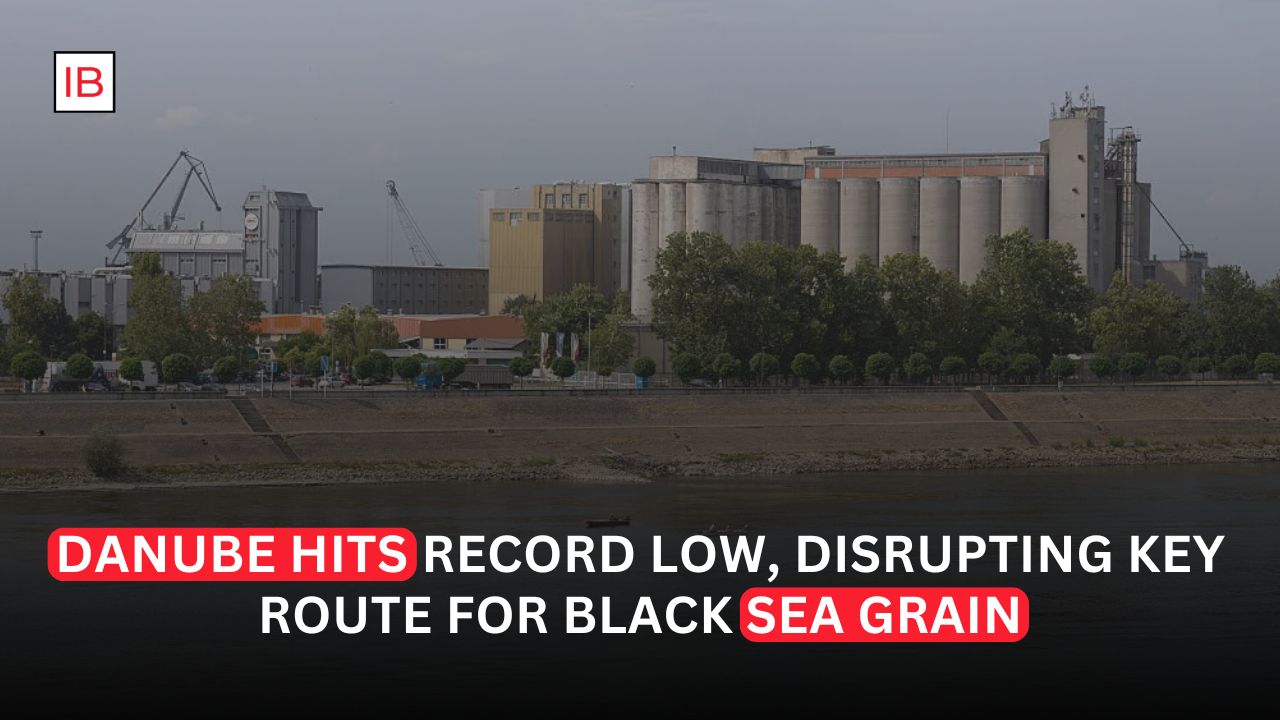
Falling River Levels Threaten a Major Transportation Link for Europe’s Agricultural Trade
Record-low water levels on the Danube River are putting additional pressure on an important transportation route used to move grain from the Black Sea region, raising concerns about higher shipping costs, supply disruptions and further stress on agricultural markets.
The Danube is one of Europe’s most important inland waterways. It connects major industrial and agricultural regions with ports on the Black Sea and provides an important alternative to road and rail transportation.
As water levels fall, vessels may be forced to carry smaller loads or face delays, reducing the efficiency of the river system.
A Critical Trade Route
The Danube stretches across much of Central and Eastern Europe before reaching the Black Sea.
Its transportation network plays an important role in moving commodities, including agricultural products.
Grain from the Black Sea region can travel through the Danube corridor toward international markets.
The waterway therefore serves as an important link between producers and consumers at a time when global food supply chains are already facing uncertainty.
Low Water Creates Shipping Problems
Cargo vessels require sufficient water depth to operate efficiently.
When river levels fall significantly, ships may have to reduce their cargo loads to avoid running aground.
That creates a simple economic problem: more vessels may be needed to transport the same quantity of goods.
Lower loading capacity can therefore increase:
- Transportation costs.
- Delivery times.
- Fuel consumption per ton of cargo.
- Pressure on alternative transport networks.
For grain exporters, these additional costs can reduce margins or eventually be reflected in prices.
Climate Conditions Increase the Risk
Low water levels on major European rivers have become a recurring concern as weather patterns change.
Hotter temperatures and prolonged periods of limited rainfall can reduce river flows.
The Danube is not the only major European waterway affected by these conditions.
Other rivers, including the Rhine, have also experienced periods of unusually low water levels in recent years.
The trend has raised broader concerns about the reliability of Europe’s inland transportation system.
Grain Markets Face Additional Uncertainty
The timing of the disruption is particularly important because the Black Sea region is a major source of agricultural commodities.
Countries around the Black Sea play a significant role in global grain markets.
Any disruption affecting the movement of wheat, corn or other agricultural products can influence international supply expectations.
Even if sufficient grain exists physically, transportation bottlenecks can make it more difficult and expensive to deliver that supply to buyers.
Alternative Routes May Face Pressure
When river transportation becomes less efficient, exporters may turn toward roads and railways.
But those systems have limited capacity.
A sudden increase in demand for rail cars or trucks can create congestion and raise transportation costs.
This can produce a chain reaction across the logistics network.
A problem on a river can therefore eventually affect roads, railways, ports and storage facilities.
Black Sea Trade Remains Strategically Important
The Black Sea has become one of the world’s most closely watched agricultural trading regions.
Its importance has increased further because geopolitical tensions have already complicated traditional grain-export routes.
The Danube has provided an important alternative pathway for moving agricultural products.
That makes the river’s condition strategically significant beyond the countries directly located along its banks.
Europe’s Energy and Commodity Networks Are Vulnerable
The latest Danube disruption highlights a broader issue facing Europe.
The continent depends heavily on transportation networks that can be affected by weather conditions.
Low river levels can interfere with the movement of commodities ranging from grain to industrial materials and energy products.
When waterways become less reliable, businesses may have to rely more heavily on higher-cost transportation methods.
Higher Costs Could Reach Consumers
Transportation is an important component of the final cost of agricultural products.
If exporters face higher logistics expenses for an extended period, some of those costs may eventually be passed along the supply chain.
That could contribute to higher prices for grain and products made from grain.
The impact on consumers will depend on how long the disruption lasts and whether alternative transportation routes can absorb the additional demand.
Long-Term Infrastructure Questions
Recurring periods of low water levels could force governments and companies to rethink how European waterways are managed.
Potential responses could include:
- Improved river monitoring.
- Better navigation systems.
- Infrastructure upgrades.
- More flexible logistics networks.
- Greater investment in rail capacity.
- Improved coordination among neighboring countries.
Businesses may also seek to diversify transportation options so they are less dependent on a single route.
Looking Ahead
Record-low Danube water levels are creating another challenge for Black Sea grain exporters and European logistics networks.
The immediate concern is reduced shipping capacity and higher transportation costs.
The longer-term issue is whether Europe’s inland waterways can remain reliable as extreme weather and changing rainfall patterns become more frequent.
For global agricultural markets, the Danube is a reminder that food security depends not only on how much grain farmers produce, but also on whether that grain can be moved efficiently from farms and ports to consumers.
If low water levels persist, exporters could face increasing pressure to shift cargo to roads and railways, potentially raising costs across the supply chain.
The Danube’s condition will therefore remain an important factor for European logistics and global grain markets in the months ahead.