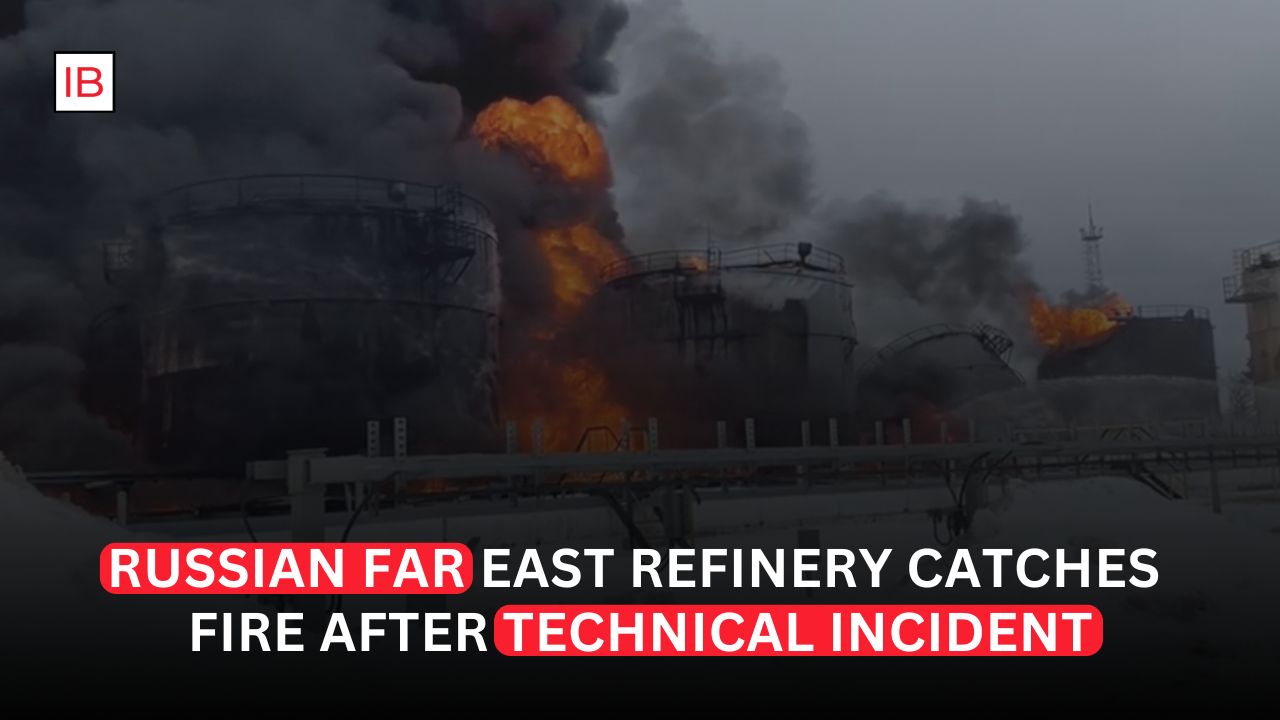
A fire broke out at a major oil refinery in Russia’s Far East on Tuesday following what authorities described as a technical incident, adding fresh uncertainty to an energy sector already facing significant operational and supply pressures.
A fire was reported at the Komsomolsk-on-Amur oil refinery in Russia’s Khabarovsk region on August 11. The facility is operated by Rosneft and is located more than 6,000 kilometers from Ukraine. Initial reports said the blaze followed a technical incident, although the precise cause and the extent of any operational disruption were not immediately clear.
The incident comes at a particularly sensitive time for Russia’s oil industry. Refineries and other energy facilities across the country have faced repeated fires, technical problems and attacks in recent months, putting additional pressure on refining capacity and domestic fuel supplies.
Fire Reported at Komsomolsk-on-Amur
The refinery is located in Komsomolsk-on-Amur, a major industrial city in Russia’s Far East.
Reports emerging Tuesday said a fire had started on the refinery’s premises. Early information did not indicate that the incident was caused by a drone strike, and the available reports have instead described it as a technical or operational incident. The cause remains under investigation.
Authorities had not immediately provided a detailed assessment of the damage or confirmed whether refinery operations were significantly affected.
That distinction will matter for energy markets. A relatively small fire that is quickly contained may have little lasting impact on production, while damage to a major processing unit could force a longer shutdown and reduce the availability of refined petroleum products.
A Critical Refinery for Russia’s Far East
The Komsomolsk refinery is an important part of Russia’s energy infrastructure in the Far East.
Its location allows it to supply petroleum products to consumers and businesses across the region, reducing the need to transport refined fuels over extremely long distances from western Russia.
That geographical role makes the facility particularly important.
Russia’s Far East is separated from the country’s major western refining centers by thousands of kilometers. Any prolonged disruption at a large regional refinery could therefore create logistical complications for fuel suppliers.
Alternative supplies can be transported from other regions, but moving petroleum products across such distances can increase costs and place additional pressure on transportation networks.
Timing Adds to Energy-Sector Pressure
The fire comes as Russia’s refining industry is already experiencing significant disruption.
Russian oil processing fell sharply in July after a series of Ukrainian drone attacks targeted refineries and other energy infrastructure. Bloomberg reported that Russian refining had dropped to its lowest level in more than two decades as attacks intensified.
The repeated incidents have forced Russian energy companies and authorities to manage a complicated combination of damaged infrastructure, maintenance requirements and security concerns.
While the Komsomolsk incident appears different from recent reported drone attacks, its timing makes the situation more significant for the broader oil market.
Every additional refinery outage reduces the system’s ability to absorb further disruptions.
Not Every Refinery Fire Is an Attack
It is important not to assume that the latest fire was caused by Ukraine.
Recent attacks against Russian energy infrastructure have made refinery fires particularly sensitive, but industrial facilities can also experience fires because of equipment failures, maintenance problems, leaks or other technical issues.
The first reports concerning the Komsomolsk incident point toward a technical event rather than an externally caused attack. Until Russian authorities or the company provide more detailed findings, the exact cause should be treated as unconfirmed.
This distinction is important because the market implications are different.
A technical incident affecting one unit could be resolved relatively quickly. A deliberate attack could signal a broader security problem and increase expectations of further disruptions.
Fuel Supply Remains a Concern
Russia’s refining difficulties have already affected domestic fuel markets.
The country’s refineries produce gasoline, diesel and other petroleum products needed by consumers, agriculture, transportation companies and industrial businesses.
When several facilities experience disruptions at the same time, the impact can spread through the domestic supply chain.
Russia has previously responded to fuel shortages and price pressures with measures including restrictions on fuel exports. The objective has been to ensure adequate domestic availability and prevent shortages from becoming more severe.
Additional refinery disruptions could increase the need for similar interventions if supplies become tight.
Rosneft Faces Another Operational Challenge
The refinery is operated by Rosneft, one of Russia’s largest oil producers and refiners.
For Rosneft, the incident creates another operational challenge at a time when the company and Russia’s wider energy sector are operating under pressure from sanctions, infrastructure disruptions and geopolitical risks.
The company will need to determine the cause of the fire, assess whether equipment has been damaged and establish whether production can continue normally.
If the affected equipment requires extensive repairs, the duration of the outage will become more important than the initial fire itself.
Energy traders typically focus less on the existence of a fire than on whether it removes significant refining capacity from the market and for how long.
Why the Far East Matters
The geographical location of the refinery also gives the incident wider significance.
Russia’s Far East has its own energy and transportation challenges. Long distances, limited infrastructure and dependence on regional production facilities can make the area more vulnerable to localized disruptions.
The Komsomolsk refinery helps connect crude oil production and processing with consumers across the region.
If operations are interrupted for an extended period, suppliers may need to increase shipments from alternative facilities.
That could raise transportation costs and create additional pressure on fuel inventories.
Broader Impact on Russia’s Oil Industry
The incident illustrates the broader difficulties facing Russia’s refining sector.
Ukraine has increasingly targeted Russian oil infrastructure as part of its strategy to reduce Moscow’s ability to generate revenue and support its military campaign. Ukrainian officials have acknowledged strikes against multiple Russian refineries, while Russian authorities have repeatedly reported drone attacks on energy facilities.
In early August, for example, a major fire at the Yaroslavl refinery was reported after what the regional governor said was a Ukrainian drone attack.
Other Russian refineries have also experienced fires following reported attacks in recent days.
The cumulative effect is more important than any individual incident.
Markets Watching for Supply Disruptions
Oil markets will be watching the Komsomolsk incident for signs of a significant production interruption.
If the fire is contained quickly and the refinery resumes normal operations, the impact on international markets may remain limited.
However, if critical processing equipment has been damaged, the outage could become more significant, particularly given the existing pressure on Russia’s refining system.
The situation also matters for refined products rather than simply crude oil.
A refinery can have access to crude supplies but still be unable to produce gasoline, diesel or other fuels if processing units are offline.
That distinction is particularly important for domestic Russian markets.
Looking Ahead
The immediate priority will be determining the cause of the fire and assessing the condition of the Komsomolsk refinery.
For now, available reports indicate that the incident followed a technical problem, and there is no confirmed evidence that it was caused by a Ukrainian attack.
The longer-term significance will depend on the extent of the damage and how quickly Rosneft can restore normal operations.
The incident nevertheless highlights the vulnerability of Russia’s refining network. With several facilities already facing disruptions from attacks and other operational problems, even incidents that begin as technical failures can add to pressure on fuel production.
For Russia, maintaining stable refinery operations is becoming increasingly important as the country attempts to protect domestic fuel supplies and preserve energy revenues amid continuing wartime and economic pressures.
The Komsomolsk fire may ultimately prove to be a short-lived operational problem. But in an oil industry already operating under extraordinary pressure, every refinery disruption is being watched closely by traders, companies and policymakers looking for signs of a deeper supply problem.