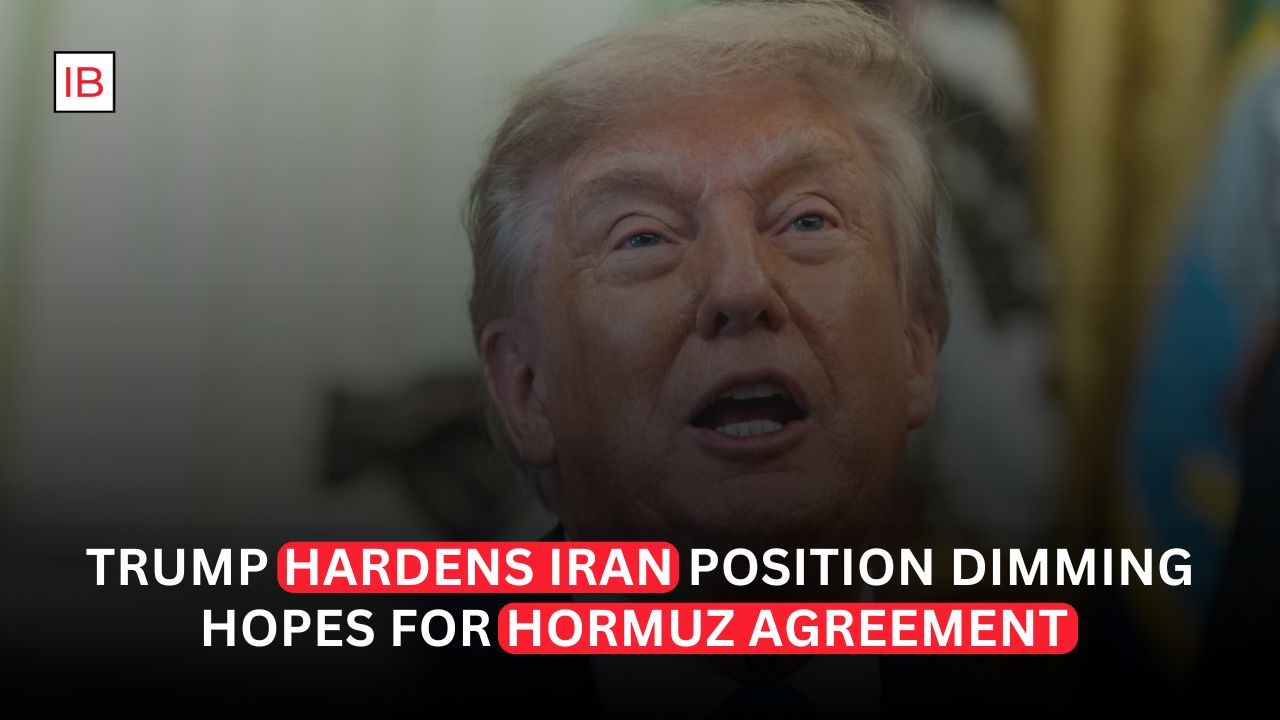
President Donald Trump has toughened his position toward Iran as efforts to secure an agreement over the Strait of Hormuz lose momentum, raising the risk that disruptions to one of the world’s most important energy corridors could persist and keep pressure on global oil markets.
The latest developments have weakened hopes for a quick diplomatic breakthrough between Washington and Tehran. Trump has increased pressure on Iran while insisting that any settlement must address a broad range of US demands, making it increasingly difficult for negotiators to bridge the gap between the two sides.
The uncertainty is particularly important for energy markets because the Strait of Hormuz is a critical route for global oil and liquefied natural gas shipments. Any prolonged restriction on traffic through the waterway can force ships to take longer alternative routes, increase transportation costs and reduce the amount of energy reaching international markets.
Oil prices have already reacted to the deterioration in expectations. Brent crude recently traded near $88 a barrel, while West Texas Intermediate was above $82 after both benchmarks surged more than 5% in the previous session.
Trump Takes a Harder Line
Trump’s latest position suggests that Washington is not prepared to accept a limited agreement simply designed to restore shipping through Hormuz.
The president has demanded compensation from Iran for casualties and damage connected to the conflict, adding another major obstacle to negotiations. The issue is particularly difficult because Tehran has also demanded compensation and guarantees related to US military actions.
Instead of narrowing their positions, the two governments therefore appear to be moving further apart.
That matters because reopening Hormuz is no longer simply a question of arranging safe shipping routes. It has become tied to the broader political and security dispute between the United States and Iran.
Iran Has Its Own Conditions
Iran has made clear that an agreement on managing shipping through the waterway would not necessarily mean the Strait of Hormuz would be fully reopened.
Iranian officials have demanded changes to the US military posture, sanctions and other conditions before agreeing to unrestricted passage.
Reports indicate that Tehran has also sought compensation for damage caused during the conflict and guarantees against future military action.
That creates a fundamental problem for negotiators.
Washington wants Hormuz reopened as part of a broader settlement, while Tehran sees control over the waterway as one of its most valuable bargaining tools.
Neither side therefore has a strong incentive to give up its position without receiving significant concessions in return.
Why the Strait of Hormuz Matters
The strategic importance of Hormuz cannot be overstated.
The waterway connects the Persian Gulf with the Gulf of Oman and the Arabian Sea. Major oil exporters including Saudi Arabia, Iraq, Kuwait, Qatar and the United Arab Emirates depend on the route to move energy products toward global markets.
Historically, around one-fifth of global seaborne oil and liquefied natural gas supplies have passed through the strait.
When shipping through Hormuz is disrupted, the consequences can spread far beyond the Middle East.
Asian refiners may have to secure alternative cargoes, European buyers can face higher prices, and shipping companies may have to reroute vessels around longer and more expensive paths.
The result is higher energy costs at a time when governments and central banks are already concerned about inflation.
Oil Markets Are Already Reacting
The weakening diplomatic outlook has been reflected in oil prices.
Brent crude climbed sharply after investors reassessed the likelihood of a quick reopening of Hormuz. Reuters reported that Brent settled near one-week highs as hopes for a US-Iran agreement diminished.
The market reaction is significant because oil prices had previously benefited from expectations that a diplomatic agreement could restore more normal shipping conditions.
That assumption is now being questioned.
If the standoff continues, traders may maintain a larger geopolitical premium in crude prices.
The premium could rise further if there is evidence that physical oil exports are falling or that shipping companies are increasingly avoiding the region.
The Bigger Problem Is Duration
The biggest risk for energy markets may not be an immediate supply collapse.
It is the possibility that disruptions last much longer than expected.
Markets can often absorb a short-term shock if producers, refiners and traders have sufficient inventories and alternative transportation options.
A prolonged disruption is different.
If shipments remain restricted for weeks or months, inventories can gradually decline. Buyers may begin competing more aggressively for available cargoes, while alternative routes become increasingly expensive.
That could turn a geopolitical crisis into a broader supply problem.
Alternative Routes Have Limits
Energy exporters are attempting to find ways around the disruption, including alternative shipping routes and overland transportation.
But these options cannot fully replace Hormuz.
Some pipelines can move crude around the chokepoint, but available capacity is limited. Other routes involve longer journeys, higher insurance costs and additional logistical complications.
Shipping companies may also demand higher premiums for operating in areas affected by military risks.
The longer the disruption lasts, the more those additional costs can feed into the final price paid by consumers.
Inflation Risk Returns
Higher oil prices create another problem for policymakers.
Energy is a major component of household and business costs. A sustained increase in crude prices can push transportation, manufacturing and heating expenses higher.
That can make it more difficult for central banks to reduce interest rates.
The problem is particularly complicated because oil-driven inflation comes from a supply shock rather than excessive consumer demand.
Central banks cannot directly produce more oil or reopen a shipping lane. They can only respond to the broader economic effects through monetary policy.
If oil remains elevated for long enough, expectations for interest-rate cuts could weaken.
Other Commodities Are Feeling the Pressure
The Hormuz uncertainty is also affecting metals and other commodities.
Aluminum, for example, has recently climbed to a seven-week high as concerns about Middle Eastern supply disruptions increased. The region accounts for a meaningful share of global aluminum production, making shipping disruptions important for the physical metals market as well.
That creates the possibility of a broader commodity shock.
Higher energy prices can increase production costs for metals, chemicals and other energy-intensive industries. At the same time, transportation disruptions can reduce the availability of raw materials.
The combination can push commodity prices higher even if underlying global demand remains relatively weak.
Diplomacy Becomes More Difficult
The latest developments show why a quick Hormuz agreement has become harder to achieve.
Both sides have strong incentives to maintain leverage.
Trump wants Iran to accept a settlement that addresses US security and political objectives. Iran, meanwhile, sees control over the waterway as one of its most powerful bargaining chips.
Giving up that leverage before receiving meaningful concessions would weaken Tehran’s negotiating position.
For Washington, accepting Iranian demands could also create political difficulties.
That makes a limited shipping agreement possible in theory, but a comprehensive settlement much harder.
Markets Need More Than Political Statements
Investors are likely to pay close attention to actual developments in shipping rather than diplomatic rhetoric alone.
A statement suggesting negotiations are improving could temporarily push oil prices lower. But traders will ultimately want evidence that commercial vessels can safely move through the strait and that major exporters can resume normal shipments.
Until that happens, the risk premium is likely to remain embedded in energy prices.
The market will also watch whether companies begin increasing inventories, whether insurance costs rise and whether alternative routes are being used more extensively.
Those indicators could provide a clearer picture of the real economic impact.
What Comes Next?
The immediate outlook depends on whether Washington and Tehran can narrow their demands.
If the two sides return to negotiations and establish a workable framework for shipping, oil prices could retreat as traders remove some of the geopolitical premium.
But if Trump continues to harden his position and Iran refuses to compromise on its demands, the Strait of Hormuz could remain restricted for longer.
That would create a more difficult environment for global energy markets.
Oil has already moved sharply higher, and additional disruptions could push prices further upward. At the same time, higher energy costs could feed into inflation and complicate monetary-policy decisions around the world.
The crucial question is therefore no longer simply whether Washington and Tehran can reach an agreement.
It is how much each side is willing to concede to achieve one.
For now, Trump’s harder stance and Iran’s continued demands suggest that a quick resolution is becoming less likely. Until the two governments find a compromise that separates the immediate need for safe shipping from their much broader political dispute, the Strait of Hormuz will remain a major source of uncertainty for oil markets, global trade and the wider economy.