Investment Firm Taps Strong Investor Demand as Family Offices and Institutions Seek Opportunities Across Global Markets
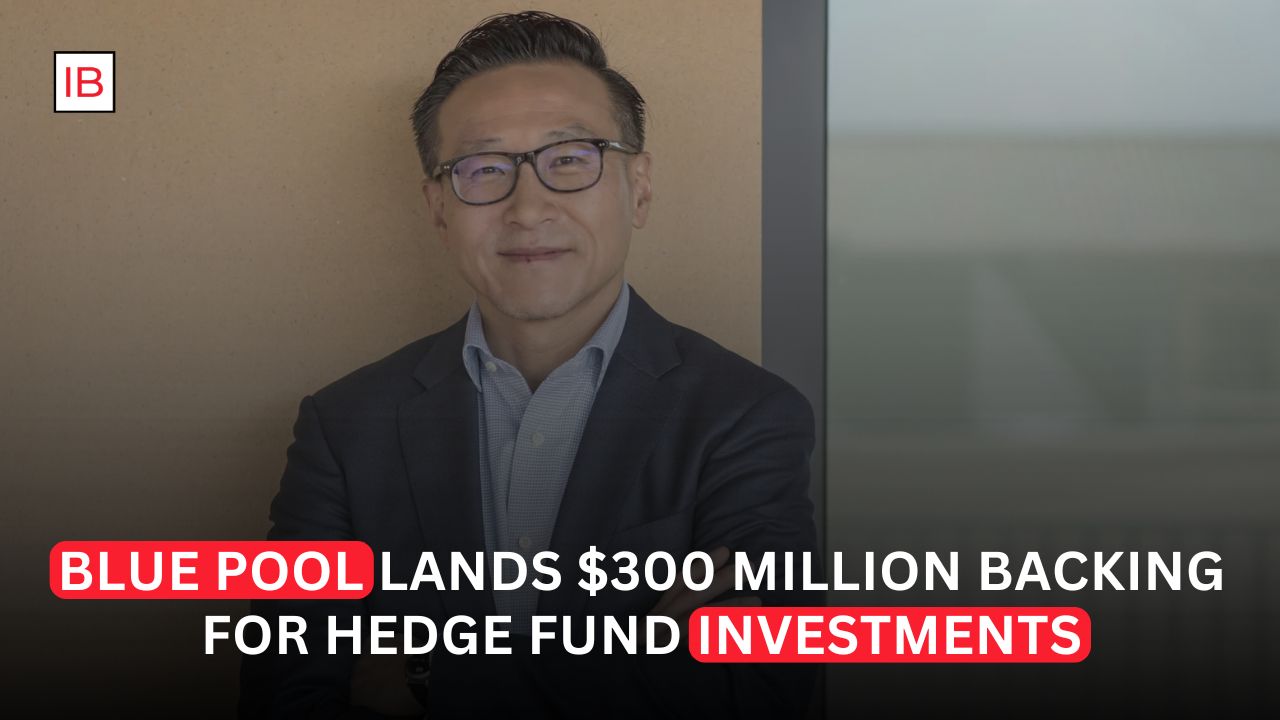
Blue Pool Capital, the investment firm backed by Alibaba co-founder Joe Tsai, has attracted about $300 million for a new hedge-fund investment strategy, highlighting continued demand for alternative assets even as investors navigate an uncertain global market.
The fundraising gives Blue Pool additional capital to deploy with external hedge-fund managers and comes as wealthy investors and family offices increasingly look for strategies capable of generating returns outside traditional stocks and bonds.
Blue Pool has built a reputation for investing across a wide range of alternative assets, including hedge funds, private equity, venture capital and real estate. The firm’s latest fundraising effort underscores its continued interest in using specialized managers to access opportunities across global financial markets.
Blue Pool Expands Hedge Fund Strategy
The new capital will allow Blue Pool to increase its exposure to hedge-fund strategies and potentially diversify its portfolio across different investment styles.
Hedge funds can employ a broad range of approaches, including long-short equity, event-driven investments, macro trading, relative-value strategies and credit investments.
For family offices managing substantial wealth, these strategies can provide exposure to opportunities that may not be readily available through traditional public-market investments.
The $300 million raised also gives Blue Pool additional flexibility to allocate capital as market conditions change.
Joe Tsai’s Investment Firm Takes Broader Approach
Blue Pool Capital manages wealth associated with Joe Tsai, the Alibaba co-founder and chairman, and has developed a broad investment portfolio spanning multiple asset classes.
The firm has previously backed hedge funds as well as private-equity and technology investments.
Blue Pool’s history in the hedge-fund sector includes backing Torq Capital, a Hong Kong-based hedge fund founded by former Citadel portfolio manager Avinash Abraham. Torq managed about $1.5 billion before eventually winding down, demonstrating the firm’s willingness to provide substantial backing to specialist investment managers.
The latest fundraising suggests Blue Pool remains interested in hedge funds even after previous investments have gone through different stages of their development.
Family Offices Increase Focus on Alternative Investments
The fundraising comes as family offices around the world continue to increase allocations to alternative investments.
Unlike traditional investment portfolios dominated by stocks and bonds, family offices often have greater flexibility to invest in private companies, hedge funds, real estate and other less-liquid assets.
That flexibility can be especially valuable during periods of market volatility.
Hedge funds can potentially benefit from both rising and falling markets because many managers are able to take short positions or use derivatives and other strategies to profit from changes in asset prices.
For investors with long-term capital, these strategies can also provide diversification away from conventional equity-market risk.
Hedge Funds Face a More Competitive Environment
The hedge-fund industry itself has become increasingly competitive.
Institutional investors and wealthy individuals have access to thousands of funds, making it difficult for managers to attract capital unless they can demonstrate strong performance, differentiated strategies or access to specialized markets.
Blue Pool’s role as a sophisticated allocator gives it the opportunity to identify managers that it believes can generate attractive risk-adjusted returns.
The firm can also spread capital across multiple strategies instead of relying on the performance of a single fund.
Alternative Assets Remain Attractive
The latest fundraising reflects a broader shift in global investment markets.
Private equity, private credit, hedge funds and venture capital have all attracted significant interest from investors seeking alternatives to traditional public markets.
Blue Pool has previously pursued private-equity opportunities, including plans for a $750 million private-equity fund targeting mid-sized companies in areas such as luxury retail, fintech and technology.
The firm’s portfolio therefore extends well beyond hedge funds.
This diversified approach allows Blue Pool to seek opportunities across different parts of the global economy and different stages of the investment cycle.
Blue Pool Has Expanded Beyond Traditional Finance
The firm’s investment activities have also extended into technology and consumer businesses.
Blue Pool led a 2026 funding round for the Asian University Basketball League, demonstrating its willingness to invest in emerging businesses outside conventional financial markets.
The firm has also made investments in luxury and consumer companies, illustrating the broad mandate available to a large family-backed investment platform.
Its hedge-fund allocation is therefore one component of a much wider strategy.
Why $300 Million Matters
The size of the new capital pool is significant because it gives Blue Pool the ability to establish meaningful positions across multiple managers.
Rather than concentrating the entire amount in one hedge fund, an allocator can potentially distribute capital among managers with different strategies, geographic exposures and risk profiles.
That can reduce dependence on the performance of any single investment approach.
It can also allow the firm to increase allocations to managers that demonstrate strong performance over time.
For hedge-fund managers, capital from a large family office can also be attractive because family-office investors may have longer investment horizons than some institutional investors.
Global Markets Create New Opportunities
The current market environment presents hedge funds with a wide range of potential opportunities.
Interest-rate uncertainty, geopolitical tensions, currency movements, commodity-price changes and differences between regional economies can all create opportunities for macro and relative-value investors.
At the same time, volatility can increase risks.
Successful hedge-fund investing therefore depends heavily on manager selection and risk management.
Blue Pool’s fundraising suggests that the firm believes the current environment provides enough opportunities to justify increasing its exposure to specialist managers.
Institutional Capital Continues to Flow Into Alternatives
The growth of family-office investment has become an important source of capital for the alternative-asset industry.
Family offices can often move more quickly than large pension funds or insurance companies because they face fewer regulatory and liquidity constraints.
They can also pursue investments based on long-term wealth-preservation objectives rather than quarterly performance targets.
That makes firms such as Blue Pool important participants in the global alternatives market.
The firm’s continued investment activity demonstrates how wealthy individuals are increasingly using professional investment organizations to manage diversified portfolios across public and private markets.
Looking Ahead
The $300 million raised by Joe Tsai-backed Blue Pool Capital highlights continued investor appetite for hedge funds and alternative investment strategies.
The capital gives Blue Pool additional resources to allocate across specialist managers while strengthening its broader portfolio of alternative investments.
The move also fits with the firm’s long-standing strategy of investing across hedge funds, private equity, venture capital, technology and other assets.
For hedge-fund managers, new capital from sophisticated family offices can provide an important source of long-term funding at a time when competition for institutional assets remains intense.
As financial markets become more volatile and investors search for returns beyond traditional stocks and bonds, family offices such as Blue Pool Capital are likely to remain an increasingly important source of capital for hedge funds and other alternative investment managers.