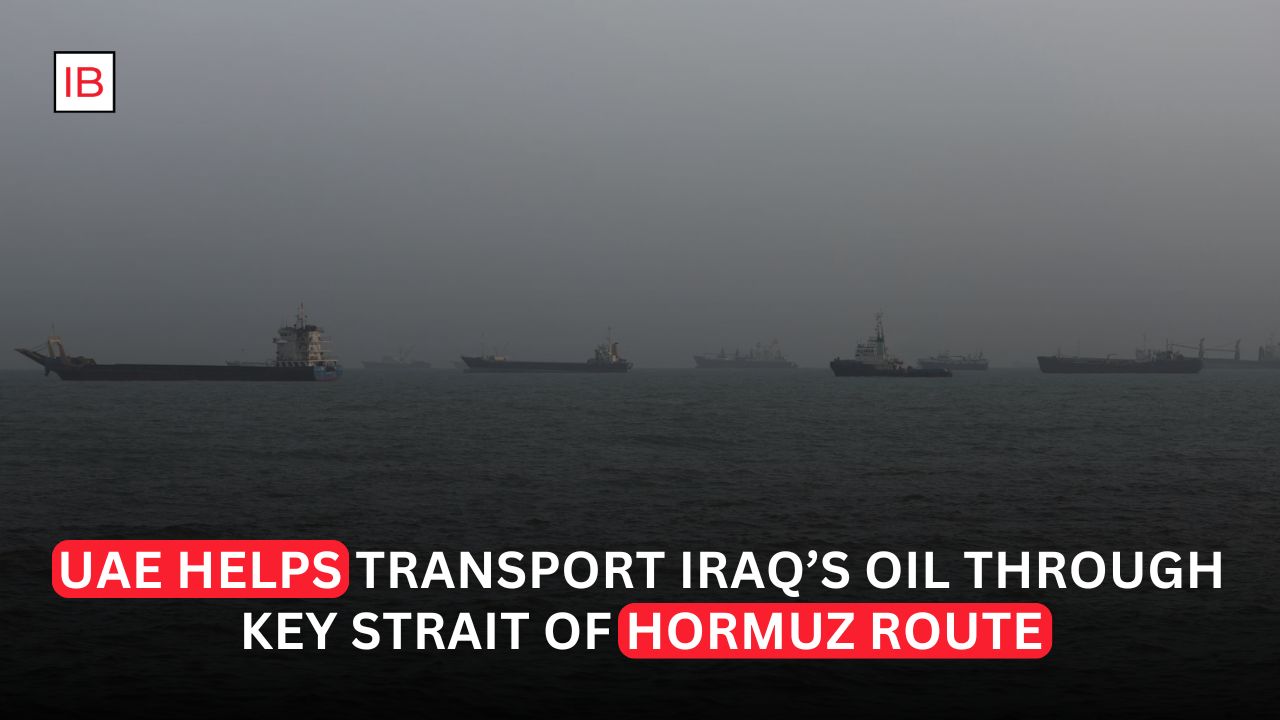
ADNOC Proposes Maritime Solution to Help Iraq Maintain Crude Exports as Shipping Disruptions Continue to Threaten Gulf Energy Flows
The United Arab Emirates is offering to help move Iraqi oil through the Strait of Hormuz, providing a potential lifeline for Baghdad as the strategic waterway remains severely disrupted by the ongoing regional conflict.
The proposal comes from ADNOC, the UAE’s state-owned energy company, which is offering to use tankers to shuttle Iraqi crude through the Strait. The move highlights the growing importance of alternative shipping arrangements as Gulf producers struggle to maintain exports through one of the world’s most important energy chokepoints.
For Iraq, the proposal could be particularly important because the country remains heavily dependent on Hormuz for access to international oil markets. Unlike the UAE and Saudi Arabia, Iraq has limited pipeline infrastructure capable of bypassing the Strait, leaving much of its crude export system exposed to maritime disruptions.
Iraq Faces Major Export Challenge
Iraq is one of the Gulf’s major oil producers, but its geographic position makes it particularly vulnerable to disruptions in the Strait of Hormuz.
Most of the country’s crude exports originate from southern oil fields around Basra and are shipped through the Gulf before passing through Hormuz.
When tanker traffic through the Strait was sharply reduced earlier this year, Iraqi oil production and exports came under severe pressure.
The country was forced to find alternative ways to move crude while attempting to prevent storage facilities from becoming overwhelmed.
Recent data suggest that Iraqi exports have recovered significantly from their earlier lows. Iraq doubled its exports in June compared with the previous month, helped by additional very large crude carrier loadings.
The UAE’s latest proposal could provide another mechanism for maintaining that flow.
ADNOC Offers a Maritime Workaround
ADNOC’s proposal involves using its experience in moving oil through difficult maritime conditions to help Iraqi barrels reach international buyers.
The company is reportedly prepared to shuttle Iraqi crude through the Strait using a strategy designed to reduce the risks associated with the disrupted shipping environment.
Such an arrangement could allow Iraq to maintain a greater level of exports even while normal tanker operations remain constrained.
The proposal also demonstrates how Gulf energy companies are adapting to a fundamentally different shipping environment.
Instead of simply waiting for Hormuz traffic to return to normal, producers and exporters are looking for ways to keep oil moving under extraordinary circumstances.
Strait of Hormuz Remains Critical
The Strait of Hormuz is one of the most important energy corridors in the world.
Large volumes of crude oil, petroleum products and liquefied natural gas normally pass through the narrow waterway connecting the Persian Gulf with the Gulf of Oman.
For several Gulf producers, there are few practical alternatives.
A recent World Bank assessment showed that Iraq is among the countries most exposed to Hormuz disruptions, while the UAE and Saudi Arabia have comparatively greater access to alternative pipeline routes.
That difference has become increasingly important during the current crisis.
The UAE has been able to redirect some of its exports through infrastructure leading to ports outside the Gulf, while Iraq remains substantially more dependent on maritime access.
UAE Has Its Own Bypass Infrastructure
The UAE has spent years developing infrastructure designed to reduce its dependence on Hormuz.
Its Habshan-Fujairah pipeline allows crude to be transported from Abu Dhabi’s oil fields to Fujairah on the Gulf of Oman, outside the Strait.
The UAE has also been working to expand its ability to export energy through alternative routes.
Earlier plans called for the expansion of the Habshan-Fujairah system, while the country has also been developing ports and other infrastructure to reduce its exposure to the strategic chokepoint.
Those investments give the UAE greater flexibility than Iraq.
The latest proposal effectively extends some of that logistical flexibility to a neighboring oil producer.
Iraq Has Fewer Alternatives
Iraq’s dependence on Hormuz is much greater.
The country’s primary southern export infrastructure is concentrated around Basra, and most of its internationally traded crude normally leaves through Gulf terminals.
Pipeline alternatives exist, but their capacity is limited compared with Iraq’s overall production and export requirements.
That makes shipping the critical link between Iraqi oil fields and global markets.
The vulnerability became clear earlier in the year when the disruption forced Iraq to cut production and seek alternative export arrangements.
Reports at the time indicated that Iraq was considering routes involving neighboring countries and other transport methods, but these options carried significantly higher costs and logistical challenges.
Global Oil Markets Are Watching Closely
The UAE’s offer comes as global oil markets continue to assess the effects of the Hormuz disruption.
Gulf oil exports remained relatively steady in July at around 10.7 million barrels per day, but volumes were still about 40% below pre-war levels.
That shortfall remains significant for global energy markets.
Any further disruption could put additional pressure on crude prices, particularly if producers are unable to compensate for lost shipments.
The continued movement of Iraqi and other Gulf barrels is therefore important not only for individual producers but also for global supply.
Tanker Traffic Remains Under Pressure
Shipping through Hormuz has been affected by security concerns, attacks on vessels and uncertainty surrounding the status of the waterway.
Tanker operators have had to consider additional insurance costs, routing risks and operational delays.
The number of vessel attacks in the region also increased during July, adding another layer of uncertainty for shipping companies.
For an oil producer such as Iraq, those risks can quickly translate into higher transportation costs.
A state-backed arrangement involving ADNOC could potentially make it easier to organize tanker movements and maintain a more predictable export schedule.
UAE Emerges as a Regional Logistics Hub
The proposal also reinforces the UAE’s growing importance as a logistics and energy hub.
The country has invested heavily in ports, pipelines, storage facilities and transportation infrastructure that connect the Gulf with international markets.
Its location outside the Strait provides a strategic advantage during periods of disruption.
The UAE has also been expanding facilities at Fujairah, which has become one of the world’s most important energy hubs outside the Persian Gulf.
That infrastructure gives Abu Dhabi options that are unavailable to several other Gulf producers.
Iraq’s Economy Depends Heavily on Oil
The stakes are especially high for Iraq because oil revenues represent the overwhelming majority of government income.
Any sustained decline in crude exports can therefore affect the government’s ability to finance salaries, public services, infrastructure spending and other expenditures.
Earlier in the crisis, the disruption to oil exports created serious concerns about Iraq’s fiscal position.
Maintaining access to international markets is consequently a national economic priority rather than simply a commercial issue.
A successful UAE-supported shipping arrangement could help reduce some of that pressure.
Regional Energy Cooperation Gains Importance
The proposal also illustrates how the current crisis is encouraging greater cooperation among Gulf energy producers.
Countries that previously competed for market share are increasingly facing a common challenge: maintaining access to global customers while maritime routes remain vulnerable.
The UAE has an obvious incentive to support continued Iraqi exports because disruptions to Iraq’s production can contribute to broader volatility in regional energy markets.
Helping Iraq maintain shipments could therefore benefit the wider Gulf oil system.
Oil Markets Remain Sensitive to Hormuz Developments
Even relatively small changes in shipping activity can have an outsized impact on oil prices because traders closely monitor the amount of crude physically available to global buyers.
If Iraqi exports remain stable, some pressure on global supply could ease.
If shipments fall again, markets could quickly price in tighter supplies.
The situation is especially important because Gulf inventories have already been drawn down during the crisis.
Reuters recently reported that global inventories had fallen substantially since February, highlighting the difficulty of rebuilding supply buffers while shipping disruptions persist.
Looking Ahead
The UAE’s offer to shuttle Iraqi oil through the Strait of Hormuz represents an important attempt to keep one of the region’s most critical energy flows operating despite extraordinary shipping disruptions.
For Iraq, maintaining crude exports is essential to protecting government revenues and keeping its oil industry functioning.
For the UAE, the proposal demonstrates how its extensive energy infrastructure, tanker fleet and alternative export routes can provide strategic flexibility during a regional crisis.
The arrangement will not eliminate the risks surrounding Hormuz, and the underlying security situation remains uncertain. Iraq will continue to face greater exposure than Gulf producers with established bypass pipelines.
Nevertheless, the UAE’s proposal provides a potential short-term solution while broader efforts to restore normal maritime traffic continue.
As the conflict continues to reshape regional energy logistics, the ability to move oil around or through the Strait of Hormuz is becoming almost as important as the ability to produce it. The UAE’s latest initiative could therefore become an important part of efforts to keep Iraqi crude flowing to global markets while the region navigates one of its most disruptive energy crises in decades.