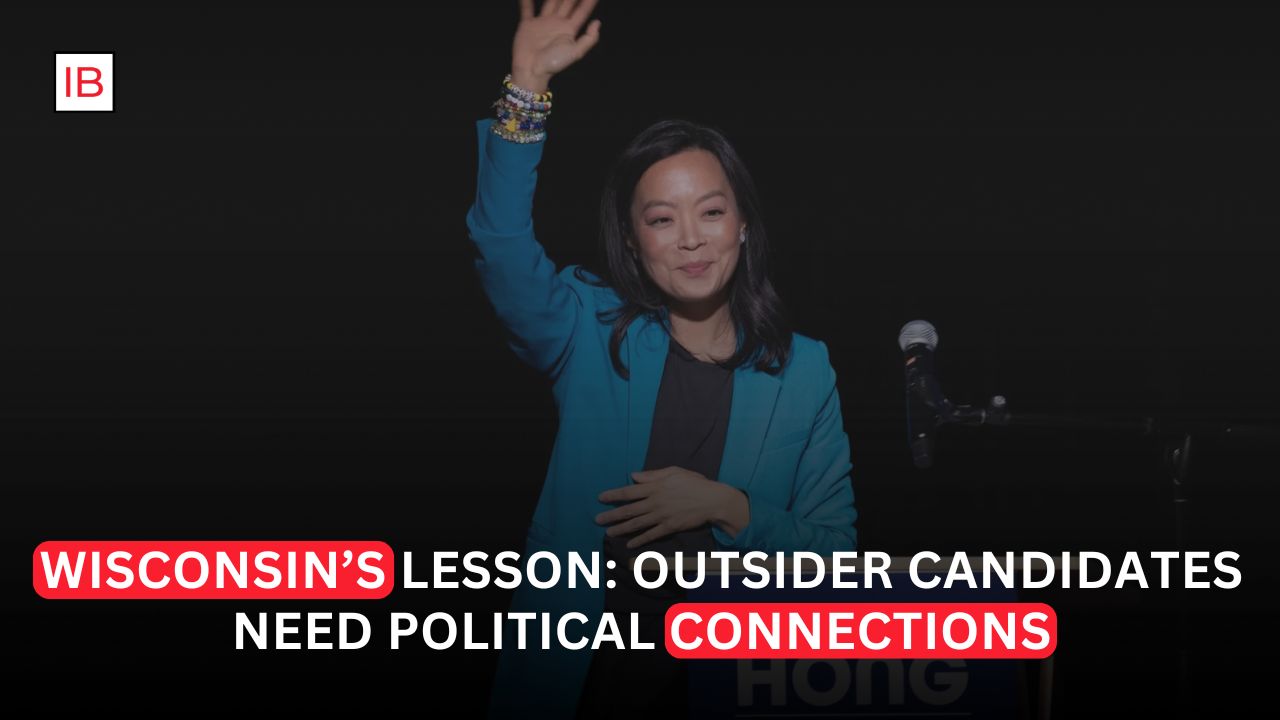
Francesca Hong’s Narrow Defeat Highlights the Challenge Progressive Insurgents Face When National Momentum Collides With Local Political Realities
Francesca Hong’s defeat in Wisconsin’s Democratic gubernatorial primary offers a revealing lesson about the limits of outsider campaigns, even as progressive candidates continue to gain attention across the country.
Hong, a state representative and democratic socialist, had built a campaign around grassroots organizing, progressive economic policies and a rejection of traditional Democratic politics. Her campaign generated significant attention and at one point put her ahead in polling, turning the Wisconsin governor’s race into one of the most closely watched Democratic contests of the 2026 primary season.
But Milwaukee County Executive David Crowley narrowly defeated Hong, demonstrating that national progressive energy does not automatically translate into victory in a competitive Midwestern state.
The result comes after recent victories by progressive candidates elsewhere, making Wisconsin an important test of how far the Democratic Party’s left wing can expand beyond heavily progressive districts and urban political environments.
Hong Built a Campaign Around Progressive Momentum
Hong entered the race as an unconventional candidate.
A former chef and longtime progressive activist, she positioned herself as an outsider who could challenge the political establishment and offer a different direction for Wisconsin.
Her platform included policies such as universal childcare, free school meals, expanded public investment and restrictions on new artificial-intelligence data centers. She also opposed accepting corporate political action committee money, reinforcing her argument that her campaign represented grassroots voters rather than established political interests.
That approach helped Hong attract national attention.
Her campaign was also influenced by the rise of other democratic socialist candidates, including New York City Mayor Zohran Mamdani. Hong sought to demonstrate that a similar progressive coalition could succeed in a Midwestern battleground state.
Polling Initially Favored Hong
Hong’s campaign gained momentum during a period of uncertainty in the Democratic primary.
Several better-known candidates exited the race, changing the dynamics and allowing Hong to consolidate support among progressive voters.
A Marquette University Law School poll had Hong leading the field before the election, although a large number of voters remained undecided.
Her position at the top of the polls created the impression that Wisconsin could become another major breakthrough for the progressive movement.
That expectation ultimately proved too optimistic.
Crowley Represented a More Conventional Alternative
Crowley offered Democratic voters a different proposition.
As Milwaukee County executive, he had experience running one of the state’s largest local governments and presented himself as a more pragmatic candidate.
His campaign emphasized issues including affordable housing, public safety and governing experience, rather than making the Democratic primary primarily a referendum on the direction of the national party.
His return to the race also received an important boost when outgoing Governor Tony Evers endorsed him.
That support gave Crowley access to a well-established Democratic political network at a crucial point in the campaign.
Evers’ Endorsement Changed the Race
Crowley’s comeback was particularly significant because he had previously left the gubernatorial contest.
Evers encouraged him to return, effectively giving moderate Democrats a candidate around whom they could organize.
That helped create a clearer ideological choice for voters.
Instead of a crowded field in which Hong could dominate progressive voters, the contest increasingly became a direct competition between Hong’s outsider campaign and Crowley’s more established political operation.
The shift appears to have helped Crowley overcome Hong’s earlier polling advantage.
Electability Became a Central Question
One of the biggest challenges facing Hong was the question of whether a democratic socialist could win a general election in Wisconsin.
Wisconsin is a highly competitive political state, making Democratic candidates particularly sensitive to questions about their ability to appeal beyond the party’s progressive base.
Hong’s supporters argued that bold policies could increase Democratic enthusiasm and bring new voters into the political process.
Her opponents worried that some of her positions could make it more difficult to compete against Republicans in November.
That debate ultimately became a major feature of the primary.
Controversies Complicated Hong’s Campaign
Hong also faced scrutiny over previous political statements and positions.
Critics highlighted past comments involving policing and other controversial issues, while some of her positions became targets for conservative attacks.
Although Hong subsequently modified or clarified some of those positions, the controversy gave opponents material to question her broader political strategy and electability.
For an outsider campaign, such controversies can be particularly difficult to manage.
Established candidates typically have years of political relationships, institutional support and experienced campaign organizations that can help contain negative narratives.
Outsiders often have fewer such defenses.
Grassroots Energy Has Limits
Hong’s campaign demonstrated the power of grassroots political organizing.
She attracted enthusiastic supporters and benefited from the broader national interest in progressive candidates.
But enthusiasm alone does not necessarily produce a statewide coalition.
A successful gubernatorial campaign requires support across different regions, demographic groups and political constituencies.
Wisconsin’s electorate is particularly diverse politically, and a candidate seeking statewide office must appeal to voters well beyond the most progressive parts of Madison and Milwaukee.
Crowley’s more conventional political profile may have helped him build that broader coalition.
National Progressive Momentum Did Not Guarantee Victory
Hong’s loss also complicates the narrative of a progressive surge.
Progressive candidates have enjoyed notable successes in the 2026 primary season.
In Minnesota, progressive Lt. Gov. Peggy Flanagan defeated centrist Rep. Angie Craig in the Democratic Senate primary, while Abdul El-Sayed’s earlier victory in Michigan provided another boost to the Democratic left.
Those victories created expectations that progressive candidates could continue winning in other states.
Wisconsin delivered a more complicated message.
The result suggests that progressive ideas can generate significant enthusiasm without necessarily overcoming concerns about ideology, experience and general-election competitiveness.
Wisconsin Remains a Difficult Political Environment
The state’s political importance makes the outcome particularly significant.
Wisconsin is routinely viewed as a battleground where relatively small shifts in voter preferences can determine statewide elections.
The Democratic nominee will face Republican Tom Tiffany, a Trump-aligned congressman, in the November gubernatorial election.
That matchup means Democratic voters were not simply choosing between two primary candidates.
They were also deciding what kind of candidate they believed could compete most effectively in the general election.
Crowley’s victory suggests that enough voters prioritized that consideration over the prospect of a more sweeping ideological transformation.
Outsider Candidates Still Have an Important Role
Hong’s campaign should not necessarily be viewed as a failure for progressive politics.
Outsider candidates can change the political debate even when they do not win.
Hong pushed issues such as childcare, affordability, public services and AI infrastructure into the center of the Wisconsin campaign.
She also demonstrated that a candidate without traditional establishment backing can quickly become competitive when voters are dissatisfied with existing political choices.
Her campaign may therefore influence future Democratic candidates even after the primary.
Establishment Support Still Matters
The Wisconsin race also illustrates the continuing value of institutional political support.
Crowley benefited from Evers’ endorsement and from a more conventional governing record.
That support gave moderate Democrats a clear alternative to Hong.
The lesson for future outsider candidates may be that grassroots enthusiasm needs to be combined with a broader political organization if it is going to overcome established candidates.
Campaign infrastructure, fundraising, endorsements and voter outreach remain important even in an era when social media can rapidly elevate unconventional candidates.
The Democratic Party Faces an Ideological Balancing Act
The result also reflects a larger debate inside the Democratic Party.
Progressives want the party to embrace policies that address inequality, housing costs, healthcare, childcare and corporate influence.
Moderates argue that Democrats must remain focused on winning competitive states and districts by appealing to independent and centrist voters.
Wisconsin illustrates the tension between those two approaches.
Hong’s campaign represented the argument that Democrats can win by mobilizing the left.
Crowley’s campaign represented the alternative theory that Democrats need a more pragmatic candidate to compete statewide.
The Loss Does Not End the Progressive Movement
The defeat is unlikely to end Hong’s political influence.
She remains a prominent progressive figure in Wisconsin, and the campaign demonstrated that there is an audience for a more confrontational approach to state politics.
The result may also encourage progressive organizers to examine where their campaigns need to expand beyond their strongest constituencies.
For the national movement, the Wisconsin primary provides useful information rather than a definitive verdict.
Progressive candidates can win primaries, but their success depends heavily on the state, electorate and political environment.
Looking Ahead
Hong’s loss in Wisconsin demonstrates that the rise of progressive outsider candidates has real limits, particularly when they move from activist-oriented campaigns into statewide elections.
Her campaign generated significant momentum, led early polling and attracted national attention. But Crowley’s combination of governing experience, moderate positioning and support from Evers ultimately proved more effective with enough Democratic voters to secure a narrow victory.
The result does not mean progressive politics has lost its appeal.
Victories in Minnesota and Michigan show that progressive candidates can still mobilize Democratic voters and defeat establishment-backed opponents.
Wisconsin, however, suggests that national progressive momentum cannot simply be transferred from one state to another.
Candidates still need to build local coalitions, address concerns about electability and demonstrate that their policy agendas can appeal to voters outside their ideological base.
For the Democratic Party, that may be the most important lesson from Wisconsin.
The party’s progressive wing has demonstrated that it can generate enthusiasm and reshape primary contests. But winning statewide elections in closely divided states requires more than enthusiasm.
Hong’s campaign showed how far an outsider can rise. Her defeat showed where that strategy can still fall short.