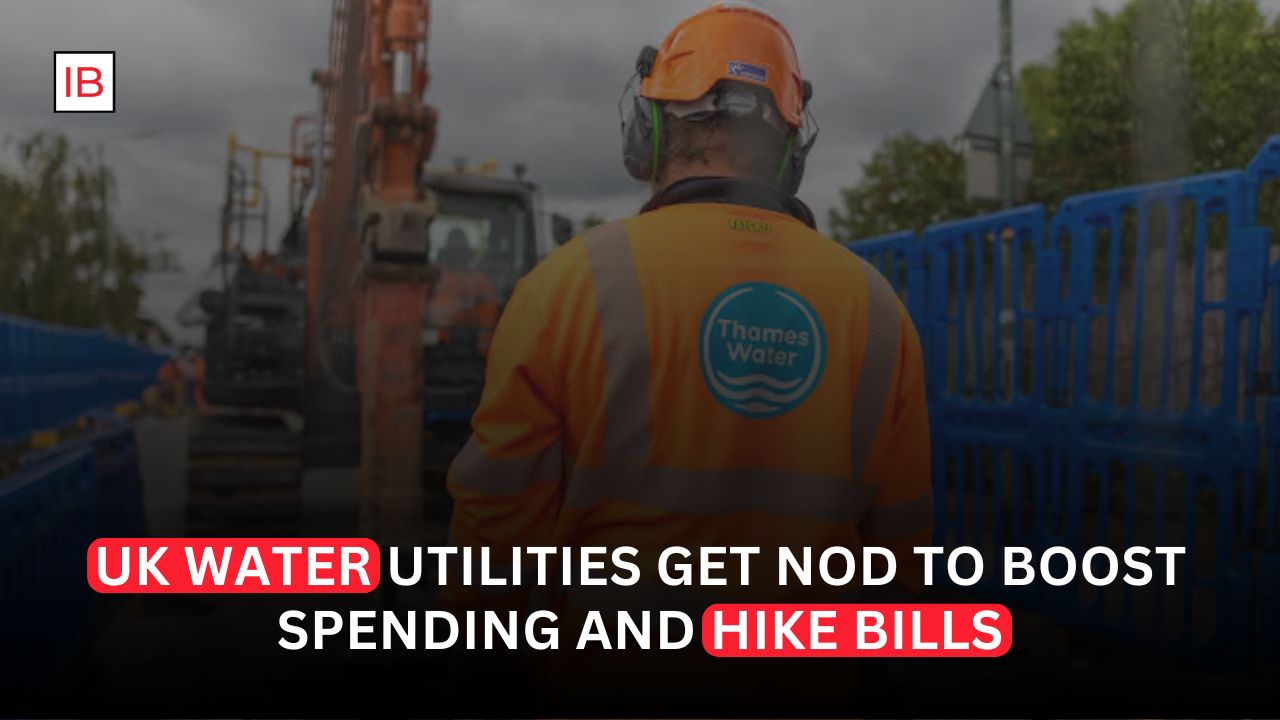
Britain’s water companies have been given the green light to spend billions of pounds on infrastructure, but households will ultimately carry part of the cost through higher water bills.
The UK water regulator Ofwat has provisionally approved up to £3.4 billion ($4.6 billion) of additional funding for 13 water utilities, clearing the way for projects aimed at upgrading infrastructure, improving drinking-water quality and removing harmful substances such as PFAS, often referred to as “forever chemicals.” The investment is also intended to support new housing and data-center development.
The decision comes at a politically sensitive moment for Britain’s privatized water industry. Companies have faced years of criticism over sewage pollution, leaks, aging infrastructure, rising debt and executive pay, while customers have already been hit with substantial bill increases.
The central question is therefore not simply whether Britain needs more investment in its water network. It clearly does.
The harder question is who should pay for it, and whether customers will receive enough improvement in return for higher bills.
Bill Payers Are Already Facing Higher Costs
Water customers in England and Wales are already experiencing significant increases.
The average combined water and sewerage bill is expected to reach roughly £639 in 2026–27, an increase of £33 from the previous year.
Those increases are part of a much larger five-year investment program.
Ofwat’s broader price-review settlement allows water companies to invest around £104 billion between 2025 and 2030 in infrastructure and services.
That spending is intended to address some of the industry’s most persistent problems, including leaking pipes, inadequate wastewater infrastructure and pollution.
But customers are being asked to finance a substantial portion of the investment through their bills.
That makes the performance of the companies increasingly important.
Why Britain Needs the Investment
The UK‘s water infrastructure is old and under considerable pressure.
Population growth, new housing, climate change and increasingly unpredictable weather are putting additional demands on water networks.
At the same time, Britain’s sewage systems have faced intense scrutiny because of pollution incidents and storm-overflow discharges.
Investment is therefore necessary simply to maintain reliable services.
Without additional spending, utilities could struggle to maintain pipes, treatment plants, reservoirs and wastewater systems.
The latest funding decision also has a broader economic dimension.
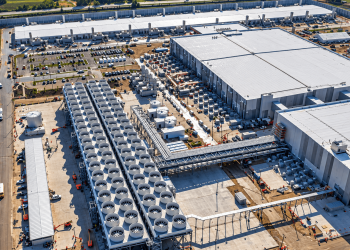
Ofwat says the newly approved funding can help unlock housing development and support business growth, including data centers that require reliable water infrastructure.
That means the investment is not only about fixing existing problems.
It is also about expanding capacity for future economic activity.
PFAS Is Becoming a Bigger Concern
One of the specific priorities is removing PFAS, a group of chemicals known for their persistence in the environment.
PFAS have been widely used in industrial and consumer products because they resist heat, water and grease.
The problem is that many of these substances break down extremely slowly.
Water companies therefore face increasing pressure to detect and remove them from drinking-water supplies.
That requires new treatment technologies and additional infrastructure.
The cost will ultimately be reflected somewhere in the system — either through customer bills, government support or reduced returns to investors.
The latest Ofwat decision moves some of that cost toward customers.
The Industry Has a Trust Problem
This is where the politics becomes difficult.
If Britain’s water companies were universally regarded as well-run utilities delivering excellent services, higher bills to finance infrastructure investment would be easier to defend.
That is not the current reality.
Customers have watched bills rise while water companies have faced criticism over sewage pollution, leakage and financial management.
The industry has therefore developed a credibility problem.
Customers may accept higher bills if they can clearly see that the money is producing cleaner rivers, fewer leaks and more reliable water supplies.
They are less likely to accept them if service quality does not improve.
Thames Water Remains the Biggest Symbol of the Crisis
No company illustrates Britain’s water-industry problems more clearly than Thames Water.
The utility has struggled with enormous debt and financial pressure while simultaneously facing criticism over infrastructure failures and environmental performance.
Its financial difficulties have raised the possibility of government intervention and restructuring.
That creates an awkward backdrop for the wider industry.
Regulators want companies to invest more.
But heavily indebted companies need enough cash flow to survive.
And customers are already paying higher prices.
The system therefore has to balance infrastructure investment with financial sustainability.
More Spending Does Not Automatically Mean Better Services
This is the weakest assumption in the current policy approach: that allowing utilities to spend more will necessarily solve the industry’s problems.
It might.
But spending is not the same thing as performance.
A company can spend billions on infrastructure and still suffer from poor project management, weak operational execution or inadequate maintenance.
That is why regulatory oversight matters.
Ofwat needs to ensure that approved spending translates into measurable improvements.
The regulator has mechanisms for rewarding or penalizing companies based on performance.
Those incentives will become increasingly important as customers are asked to pay more.
The Investment Could Have Long-Term Benefits
There is nevertheless a strong economic argument for the spending.
Water infrastructure is not something Britain can easily postpone.
Pipes, treatment facilities and reservoirs have long useful lives, and inadequate investment can become dramatically more expensive later.
Delaying repairs can also increase the risk of failures.
A leaking pipe wastes treated water.
A poorly maintained sewage system can cause environmental damage.
Insufficient capacity can prevent new housing developments from proceeding.
From that perspective, investment today could reduce larger costs in the future.
Housing and Data Centers Add Another Dimension
The reference to new housing and data centers is particularly significant.
Britain needs additional housing, but new developments cannot be built efficiently if local water infrastructure does not have enough capacity.
Data centers create a similar challenge.
The rapid expansion of artificial intelligence and cloud computing is driving enormous investment in data centers.
These facilities require electricity, cooling systems and, depending on their design, significant water resources.
That means infrastructure investment in the water sector could increasingly become part of Britain’s broader technology and economic-development strategy.
The irony is that customers may end up financing infrastructure that also enables highly profitable private businesses.
That makes the question of cost allocation even more politically sensitive.
The Regulator Has to Walk a Narrow Line
Ofwat’s challenge is to balance three competing interests:
Consumers want affordable bills.
Companies need sufficient revenue to invest and remain financially viable.
The country needs reliable infrastructure and environmental improvements.
Giving companies too little funding risks underinvestment.
Giving them too much could place excessive pressure on households and potentially reward poor management.
The regulator therefore needs to make sure that higher allowed spending is accompanied by strict performance requirements.
Customers Will Want Results
The easiest way for the water industry to rebuild trust is not through public-relations campaigns.
It is through measurable improvements.
Customers will want to see:
- fewer sewage spills;
- fewer supply interruptions;
- lower leakage;
- better drinking-water quality;
- faster responses to failures;
- stronger environmental performance;
- better financial discipline.
If those improvements occur, higher bills become easier to justify.
If they don’t, the political backlash will intensify.
The Broader Economic Impact
Higher water bills may appear relatively small compared with mortgage payments, energy bills or food prices.
But households are facing numerous increases simultaneously.
Water bills are therefore another pressure on disposable income.
For businesses, higher utility costs can also increase operating expenses.
That matters particularly for industries with high water consumption, such as manufacturing, hospitality and food production.
At the same time, infrastructure investment can generate economic benefits through construction activity, employment and improved productivity.
The short-term effect is therefore a higher cost for customers alongside potentially larger long-term economic benefits.
The Real Test Begins Now
The latest Ofwat approval does not solve Britain’s water crisis.
It provides utilities with additional financial capacity to address it.
That distinction matters.
The industry now has fewer excuses if infrastructure performance fails to improve.
Customers are paying more.
Investors are being asked to support greater capital spending.
Regulators are allowing companies to recover additional costs.
In return, the public will reasonably expect better service.
The success or failure of the plan will therefore be measured not by how much money water companies are allowed to spend, but by what that money actually delivers.
Britain needs modern water infrastructure. The argument over investment itself is increasingly difficult to sustain.
The more contentious question is whether private utilities can convince customers that they deserve to collect substantially more money from them.
For now, Ofwat has chosen to give the companies additional funding.
The next challenge is making sure that higher bills produce cleaner water, fewer leaks and a more reliable system — rather than simply larger revenues.