Government Moves to Tighten Public Spending as It Seeks Greater Efficiency, Stronger Growth and Better Value for Taxpayers
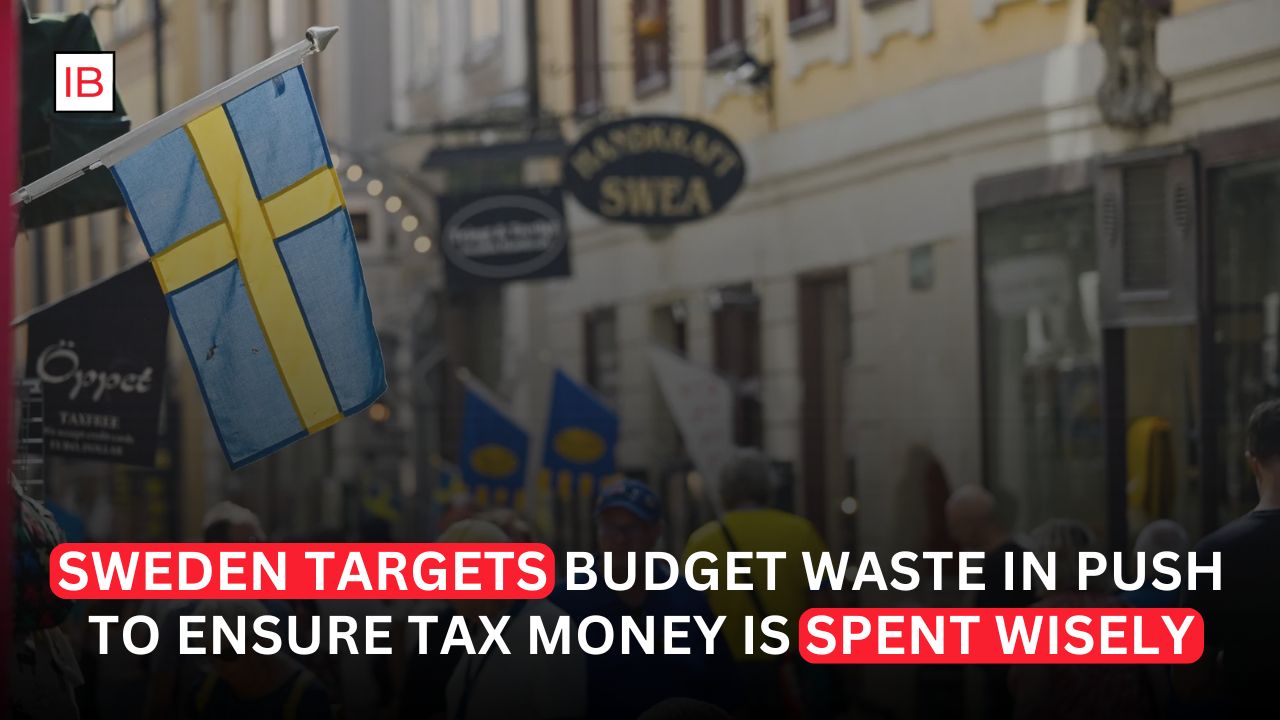
Sweden is preparing to take a closer look at government spending in an effort to identify waste and make sure taxpayers’ money is being used more effectively, adding a new focus on efficiency as the country prepares its next phase of economic policy.
The initiative comes as Sweden seeks to strengthen public finances while simultaneously increasing investment in areas such as defense, infrastructure, welfare and economic growth.
The government has emphasized that Sweden enters the current period with relatively strong public finances, giving policymakers room to act. Government documents put public debt at about 35% of GDP, well below the European Union average of more than 80%.
But strong finances do not mean unlimited spending capacity.
Government Wants Better Value From Tax Revenue
The push to identify waste reflects a broader effort to ensure that existing government resources are being used efficiently rather than simply increasing budgets.
Swedish taxpayers already contribute significant amounts to public services, while government agencies oversee large spending programs covering healthcare, education, infrastructure, social services, security and other areas.
The government wants agencies to demonstrate that spending is producing measurable results.
That could mean reviewing programs that overlap, reducing administrative costs and eliminating spending that no longer delivers sufficient value.
The approach is particularly relevant as Sweden faces growing demands for public investment.
Strong Public Finances Provide Room for Action
Sweden’s relatively low public debt gives the government more flexibility than many other European countries.
The government has described the country’s fiscal position as a major economic strength and said maintaining strong public finances remains a central objective.
That position allows Stockholm to consider additional spending in strategically important areas without immediately creating the same debt pressures faced by heavily indebted governments.
However, policymakers also want to preserve fiscal credibility.
Finding savings inside existing programs could therefore help create room for new priorities without requiring equivalent increases in borrowing or taxation.
Defense Spending Is Rising
One of the biggest pressures on Sweden’s budget is defense.
Since Russia’s full-scale invasion of Ukraine, Sweden has significantly increased its focus on national security and joined NATO.
Government budget documents show substantial increases in spending for defense capability and civil defense.
That means policymakers must find ways to finance a stronger military while continuing to support Sweden’s welfare system.
A systematic review of government spending could help redirect resources toward defense without unnecessarily reducing essential services.
Welfare Remains a Major Priority
Sweden’s welfare state requires substantial public funding.
Healthcare, education, pensions, social services and support for vulnerable households represent major components of government expenditure.
Recent budgets have included additional funding for healthcare, schools, municipalities and other public services.
The government therefore faces a difficult balancing act.
Cutting waste is politically easier than cutting core services, but identifying genuine inefficiencies can be complicated.
Some programs may appear expensive while delivering important social benefits that are difficult to measure in financial terms.
Sweden Is Trying to Boost Growth
The spending review also comes as Sweden seeks to strengthen economic growth after a period of weakness.
The government has said Sweden entered 2026 following an economic downturn driven largely by weak domestic demand.
Its strategy has included tax reductions and measures intended to put more money into household budgets and encourage consumption.
The government argues that stronger household finances can help rebuild confidence and support economic recovery.
But fiscal resources must still be allocated carefully.
Reducing unnecessary public spending could help ensure that available money is directed toward measures with the greatest economic impact.
Efficiency Has Become More Important
Government efficiency has become a growing issue across advanced economies.
As populations age and public-service demands increase, governments face pressure to deliver more while controlling costs.
Sweden is no exception.
Its high level of public services creates significant administrative and financial responsibilities.
Digitalization could provide one way to reduce costs.
Government agencies can automate processes, improve data sharing and reduce paperwork while maintaining services.
The challenge is ensuring that efficiency measures actually produce savings rather than simply shifting costs from one part of the public sector to another.
Earlier Budgets Already Included Streamlining
Sweden has already incorporated efficiency measures into previous budgets.
Government budget documents have included initiatives aimed at creating a more effective central government administration and reducing administrative costs.
Previous plans have also included measures to streamline government agencies and improve the efficiency of public administration.
The latest push therefore builds on an existing policy direction rather than representing an entirely new approach.
The difference is the increased emphasis on actively searching for waste across government spending.
Taxpayers Are Becoming More Important to the Political Debate
The issue also has a political dimension.
Sweden is heading toward an election period in which household finances, taxes and public services are likely to be important campaign issues.
The government can use a spending-efficiency campaign to argue that it is protecting taxpayers while maintaining essential services.
The message is relatively straightforward: before asking taxpayers for more money or borrowing more, the government should make sure existing resources are being used properly.
That argument can appeal across political lines.
Tax Cuts Add Pressure to the Budget
The government has introduced several tax reductions intended to strengthen household finances.
The 2026 economic plan included lower taxes on labor, pensions, electricity and savings, along with measures to reduce the cost burden on households.
Food value-added tax was also reduced from April 2026, while childcare fees were lowered from July.
These measures are designed to support consumers and encourage economic activity.
But tax cuts also reduce government revenue.
That makes spending discipline increasingly important.
Infrastructure and Investment Still Require Money
At the same time, Sweden cannot simply cut spending across the board.
The country needs investment in roads, energy systems, digital infrastructure and other long-term projects.
Government budget plans have included additional funding for transport infrastructure and road maintenance, alongside measures aimed at improving Sweden’s competitiveness.
The spending review is therefore likely to focus more heavily on identifying low-value expenditure than on imposing broad cuts.
The objective is to make room for investment rather than reduce investment altogether.
Economic Recovery Could Make the Review Easier
A stronger economy would give Sweden additional fiscal flexibility.
Higher employment and rising economic activity can increase tax revenues, while stronger household incomes can reduce demand for some forms of government support.
The government expects economic recovery to become an important foundation for future fiscal policy.
Its stated strategy is based on maintaining strong public finances, creating more jobs and ensuring that work produces stronger financial rewards.
A successful spending review could complement that strategy by making government programs more productive.
Finding Waste Is Not Always Simple
One challenge will be defining what constitutes waste.
Government spending often supports programs whose benefits are difficult to measure.
For example, investment in education may take years to produce measurable economic benefits, while preventive healthcare can reduce future costs that are difficult to calculate.
Similarly, administrative spending may appear unnecessary until the consequences of understaffing become visible.
The government will therefore need to distinguish genuine waste from spending that provides long-term public value.
Stronger Oversight Could Follow
A broader review could lead to increased scrutiny of government agencies and publicly funded programs.
Officials could be required to provide clearer evidence that spending is achieving its intended objectives.
Performance targets, audits and evaluations could become more important.
That could encourage agencies to focus more closely on outcomes rather than simply using allocated budgets.
For taxpayers, greater transparency could make it easier to understand where public money is going.
Sweden Wants to Protect Its Fiscal Reputation
Sweden has spent decades building a reputation for relatively strong fiscal management.
Maintaining that reputation is particularly important in an uncertain global environment.
The government says Sweden’s low debt and strong public finances provide resilience against external shocks.
A systematic effort to reduce waste could reinforce that position.
It could also give policymakers more room to respond if economic conditions deteriorate or new crises emerge.
Looking Ahead
Sweden’s plan to scour government spending for waste reflects a broader effort to make every taxpayer krona work harder as the country balances economic recovery with rising demands for defense, welfare and investment.
The government enters this period from a relatively strong fiscal position, with public debt at around 35% of GDP, significantly below the EU average.
That provides policymakers with room to invest.
But the government is simultaneously cutting taxes and increasing spending in several strategic areas, meaning efficiency will become increasingly important.
The challenge will be finding genuine savings without weakening the public services that Swedish households depend on.
Defense is likely to remain one of the largest areas of additional spending as Sweden strengthens its military capabilities following NATO membership.
At the same time, healthcare, education, infrastructure and social programs will continue demanding substantial resources.
A successful spending review could help the government finance these priorities without unnecessarily increasing debt or reversing tax reductions.
The initiative also fits into Sweden’s wider economic strategy of improving competitiveness, strengthening domestic demand and preserving strong public finances.
Government documents emphasize that fiscal strength remains one of Sweden’s key advantages in an uncertain global economy.
The next challenge is making sure that strength is not diluted by inefficient spending.
For Swedish taxpayers, the ultimate test will be whether the review produces visible improvements: fewer unnecessary costs, better public services and greater transparency over how their money is used.
If the government can demonstrate meaningful savings while protecting essential programs, the initiative could become an important part of Sweden’s economic strategy.
The message from Stockholm is increasingly clear: maintaining strong public finances is not only about raising revenue or controlling deficits. It is also about making sure the money already collected is spent as effectively as possible.